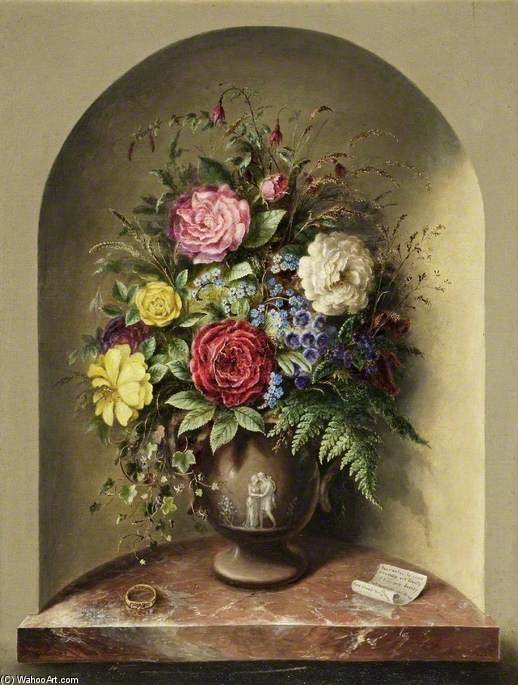
Delicate realism shines through Albrecht Dürer’s ‘Cultivated Flowers,’ capturing the vibrant beauty of roses, lilies, and foliage against a serene marble backdrop—a quintessential Renaissance masterpiece inviting you to explore its timeless elegance.
A Symphony of Light and Texture: Exploring Albrecht Dürer’s ‘Cultivated Flowers’
The painting “Cultivated Flowers,” attributed to Albrecht Dürer, stands as a testament to the meticulous observation and artistic mastery characteristic of the German Renaissance. Executed around 1503-1504 during Dürer's prolific period in Nuremberg, this still life transcends mere botanical depiction; it embodies an idealized vision of beauty rooted in humanist ideals and infused with subtle symbolic resonance. The artwork’s enduring appeal lies not only in its exquisite realism but also in the artist’s masterful manipulation of light and texture—elements that elevate it beyond a simple representation of flora into a profound meditation on nature's grace.
- Subject Matter & Composition: Dürer meticulously captures a bouquet of flowers arranged within a classically proportioned vase resting upon a polished marble pedestal. The arrangement isn’t haphazard; rather, it adheres to principles of visual harmony—a deliberate effort to convey order and contemplation. Scattered amongst the blossoms are delicate leaves providing a verdant counterpoint to the vibrant hues of the blooms.
- Style & Technique: Dürer employed his signature engraving technique – hatching and cross-hatching – to achieve unparalleled tonal accuracy. This painstaking process allowed him to render subtle gradations of color and shadow with astonishing precision, creating a palpable sense of depth and dimensionality that defies the limitations of printmaking. The artist’s meticulous attention to detail extends beyond mere shading; he painstakingly captures the textures of petals—the velvety softness of roses juxtaposed against the crispness of lily bracts—demonstrating an unwavering commitment to realism.
Historical Context & Renaissance Ideals
“Cultivated Flowers” emerged during a period of significant intellectual and artistic ferment in Europe. The humanist movement championed by figures like Erasmus and Pico della Mirandola emphasized human reason and observation as pathways to understanding the divine order. Dürer’s depiction aligns perfectly with these ideals—celebrating the beauty of the natural world not merely for its aesthetic pleasure but also as a reflection of God's creative power. The inclusion of a small figurine, likely representing Saint George slaying the dragon, subtly reinforces themes of courage and triumph over adversity – common motifs within Renaissance iconography.
Symbolism & Emotional Impact
Flowers held considerable symbolic significance in Renaissance art, representing purity, fertility, and remembrance. The specific flowers chosen—roses symbolizing love and devotion, lilies signifying virginity—speak to the prevailing spiritual concerns of the era. More than just a visual spectacle, “Cultivated Flowers” invites contemplation on themes of mortality and immortality. The stillness of the composition evokes a sense of serenity and timeless beauty, prompting viewers to consider the ephemeral nature of earthly existence alongside the enduring legacy of artistic excellence.
A Reproduction Worth Admiring
Today, high-quality reproductions of “Cultivated Flowers” offer art enthusiasts and interior designers alike an opportunity to experience Dürer’s unparalleled artistry firsthand. ArtsDot.com presents meticulously crafted prints that faithfully capture the nuances of color and texture—allowing collectors and admirers to appreciate the profound beauty and intellectual depth of this iconic masterpiece.