A Visceral Encounter with Mortality
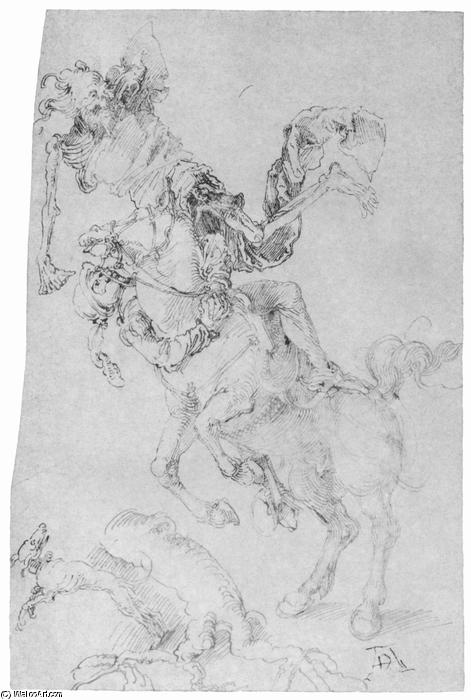
In the hauntingly beautiful masterpiece Death and Rider, the German Renaissance master Albrecht Dürer invites us into a realm where the boundaries between the physical and the spiritual dissolve. This striking work, rendered with the precision of a master engraver, captures a moment of profound existential struggle. At its heart lies a dynamic, almost violent collision: a mounted warrior, armored and resolute, locked in a desperate combat against an encroaching shadow. The composition is a whirlwind of motion, where limbs are extended in aggressive poses and the very air seems thick with the dust of a battlefield. It is not merely a depiction of a skirmish, but a psychological landscape where the knight represents the human soul attempting to maintain its footing amidst the chaos of mortality.
The technical brilliance of Dürer’s hand is evident in every meticulously etched line. Utilizing the intricate techniques of hatching and cross-hatching, the artist builds a sense of profound depth and tactile texture that breathes life into the cold metal of armor and the sinewy strength of the horse. The monochromatic palette—a symphony of blacks, whites, and varying greys—serves to heighten the dramatic tension, stripping away the distraction of color to focus the viewer's eye on the raw energy of the struggle. Through masterful use of light and shadow, Dürer creates a chiaroscuro effect that accentuates the strained musculature of the combatants, casting deep, dramatic shadows that suggest an environment littered with the debris of conflict and the fallen remnants of war.
Symbolism and the Renaissance Spirit
Beyond its surface-level intensity, Death and Rider serves as a powerful allegory for the human condition. The stylistic leanings toward Mannerism—characterized by elongated forms and a deliberate distortion of perspective—work in harmony with the subject matter to evoke an emotional intensity that transcends simple realism. The knight, often interpreted as a symbol of faith or the Christian spirit, finds himself besieged by the personification of Death and the Devil. This eternal conflict between virtue and vice, or life and its inevitable end, was a central preoccupation of the Northern Renaissance. Every dent in the armor and every frantic movement of the horse speaks to the fragility of existence and the heroic, albeit exhausting, effort required to preserve one's integrity against the tides of destruction.
For the discerning collector or interior designer, this artwork offers more than just a visual focal point; it provides a profound narrative depth. A high-quality reproduction of this piece brings an atmosphere of intellectual rigor and historical gravity to any space. Whether placed in a study filled with leather-bound books or as a commanding statement in a contemporary gallery setting, the work commands attention through its sheer visceral drama. It is a piece that invites contemplation, sparking conversations about history, philosophy, and the enduring human struggle. To possess such a work is to hold a fragment of the Renaissance spirit—a reminder of the timeless tension between our earthly battles and our eternal aspirations.