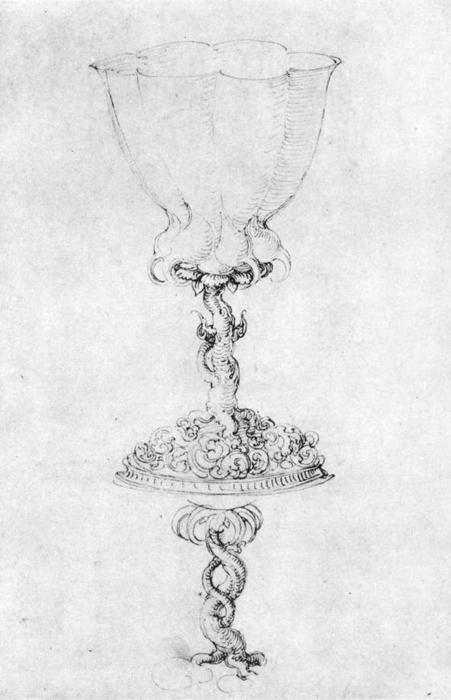
Admire Albrecht Dürer’s ‘Design of a Goblet,’ a stunning 1515 Renaissance masterpiece. Explore intricate details & elegant design of this iconic artwork.
Explore the art of Albrecht Dürer, a German Renaissance master! Discover iconic engravings like Melencolia I and detailed self-portraits – a pivotal figure in art history.
Explore human history & culture at the British Museum! Discover iconic artifacts from around the world – ancient Egypt to modern art. A must-see London landmark.
A Study in Elegance: Decoding Dürer’s Goblet Design
Albrecht Dürer's "Design of a Goblet with a Variant of the Base," created in 1515, transcends mere technical illustration; it embodies the spirit of Renaissance artistic innovation and offers a glimpse into the meticulous craftsmanship that defined its era. Produced during Dürer’s formative years as an artist—a period marked by intense experimentation and unwavering dedication to mastering his craft—this monochrome drawing serves not just as a preparatory sketch for metalwork but as a profound statement about form, perspective, and decorative artistry.
The Renaissance Blueprint: Style and Technique
Dürer's approach aligns perfectly with the prevailing stylistic trends of the time. The disegno – Italian for “drawing” – championed by artists like Leonardo da Vinci prioritized careful observation and accurate representation. Unlike earlier Gothic art’s stylized forms, Dürer sought to capture reality with astonishing precision. This is achieved through masterful pen and ink drawing on paper, utilizing hatching and cross-hatching techniques that imbue the image with a palpable sense of depth and texture. The artist's hand demonstrates an unparalleled command of line weight—varying thicknesses strategically highlight contours and emphasize areas of visual interest, creating a dynamic interplay between light and shadow.
A Window into Fifteenth Century Ornamentation
The goblet itself is more than just a vessel; it’s a microcosm of Renaissance decorative sensibilities. The design incorporates elaborate floral motifs and scrollwork – elements common in aristocratic interiors—reflecting the humanist fascination with classical ideals of beauty and proportion. These ornamental flourishes speak to a broader cultural preoccupation with grandeur and refinement, mirroring the ambitions of wealthy patrons who commissioned artworks intended to elevate their status and commemorate significant events. The goblet’s form—a subtly curved silhouette—is carefully considered, adhering to principles of linear perspective that strive for illusionistic realism.
Symbolism Beyond Form: Reflections of Artistic Ideals
Despite its seemingly simple monochrome palette, “Design of a Goblet with a Variant of the Base” carries significant symbolic weight. The meticulous detail demonstrates Dürer’s belief in disegno – the importance of drawing as a foundational element of artistic creation. It represents an artist's commitment to mastering observation and translating natural forms into idealized representations. Furthermore, the goblet’s ornamentation embodies humanist values—harmony, balance, and beauty—values that underpinned the Renaissance worldview and continue to inspire artists today.
A Legacy of Precision: Why This Reproduction Matters
Today, a high-quality reproduction of Dürer's "Design of a Goblet with a Variant of the Base" offers more than just visual delight; it connects us directly to the intellectual currents of the Renaissance. It allows viewers to appreciate the artist’s groundbreaking technique and contemplate the enduring power of artistic ideals—a testament to Dürer’s genius and a captivating piece of art history for collectors and interior designers alike.