A Vision of Tranquility Amidst Celebration: Exploring Albrecht Dürer’s “Entwurf für einen Tafelaufsatz oder Tischbrunnen”
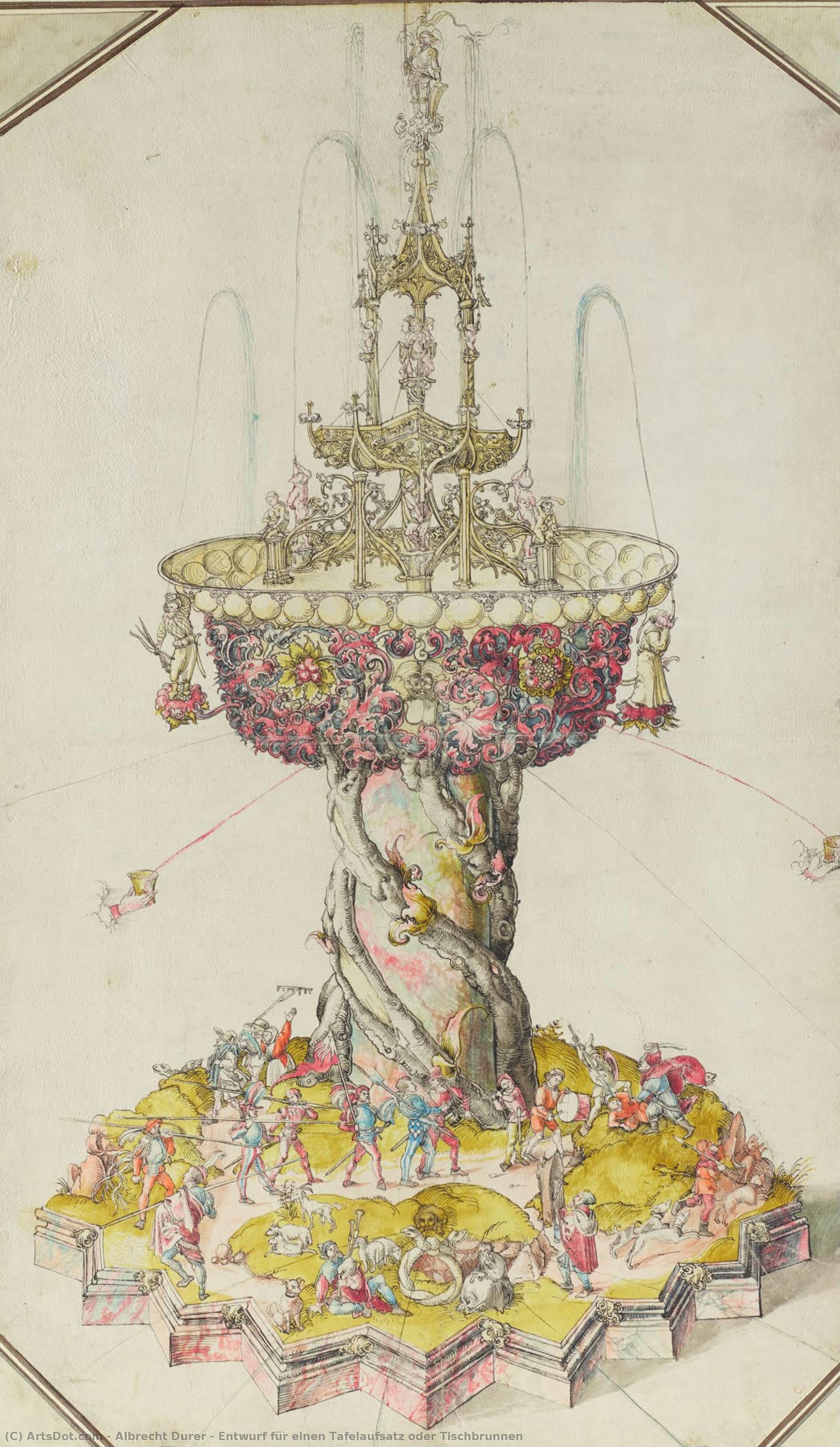
The painting "Entwurf für einen Tafelaufsatz oder Tischbrunnen," created by Albrecht Dürer around 1500, transcends mere depiction; it embodies the spirit of Renaissance humanism and offers a glimpse into the artistic sensibilities of Nuremberg’s golden age. This ambitious sketch—measuring 67 x 40 cm—captures a scene brimming with life – a fountain surrounded by lush greenery and populated by figures engaged in joyous activity, hinting at an opulent celebration or perhaps simply a moment of serene contemplation.
- Subject Matter: The central focus is undeniably the fountain itself, rendered with meticulous detail. However, Dürer doesn’t merely portray water; he elevates it to a symbol of purity and renewal—a cornerstone of Renaissance ideals reflecting humanist belief in the transformative power of nature.
- Style & Technique: Executed in graphite on paper, Dürer's technique exemplifies the precision characteristic of Northern Renaissance drawing. The artist’s masterful use of shading creates a palpable sense of depth and texture, capturing the dappled sunlight filtering through the foliage and illuminating the faces of the onlookers. It is a testament to Dürer’s dedication to observation and his ability to translate natural forms onto paper with astonishing accuracy.
Historical Context: Nuremberg's Artistic Flourishing
Nuremberg in the early sixteenth century was experiencing an unprecedented surge of artistic creativity. Driven by burgeoning trade, civic pride, and a renewed interest in classical art—fueled by humanist scholars like Erasmus—the city became a magnet for artists seeking patronage and inspiration. Dürer’s workshop thrived amidst this environment, producing groundbreaking prints and paintings that cemented Nuremberg's reputation as a center of artistic innovation. The commission for such elaborate decorative pieces like fountains underscored the importance of visual arts in shaping social identity and expressing humanist values.
- Symbolism: Beyond its immediate depiction of a fountain, the sketch speaks to broader symbolic concerns prevalent during the Renaissance. Trees represent fertility, growth, and connection to God—themes frequently explored in religious art of the period. The figures surrounding the fountain embody human interaction and social harmony, reflecting the humanist belief that humans are capable of reason and virtue.
- Emotional Impact: Viewing “Entwurf für einen Tafelaufsatz oder Tischbrunnen” evokes a feeling of tranquility mingled with delight. Dürer’s careful rendering captures not only the visual beauty of the scene but also its emotional resonance—a celebration of life, light, and the harmonious relationship between humanity and nature.
A Reproduction Worth Admiring: Bringing Dürer's Vision Home
Today, a high-quality reproduction of “Entwurf für einen Tafelaufsatz oder Tischbrunnen” offers an exceptional opportunity to experience the artistry of Albrecht Dürer firsthand. ArtsDot’s meticulous printing process ensures that the subtle nuances of graphite shading and textural detail are faithfully reproduced, allowing collectors and interior designers alike to appreciate the enduring power of this iconic Renaissance masterpiece.