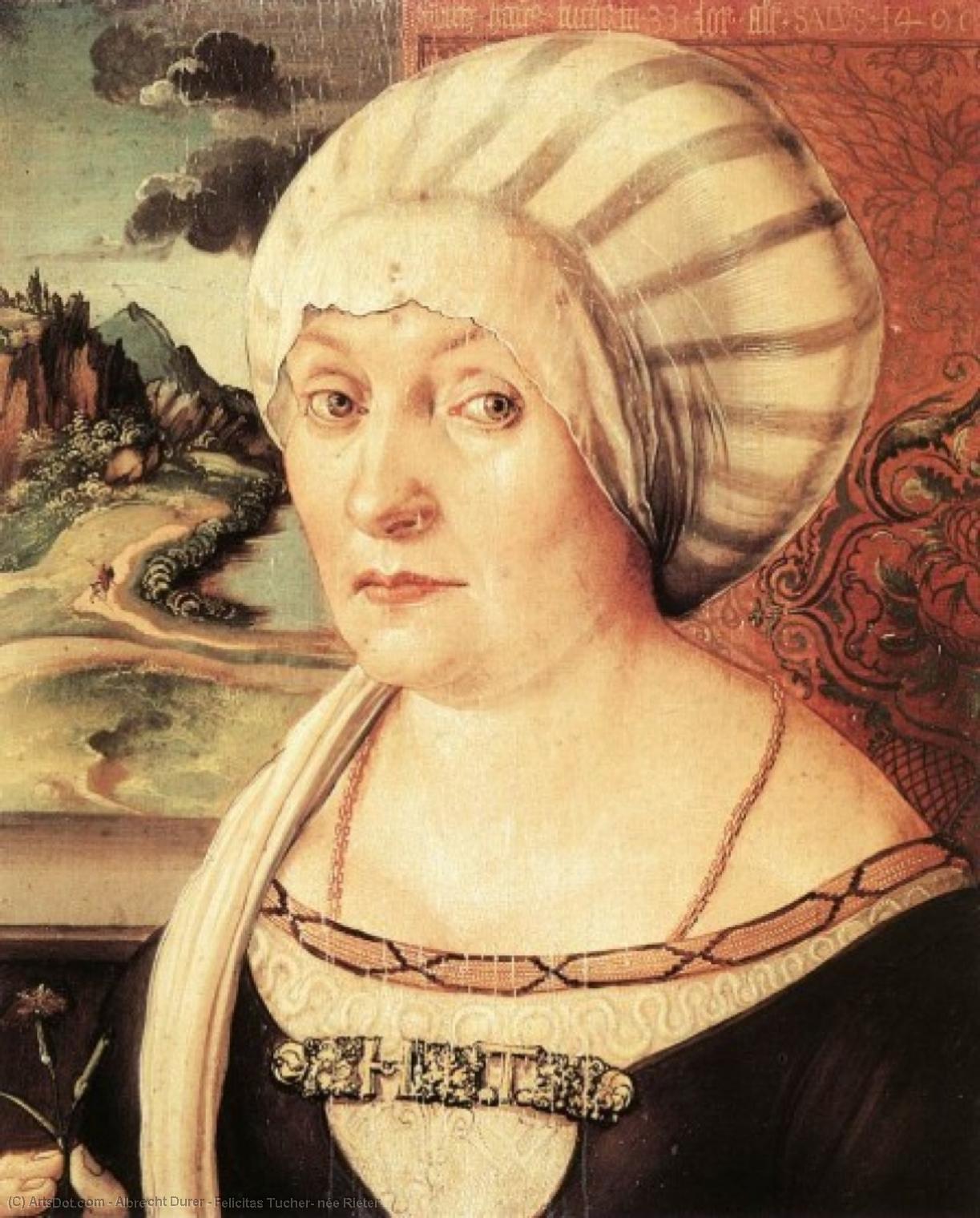
Felicitas Tucher: A Portrait of Dignified Strength
Albrecht Dürer’s “Portrait of Felicitas Tucher, née Rieter,” completed in 1499, stands as a cornerstone of German Renaissance portraiture—a testament to the artist's unparalleled ability to distill human character into visual form. More than just a likeness, it’s an exploration of femininity, piety, and familial responsibility, rendered with meticulous detail and imbued with subtle symbolic gestures that continue to fascinate scholars and art enthusiasts alike.
The painting depicts Felicitas Tucher, wife of Hans Tucher—a prominent Nuremberg merchant and banker—with a solemn gaze directed towards the viewer. Her posture exudes confidence and composure, reflecting her role as matriarch within a wealthy household. Dürer’s masterful use of oil paint on panel allows for nuanced tonal gradations that capture the delicate contours of her face and drapery, creating an illusionistic depth rarely achieved in contemporary art.
Composition and Technique: Precision Meets Emotion
- The composition is strikingly balanced, featuring Felicitas centrally positioned against a muted landscape backdrop. Two figures—presumably Hans Tucher and possibly their son—stand behind her, establishing a hierarchical arrangement that underscores the importance of familial bonds.
- Dürer’s technique exemplifies the meticulous precision characteristic of Northern Renaissance art. He employed sfumato—a subtle blending of tones—to soften edges and create atmospheric haze, enhancing the painting's realism and conveying a sense of contemplative serenity.
- Detailed observation informs every aspect of the artwork; from the precise rendering of Felicitas’s hair to the careful depiction of folds in her gown, Dürer demonstrates an unwavering commitment to capturing the subtleties of human anatomy and texture.
Symbolism: Flowers, Faith, and Domestic Tranquility
Beyond its technical brilliance, “Felicitas Tucher” is rich in symbolic meaning. Felicitas holds a carnation—a flower traditionally associated with purity and devotion—symbolizing her piety and moral virtue. The inclusion of the landscape background represents not merely scenery but also an allusion to paradise—suggesting Felicitas’s aspiration for spiritual fulfillment within the confines of her domestic life.
The artist's careful attention to detail extends beyond mere representation; he subtly conveys a sense of inner peace and contentment. The gaze of Felicitas, combined with the serene expression on her face, speaks volumes about the values held dear by Renaissance society—family stability, religious faith, and dignified grace.
Historical Context: Nuremberg’s Artistic Zenith
"Felicitas Tucher" was created during Nuremberg's artistic flourishing—a period marked by patronage from wealthy merchants like Hans Tucher who championed humanist ideals and supported artists such as Dürer. The painting reflects the broader cultural currents of the time, demonstrating an interest in portraying individuals with psychological depth and capturing the essence of their character.
Its presence at Schlossmuseum Weimar underscores its enduring significance within German art history—a masterpiece that continues to inspire admiration for its artistic merit and provoke contemplation about the complexities of human experience. For those seeking a deeper understanding of Renaissance portraiture, exploring reproductions of “Felicitas Tucher” offers an invaluable opportunity to engage with one of Dürer’s most celebrated achievements.
To learn more about Albrecht Dürer's oeuvre and Schlossmuseum Weimar’s collection, visit List of paintings by Albrecht Dürer or explore the museum’s website at Schlossmuseum Weimar, Germany.