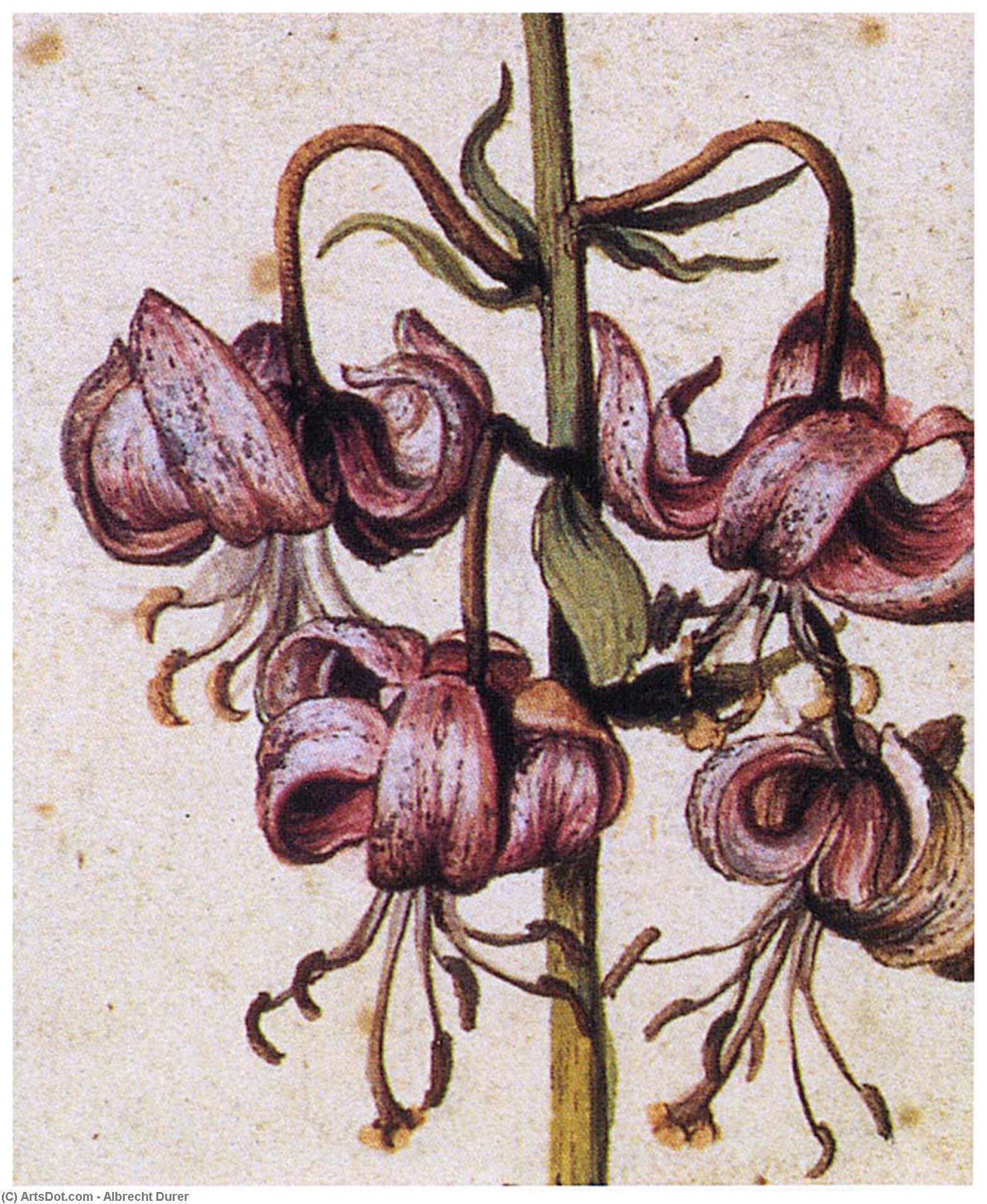
A Study in Fragility: Albrecht Dürer’s *Lillium Martagon*
Albrecht Dürer's Lillium Martagon, a meticulously rendered depiction of these striking lilies, offers a profound meditation on beauty, mortality, and the very nature of observation. Painted during the height of the Northern Renaissance, this work transcends a simple botanical study; it’s a testament to Dürer’s unparalleled skill in capturing not just form but also the delicate essence of life itself. The painting's subject – the martagon lily, with its distinctive turban-shaped flower – was particularly favored by artists and intellectuals of the period for its association with purity, resurrection, and the Virgin Mary. Dürer’s dedication to anatomical accuracy, a hallmark of his artistic practice, is evident in the precise rendering of each petal, stem, and leaf, showcasing an almost obsessive attention to detail that anticipates the scientific rigor of the later Renaissance.
- Technical Mastery: Dürer's mastery of oil paint is immediately apparent. The layering technique – known as *glazing* – allows for a luminous quality, where thin washes of color are built up to create depth and subtle variations in tone. This method, perfected by Dürer himself, contributes significantly to the painting’s ethereal glow.
- Intricate Detail: The artist's painstaking attention to detail is breathtaking. Each lily appears almost three-dimensional, with individual veins and textures rendered with astonishing precision. This level of realism was revolutionary for its time and reflects Dürer’s desire to represent the natural world as accurately as possible.
- Compositional Balance: The arrangement of the lilies within the composition is carefully considered, creating a sense of visual harmony and balance. The varying positions – some hanging gracefully from stems, others standing upright with proud resilience – contribute to the painting’s dynamic energy.
The Northern Renaissance and Symbolism
Dürer's work firmly places him within the context of the Northern Renaissance, a movement characterized by its emphasis on realism, meticulous detail, and personal expression. Unlike the Italian Renaissance, which focused heavily on classical themes and idealized forms, the Northern Renaissance artists were deeply engaged with the natural world around them. The *Lillium Martagon*, therefore, is not merely a botanical illustration; it’s imbued with symbolic meaning. Lilies have long been associated with purity, innocence, and resurrection – qualities central to Christian iconography. Dürer's choice of subject matter reflects his deep religious convictions and his desire to create works that would inspire spiritual contemplation.
Historical Context: Painted during a period of significant artistic and intellectual ferment in Europe, Dürer’s work represents the culmination of centuries of artistic tradition while simultaneously pushing the boundaries of what was possible in painting. His explorations of perspective, anatomy, and color paved the way for future generations of artists.
Dürer's Process: Observation and Representation
Dürer’s approach to creating *Lillium Martagon* exemplifies his rigorous artistic methodology. He began with meticulous observation, painstakingly studying the lilies in his studio before committing them to canvas. He likely created numerous preparatory sketches and studies, documenting every nuance of their form. This dedication to observation is reflected in the painting's remarkable realism. Dürer’s process involved multiple layers of paint, applied with a delicate touch, building up color and detail gradually over time. The artist’s use of light and shadow further enhances the sense of depth and volume, creating an illusion of three-dimensionality that draws the viewer into the heart of the composition.
Emotional Impact and Artistic Legacy
Beyond its technical brilliance, *Lillium Martagon* possesses a profound emotional impact. The painting’s delicate beauty evokes a sense of serenity and contemplation, inviting viewers to pause and appreciate the simple wonders of nature. Dürer's work continues to resonate with audiences today, demonstrating his enduring legacy as one of the greatest artists in history. A hand-painted reproduction offers an unparalleled opportunity to experience the full impact of this masterpiece, bringing its beauty and symbolism into your home or studio.