A Study in Devotion: Albrecht Dürer’s Madonna and Child
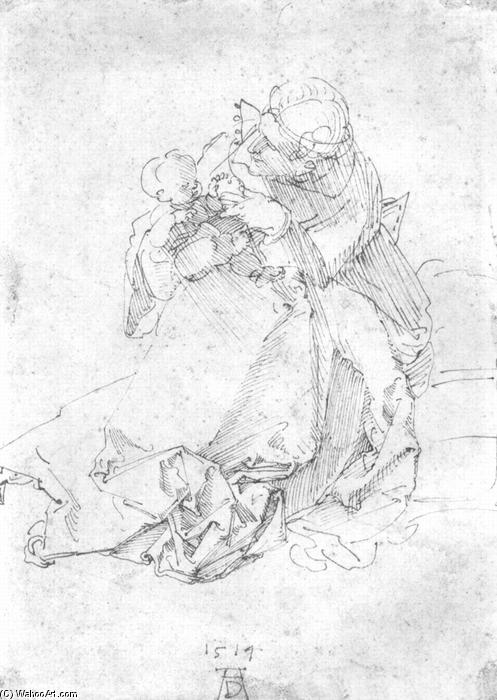
This exquisite pen and ink drawing, a preparatory study of Dürer's celebrated “Madonna and Child,” offers a rare glimpse into the meticulous process behind one of the Northern Renaissance’s most enduring masterpieces. Executed with breathtaking precision, the artwork captures not just the physical likeness of Mary and Jesus, but also the profound emotional core of this iconic subject – tenderness, protection, and an almost palpable sense of divine grace. The drawing's monochrome palette, achieved through masterful hatching and cross-hatching, elevates a simple depiction to a study in tonal depth and texture, revealing Dürer’s unparalleled command of line as a means of conveying form and emotion.
Technical Mastery: Line as Sculpture
- Technique: The artwork is defined by its rigorous technique. Dürer employed precise line work, layering hatching and cross-hatching with astonishing control to build up a complex range of values. This wasn’t merely drawing; it was sculpting with ink, creating the illusion of three-dimensionality through subtle shifts in tone.
- Materials: Crafted from pen (likely a quill for fine detail), rich black ink, and high-quality paper, the materials themselves speak to Dürer's commitment to quality and his belief that the tools used could influence the final outcome.
- Composition & Perspective: The composition is vertically oriented, emphasizing the figures’ height and creating an intimate space around Mary and Jesus. While adhering loosely to Renaissance principles of flattened perspective, Dürer skillfully uses overlapping forms and shading to suggest depth and spatial relationships, a hallmark of his meticulous draftsmanship.
Symbolism and Emotional Resonance
More than just a portrait, this “Madonna and Child” embodies profound religious symbolism. The intimate embrace between Mary and Jesus is not simply a depiction of familial love; it represents the core tenets of Christian faith – divine motherhood, protection, and the promise of salvation. Dürer’s rendering captures a moment of quiet contemplation, suggesting a connection to the spiritual realm. The relaxed posture of the figures further enhances this sense of serenity and devotion, inviting the viewer into a space of reverence.
A Window into the Renaissance Mind
Created by Albrecht Dürer during his formative years (1471-1528), this drawing reflects the artist’s deep engagement with both classical ideals and the burgeoning artistic trends of the Northern Renaissance. Dürer's meticulous draftsmanship, honed in the workshops of Michael Wolgemut, demonstrates a profound understanding of human anatomy and form – qualities that would later define his groundbreaking contributions to art history. This study offers a tangible connection to one of the most influential artists of the era, showcasing not just Dürer’s technical skill but also his intellectual curiosity and unwavering dedication to capturing the beauty and complexity of the human experience.