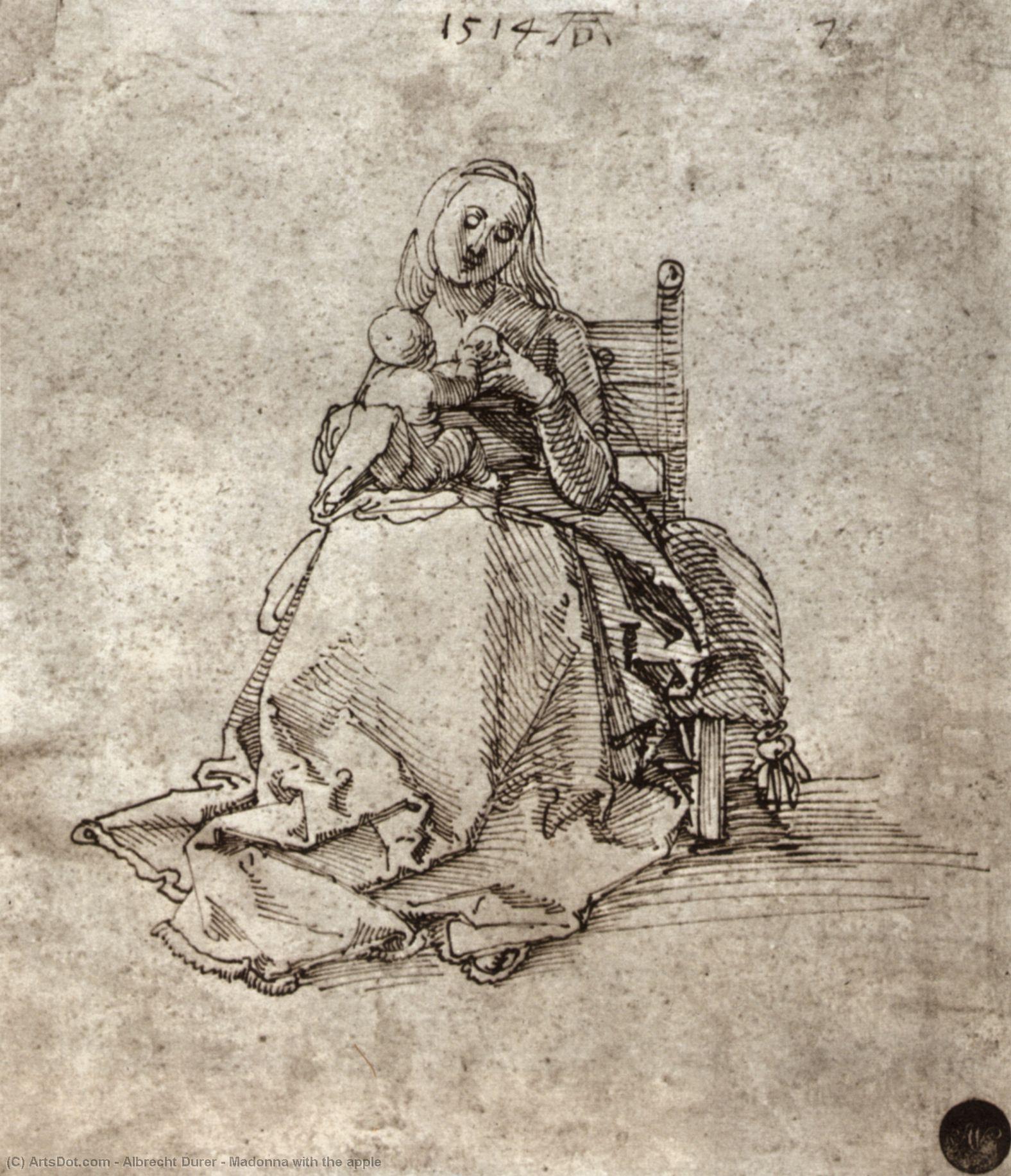
A Timeless Portrait of Devotion: Albrecht Dürer’s Madonna with the Apple
Albrecht Dürer's "Madonna with the Apple," painted during his intensely productive period in the late 15th and early 16th centuries, stands as a cornerstone of German Renaissance art. This exquisite black-and-white depiction transcends mere portraiture; it’s an embodiment of profound faith, maternal love, and the delicate balance between earthly and divine realms. The image, rendered with Dürer's unparalleled technical skill and deeply considered symbolism, continues to resonate with viewers centuries after its creation.
- Subject Matter: The composition centers on a serene Virgin Mary seated in an old-fashioned chair, tenderly holding the infant Christ. The scene captures a moment of intimate connection – the nursing process itself – a universally recognized symbol of nourishment and spiritual sustenance.
- Style & Technique: Dürer’s mastery is immediately apparent in his meticulous attention to detail. Executed in monochrome, the painting relies entirely on subtle gradations of tone and texture to create a remarkable sense of volume and realism. His use of hatching and cross-hatching demonstrates an extraordinary command of line, creating a depth that belies the medium's limitations. The smooth rendering of fabric and skin reflects his study of human anatomy and his desire to depict figures with believable naturalism.
Historical Context & Renaissance Ideals
Dürer’s “Madonna with the Apple” was created within a pivotal moment in European art history – the High Renaissance. While influenced by Italian masters like Botticelli, Dürer developed a distinctly German style that emphasized clarity, precision, and emotional restraint. The painting reflects the humanist ideals of the era, which valued human dignity and celebrated earthly beauty alongside spiritual devotion. The depiction of Mary as a dignified, contemplative figure aligns with the Renaissance’s renewed interest in classical antiquity and its emphasis on intellectual and moral virtue.
- Nuremberg Workshop: Dürer's work was largely produced within his own workshop in Nuremberg, a thriving center for artistic innovation during this period.
- Religious Patronage: The painting likely served as a devotional image for private or ecclesiastical use, reflecting the widespread practice of commissioning religious art to foster piety and reinforce faith.
Symbolism & Iconography
The symbolism embedded within the artwork is rich and layered. The apple itself – often interpreted as the “fruit of knowledge” – subtly alludes to the biblical story of Adam and Eve, representing both temptation and redemption. Mary’s halo signifies her divine status, while her serene expression embodies humility and grace. The chair, a symbol of authority and dignity, reinforces Mary's role as Queen of Heaven. The overall composition evokes a sense of timelessness and spiritual contemplation, inviting the viewer to engage with themes of faith, love, and sacrifice.
Emotional Impact & Artistic Legacy
"Madonna with the Apple" possesses an enduring emotional power that continues to captivate audiences today. Dürer’s ability to convey tenderness, serenity, and profound spirituality through a simple yet exquisitely rendered image is a testament to his genius. This reproduction offers a unique opportunity to own a piece of art history – a window into the soul of one of the greatest artists of the Renaissance. Its timeless beauty makes it an ideal addition to any discerning collection or a striking focal point within interior design, offering a constant reminder of faith, love, and artistic mastery.