The Raw Essence of the Human Form
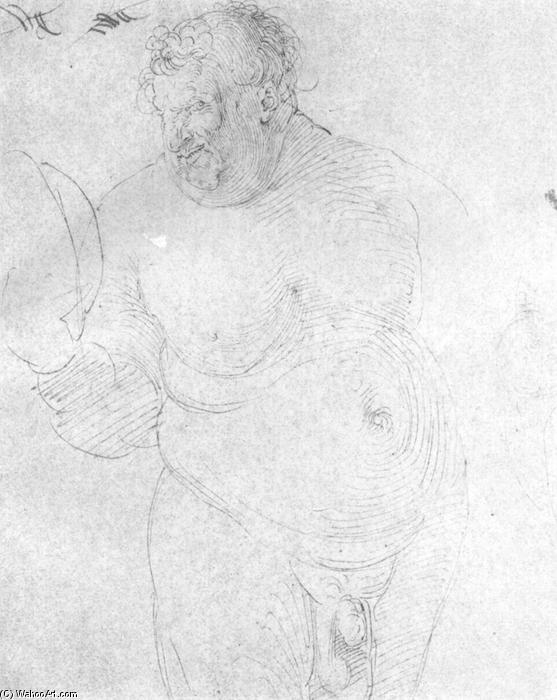
In the quiet, focused intimacy of a pencil sketch, Albrecht Dürer captures something far more profound than mere anatomy; he captures the very pulse of life. Naked Man with Mirror serves as a breathtaking window into the Renaissance mind, where the study of the human body was not merely an artistic exercise but a spiritual and scientific pursuit. The composition is dominated by a central male figure, rendered with a dynamic energy that suggests a moment frozen in time. Through a masterful command of line, Dür er creates a sense of movement, as if the swirling strokes surrounding the subject are echoing the internal vitality of the man himself. For the discerning collector, this piece offers a raw, unadorned glimpse into the preparatory soul of a master, where every hatch mark and shadow contributes to a larger narrative of strength and contemplation.
The technique employed in this work is a testament to Dürer’s unparalleled skill as a draftsman. Eschewing the polished finish of his famous engravings, this sketch embraces the tactile beauty of graphite and paper. The artist utilizes a sophisticated interplay of thick, assertive contours and delicate, ethereal shading to sculpt the musculature of the figure. Through the meticulous use of hatching and cross-hatching, Dürer achieves a remarkable tonal range that breathes three-dimensionality into the two-dimensional plane. This interplay of light and shadow—suggesting a light source from above—accentuates the anatomical precision that made him a titan of the German Renaissance. The visible texture of the paper adds an organic, earthy quality to the work, making it feel less like a static image and more like a living, breathing exploration of form.
Beyond its technical brilliance, the artwork carries a heavy emotional resonance that makes it a captivating centerpiece for any sophisticated interior. There is an inherent vulnerability in the subject's nudity, yet it is balanced by an undeniable sense of power and anatomical dignity. The presence of the mirror, while subtle, invites themes of introspection, self-reflection, and the Renaissance fascination with truth and perception. For interior designers seeking to add depth and intellectual weight to a space, this reproduction provides a perfect balance of classical elegance and modern, minimalist aesthetic. It is a piece that does not merely decorate a wall; it commands the room, inviting viewers to pause, reflect, and connect with the timeless beauty of the human condition.