A Study in Human Drama: Albrecht Dürer's "Not this Man but Barabbas"
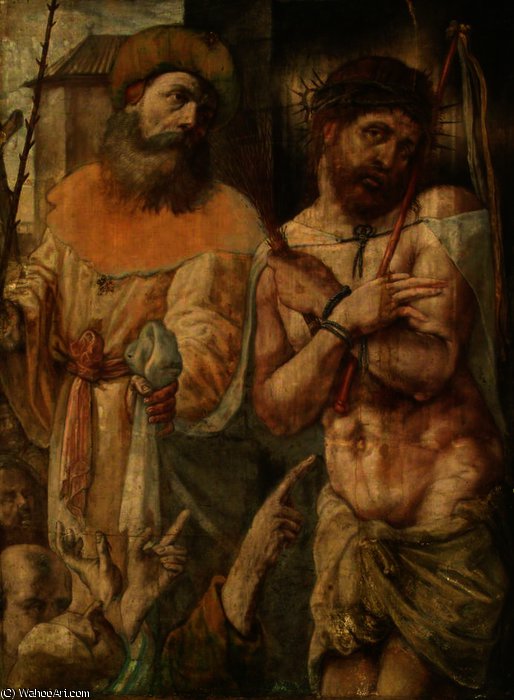
Albrecht Dürer’s “Not this Man but Barabbas,” painted circa 1508, is a profoundly unsettling work that transcends the simple depiction of a biblical scene. It’s a meditation on guilt, judgment, and the agonizing choices faced by humanity – a theme powerfully rendered through Dürer's masterful technique and deeply considered composition. The painting, depicting two men standing in what appears to be a shadowed courtyard, immediately draws the viewer into a palpable tension. One figure gestures emphatically towards the other, his hand raised as if delivering a damning verdict, while the man receiving the accusation stands with a defensive posture, hand resting on his hip – an act of both resistance and vulnerability. The stark contrast in their attire—one cloaked, the other bare-armed—further emphasizes this dynamic, hinting at a division between righteousness and culpability.
The Weight of Biblical Narrative
Dürer’s choice to depict this specific episode from Matthew 27 – the crowd’s rejection of Jesus in favor of Barabbas – is laden with symbolic weight. The story itself represents a critical moment of moral failure, a collective decision driven by fear and prejudice rather than compassion or understanding. Dürer doesn't shy away from portraying the uncomfortable truth: humanity’s capacity for error, its susceptibility to manipulation, and the ease with which it can abandon principles in favor of expediency. The figures are not idealized saints; they possess a raw, almost unsettling realism that forces the viewer to confront their own potential for similar failings.
Dürer's Masterful Technique: A Symphony of Detail
Executed with Dürer’s signature meticulousness, “Not this Man but Barabbas” exemplifies his mastery of engraving and painting. The figures are rendered with an astonishing level of detail – the texture of the robes, the subtle nuances of facial expression, the weight of their bodies – all contribute to a sense of profound realism. Dürer's use of chiaroscuro, the dramatic interplay of light and shadow, intensifies the emotional impact of the scene, creating a palpable atmosphere of suspense and moral ambiguity. The background, though somewhat indistinct, is skillfully rendered to suggest depth and space, further immersing the viewer in the narrative.
- Line Work: Dürer’s precise hatching and cross-hatching create a remarkable sense of volume and texture.
- Color Palette: The muted tones – browns, grays, and ochres – contribute to the painting's somber mood.
- Composition: The dynamic arrangement of figures creates a powerful visual narrative, drawing the viewer’s eye across the canvas.
Symbolism and Emotional Resonance
Beyond its biblical subject matter, “Not this Man but Barabbas” resonates with broader themes of human nature. The gesture of accusation, the defensive posture, and the overall sense of unease speak to our inherent anxieties about judgment, guilt, and the consequences of our actions. Dürer’s work is not merely a historical illustration; it's a timeless exploration of the complexities of morality and the enduring struggle between good and evil within the human soul. The painting evokes a powerful emotional response – a sense of discomfort, perhaps even shame – prompting viewers to contemplate their own roles in shaping the world around them.
ArtsDot.com offers meticulously crafted hand-painted reproductions of this iconic Dürer masterpiece, allowing you to bring its profound beauty and unsettling power into your home or office. Each reproduction is created using archival quality materials and techniques, ensuring that it will retain its vibrancy and detail for generations to come.