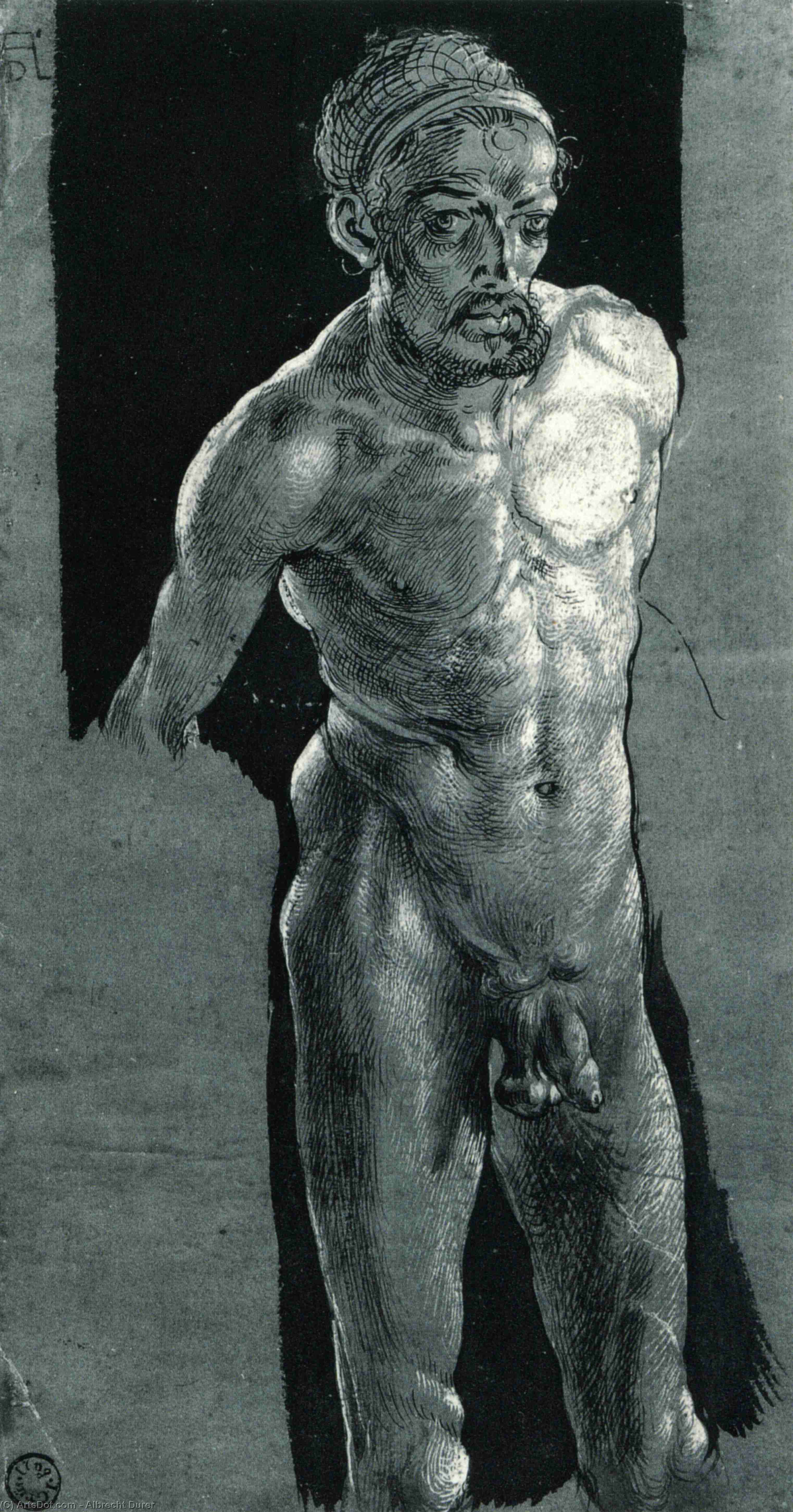
Delve into Northern Renaissance artistry with Albrecht Dürer’s haunting Nude Self-Portrait—a masterful pen drawing showcasing meticulous detail and contemplative introspection. Explore this iconic piece from 1505 and rediscover the beauty of timeless craftsmanship.
Explore the art of Albrecht Dürer, a German Renaissance master! Discover iconic engravings like Melencolia I and detailed self-portraits – a pivotal figure in art history.
A Portrait of Reflection: Decoding Albrecht Dürer’s Nude Self-Portrait
The Nude Self-Portrait by Albrecht Dürer stands as an enduring emblem of Renaissance introspection and artistic mastery—a deceptively simple drawing that speaks volumes about the artist's profound engagement with his own identity and the humanist ideals shaping Europe at the dawn of the sixteenth century. Completed in 1505, this piece transcends mere representation; it’s a carefully constructed meditation on human form, psychological depth, and the pursuit of artistic excellence.
The Northern Renaissance Crucible
Dürer's work resides firmly within the crucible of the Northern Renaissance, a movement that distinguished itself from its Italian counterpart through an unwavering focus on realism and meticulous observation of nature. Unlike the idealized figures favored by Florentine artists like Botticelli, Dürer’s self-portrait confronts viewers with unflinching honesty—a nude male torso rendered in exquisite detail against a starkly minimal background. This stylistic choice wasn't arbitrary; it reflected the humanist conviction that understanding the human body was paramount to comprehending the universe and achieving spiritual enlightenment – a cornerstone of Renaissance thought championed by thinkers like Erasmus and Pico della Mirandola. The broader context of this era is crucial: the rediscovery of classical texts fueled intellectual curiosity and spurred artists to strive for unprecedented accuracy in portraying the human form, mirroring the humanist belief in human potential.
Technique and Texture: Mastering Pen Drawing
Dürer’s technique—pen drawing with extensive use of crosshatching—represents a revolutionary advancement in artistic practice. Employing metalpoint, he achieved unparalleled tonal range and textural complexity through layering lines of varying density. This painstaking process demanded immense patience and precision, resulting in an image imbued with palpable physicality. The subtle gradations of gray created by the crosshatching technique aren’t merely decorative; they convincingly simulate the play of light and shadow on skin, conveying a remarkable sense of realism that would have astonished audiences accustomed to smoother, more stylized depictions. Consider how this method contrasts sharply with fresco painting or oil painting—a testament to Dürer's innovative spirit and his dedication to pushing the boundaries of artistic expression.
Symbolism Beyond Appearance
Beyond its technical brilliance, the Nude Self-Portrait is laden with symbolic significance. The downward gaze of Dürer’s figure isn’t simply a pose; it embodies contemplation and self-awareness—a deliberate gesture that invites viewers to consider their own inner lives. The nudity itself carries multiple layers of meaning: representing vulnerability, honesty, and perhaps even an acknowledgement of mortality. It aligns with the humanist preoccupation with examining human nature from all angles – physical, psychological, and spiritual. Furthermore, Dürer’s meticulous rendering of musculature speaks to his profound understanding of anatomy—a pursuit driven by a desire not only for artistic accuracy but also for elevating humanity through knowledge and contemplation.
A Legacy Enduring Through Reproduction
Today, reproductions of Dürer's Nude Self-Portrait grace galleries and homes across the globe, allowing audiences everywhere to appreciate its timeless beauty and intellectual depth. ArtsDot.com offers exceptional quality prints that faithfully capture the nuances of Dürer’s original drawing—a chance to experience firsthand the legacy of a true Renaissance innovator.