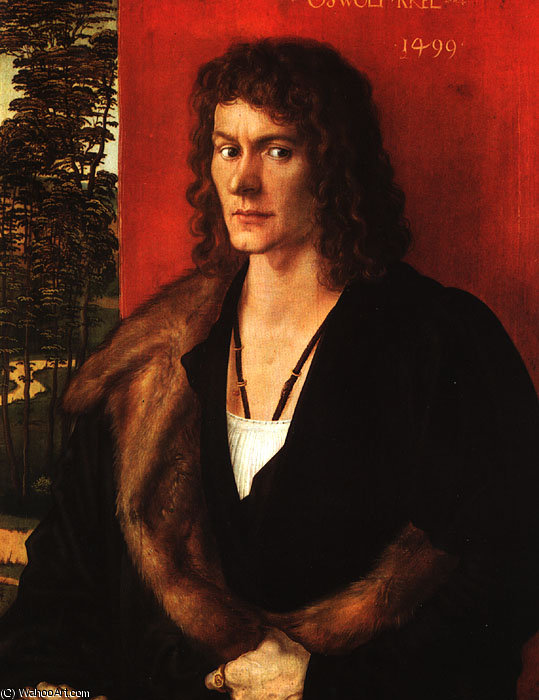
Albrecht Dürer’s ‘Oswolt krel - merchant of lindau, 1499’ presents a strikingly realistic portrait of a Nuremberg merchant, capturing his serious gaze and luxurious attire against a vibrant red backdrop. Discover this iconic Renaissance masterpiece and bring its timeless beauty into your space.
Oswolt krel - Merchant of Lindau, 1499: A Window into Renaissance Commerce
Albrecht Dürer’s “Oswolt krel – merchant of Lindau, 1499,” a captivating portrait housed within the Alte Pinakothek in Munich, offers more than just a depiction of an individual; it's a meticulously crafted snapshot of late 15th-century commerce and social standing. The painting immediately draws the eye to its subject, a man radiating quiet authority and a subtle air of wealth. His long hair, neatly arranged, speaks to contemporary fashion trends while his serious gaze – fixed directly on the viewer – establishes an immediate connection, inviting us into his world. Dürer’s masterful use of light and shadow sculpts Oswolt's features, imbuing him with a palpable sense of presence. The rich crimson background isn't merely decorative; it serves to elevate Oswolt, highlighting his importance within the scene and echoing the luxurious fabrics he wears.
The Precision of Dürer’s Technique
- Oil on Panel: Dürer employed oil paint on a wooden panel, a technique that allowed for unprecedented detail and luminosity – hallmarks of his artistic prowess. The smooth gradations of color, particularly in the rendering of Oswolt's clothing and the subtle textures of his fur-lined cloak, demonstrate his command of chiaroscuro, the dramatic use of light and dark to create depth and form.
- Detailed Observation: Dürer’s meticulous observation is evident in every detail, from the individual strands of hair to the folds of fabric. This level of realism was revolutionary for portraiture at the time and reflects his commitment to scientific accuracy in art.
- Woodcut Influence: Despite his mastery of oil painting, Dürer's background as a woodcut artist subtly influences the composition, particularly in the crisp lines and graphic quality of Oswolt’s attire.
Symbolism and Context – The Merchant Class of Lindau
The subject of the painting, Oswolt krel, was a prominent merchant from Lindau, a free imperial city on Lake Constance in Southern Germany. Lindau’s strategic location as a trading hub between Central Europe and Northern Italy made its merchants incredibly wealthy and influential. Dürer's decision to portray a Lindau merchant speaks volumes about the burgeoning importance of trade during the Renaissance. The fur collar, a symbol of status and wealth, further emphasizes Oswolt’s position within this elite class. The painting is not simply a portrait; it’s a testament to the economic power and social mobility that characterized the era.
A Legacy of Innovation
"Oswolt krel – merchant of Lindau, 1499" stands as a pivotal work in Albrecht Dürer's oeuvre and a cornerstone of Renaissance portraiture. It exemplifies his innovative approach to realism, his technical brilliance, and his ability to capture not just the physical likeness of his subject but also their character and social standing. Dürer’s influence extended far beyond his own lifetime, shaping the course of art history for centuries to come. ArtsDot.com offers a faithful hand-painted reproduction that allows you to experience the enduring power and beauty of this remarkable masterpiece.