The Paumgartner Altar: A Window into Renaissance Faith and Family
Albrecht Dürer’s 1503 *Paumgartner Altar*, specifically the central panel depicting the Nativity, stands as a remarkable testament to the artist's skill and the burgeoning humanist spirit of the German Renaissance. More than just a religious scene, it offers a profound glimpse into the lives and aspirations of a prominent Nuremberg family – the Paumgärtners – and their deeply held faith. The altar itself, a triptych comprising this central panel flanked by depictions of Saint George and Saint Eustace, was commissioned as a devotional statement, intended to adorn a private chapel within their home. Dürer’s masterful execution elevates it beyond mere decoration, transforming it into a complex tapestry of religious narrative, familial pride, and artistic innovation.
The panel's composition is immediately striking. The Nativity scene unfolds within a deliberately ambiguous architectural setting – a crumbling structure reminiscent of ancient ruins—a motif frequently employed by Renaissance artists to juxtapose the divine with the earthly, highlighting the humility of Christ’s birth. Mary and Joseph kneel before the infant Jesus, bathed in an ethereal light that suggests both holiness and vulnerability. The figures are rendered with meticulous detail, capturing not just their physical forms but also a sense of emotional depth. Note particularly the expressive faces of Mary and Joseph, conveying tenderness and devotion. The surrounding landscape, meticulously painted with a remarkable attention to perspective and naturalism, further grounds the scene in reality while simultaneously hinting at a timeless quality.
Technique and Materials: A Masterclass in Printmaking
Dürer’s genius lies not only in his subject matter but also in his unparalleled mastery of printmaking, particularly engraving. He employed a technique known as *burin*, using a sharp tool to cut lines into a metal plate – typically copper or zinc – creating an intaglio image that would then be inked and pressed onto paper. This process allowed for incredible detail, tonal variation, and the ability to create subtle gradations of light and shadow—a feat rarely achieved in painting at the time. The *Paumgartner Altar* showcases this skill brilliantly; observe the delicate rendering of fabrics, the intricate details of the landscape, and the nuanced expressions on the figures’ faces. Dürer's innovative use of hatching and cross-hatching creates a remarkable sense of depth and texture, bringing the scene to life with astonishing realism.
The choice of lime panel as the support for this artwork was also significant. Lime panels were favored by artists because they were relatively stable and allowed for greater detail than wood panels. The use of oil paints on the panel further enhanced the richness and luminosity of the colors, contributing to the overall visual impact of the work.
Symbolism and Family Identity
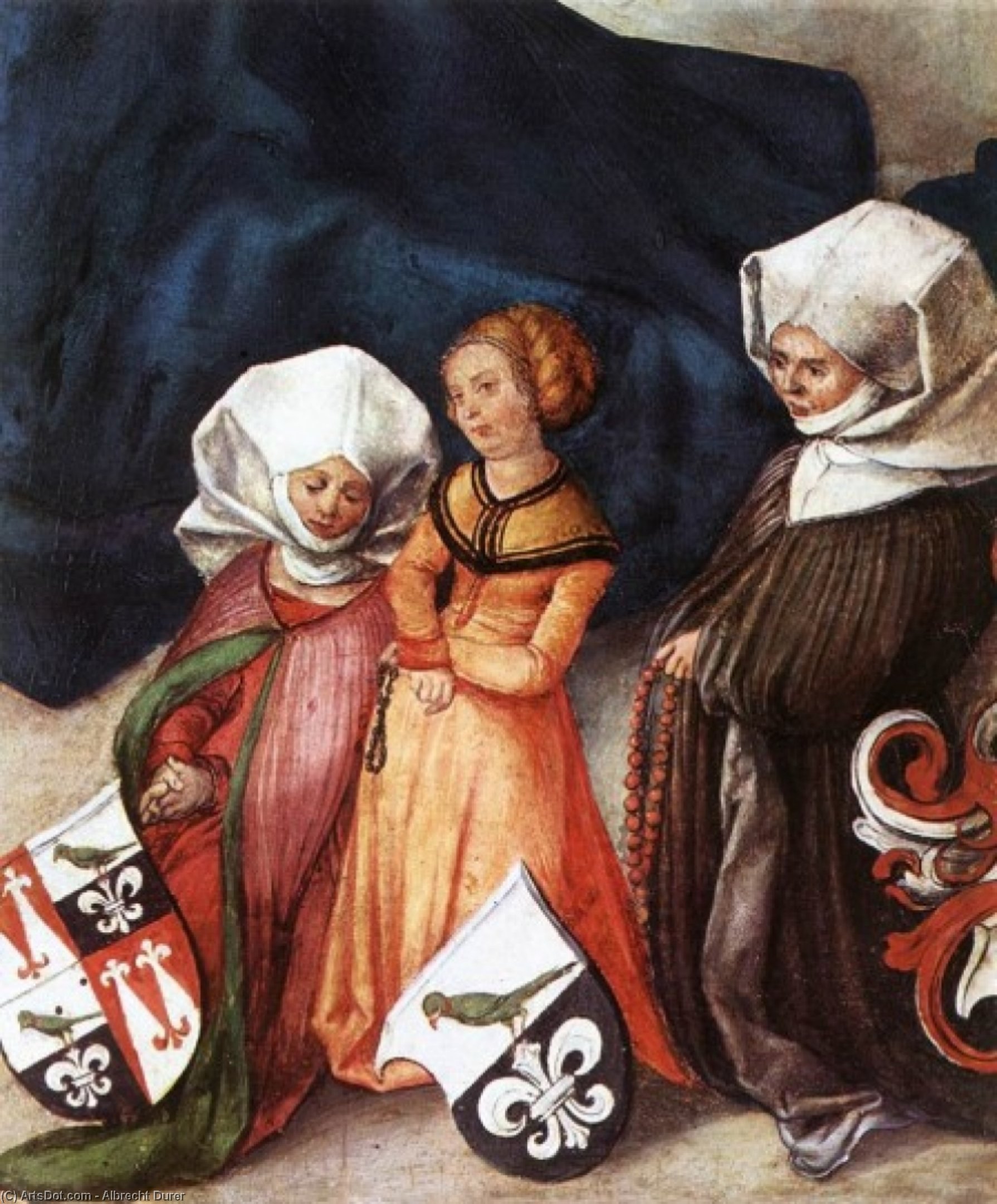
Beyond the religious narrative, the *Paumgartner Altar* is deeply intertwined with the identity of the Paumgartner family. The small figures at the bottom corners of the central panel – depicting Stephan and Lukas Paumgartner—are not merely spectators but are explicitly identified as the patrons of the altar. Their coats of arms, prominently displayed, assert their status and connection to the sacred scene. This practice of incorporating donor portraits into religious works was common during this period, reflecting a desire for personal piety and a belief that one’s patronage would ensure salvation. The saints depicted on either side—Saint George and Saint Eustace—were chosen as family emblems, further solidifying their lineage and connection to the divine.
A Legacy of Innovation and Emotion
The *Paumgartner Altar* is a pivotal work in Dürer’s oeuvre and a landmark achievement in Northern Renaissance art. It represents a synthesis of religious devotion, humanist ideals, and artistic innovation. The painting's enduring appeal lies not only in its technical brilliance but also in its ability to evoke a profound sense of empathy and wonder. It is a poignant reminder of the intersection between faith, family, and the human desire for beauty and meaning—a timeless masterpiece that continues to captivate viewers centuries after its creation.