Albrecht Dürer's Paumgartner Altar: A Portrait of Civic Duty
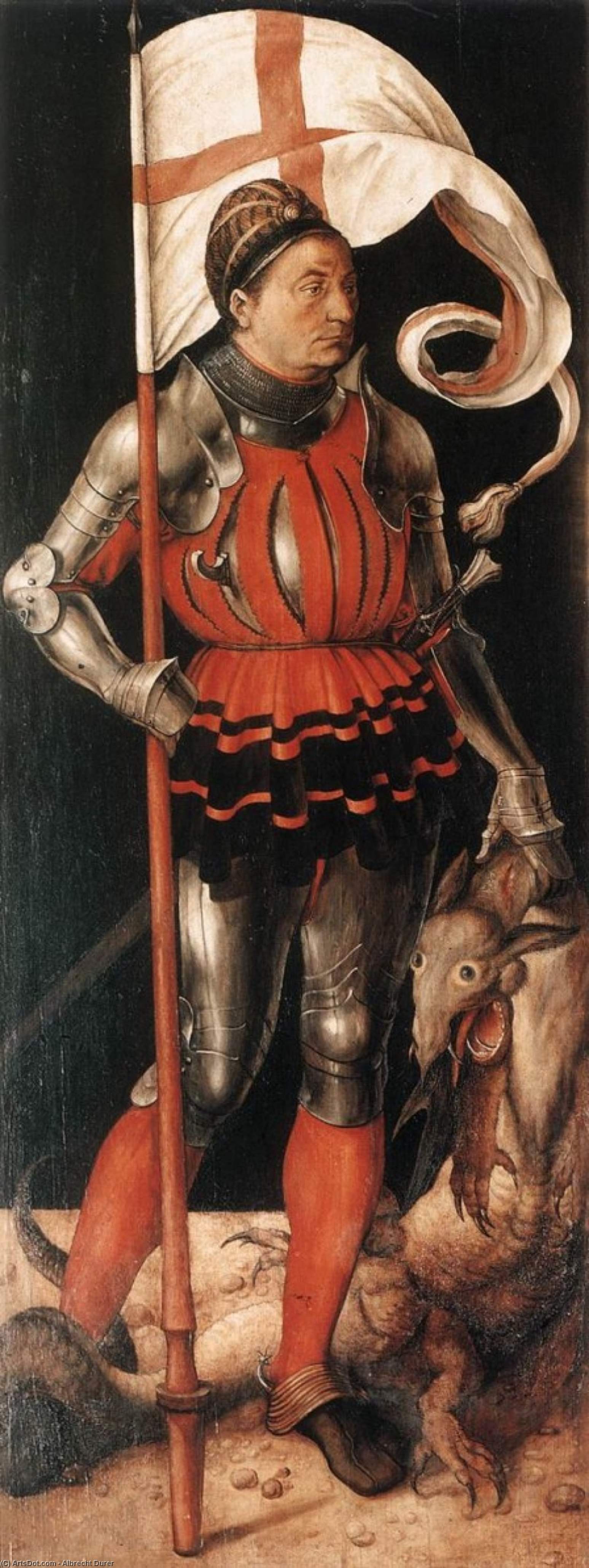
This meticulously rendered panel, part of Albrecht Dürer’s famed Paumgartner Altar (left wing), offers a captivating glimpse into the world of 16th-century civic life and military prestige. Executed in 1503, this work transcends a simple portrait; it is a carefully constructed statement about honor, loyalty, and the burgeoning ideals of the German Renaissance. The subject, identified as Hans Paumgartner, a prominent Nuremberg city official and captain of the guilds, stands as a symbol of civic virtue – a man embodying both martial prowess and responsible leadership. Dürer’s masterful handling of detail elevates this scene beyond mere representation, transforming it into a powerful visual narrative.
- Subject & Composition: The central figure is depicted in full plate armor, a hallmark of the era signifying military readiness and protection. His stance is formal yet relaxed, suggesting confidence and authority. The inclusion of two dogs flanking him reinforces this theme – loyal companions and symbols of fidelity.
- Technical Brilliance: Dürer’s meticulous attention to detail is immediately apparent in the rendering of the armor's intricate surface textures, the folds of his clothing, and the realistic portrayal of the animals. This level of realism was revolutionary for its time, showcasing Dürer’s unparalleled skill as a draughtsman and his innovative approach to oil painting technique.
- Color Palette & Lighting: The subdued color palette – dominated by earthy tones of brown, grey, and ochre – contributes to the solemnity of the scene. Dürer employs subtle gradations of light and shadow, creating a sense of depth and volume that draws the viewer’s eye directly to Paumgartner.
The Symbolism of Armor and Heraldry
Beyond the immediate depiction of Paumgartner, the painting is laden with symbolic meaning. The armor itself represents not just physical protection but also the weight of responsibility and the demands of public service. The flag held aloft – a likely heraldic symbol representing his guild or family – further emphasizes his status and allegiance. Dürer’s use of heraldry was carefully considered, reflecting the importance of lineage and social standing within Nuremberg society. The presence of the birds, often associated with freedom and divine guidance, adds another layer to the symbolism, suggesting that Paumgartner is guided by a higher purpose in his role as a civic leader.
- Armor as Status: In the early 16th century, armor was not merely functional; it was a potent visual marker of wealth and authority. Dürer’s depiction accurately reflects this social significance.
- Heraldic Representation: The flag's design would have been instantly recognizable to contemporary viewers, reinforcing Paumgartner's identity within the city's complex social hierarchy.
Dürer’s Innovation and the Renaissance Ideal
This work exemplifies Dürer’s pivotal role in shaping the artistic landscape of the German Renaissance. He was a pioneer in integrating classical ideals with Northern European traditions, resulting in a style characterized by both realism and intellectual depth. His exploration of perspective, anatomy, and psychological portraiture – evident here in Paumgartner's confident gaze – profoundly influenced generations of artists. The painting’s ambition reflects the Renaissance humanist emphasis on individual achievement and civic engagement, capturing a moment of power and responsibility within the context of Nuremberg’s thriving urban center.
- Perspective & Realism: Dürer's mastery of linear perspective creates a convincing illusion of depth, enhancing the realism of the scene.
- Psychological Portraiture: The subject’s expression conveys a sense of self-assuredness and authority, reflecting Dürer’s interest in capturing not just physical likeness but also inner character.
A Timeless Masterpiece – Recreated for Today
ArtsDot.com is proud to offer a meticulously crafted hand-painted reproduction of Albrecht Dürer's *Paumgartner Altar (left wing)*. This faithful recreation captures the essence of Dürer’s original, allowing you to experience the power and beauty of this iconic artwork in your own space. Perfect for collectors, art enthusiasts, or interior designers seeking a touch of Renaissance grandeur, our reproduction ensures that this masterpiece will be enjoyed for generations to come.