A Dance of Life and Line: The Vitality of Dürer’s Masterpiece
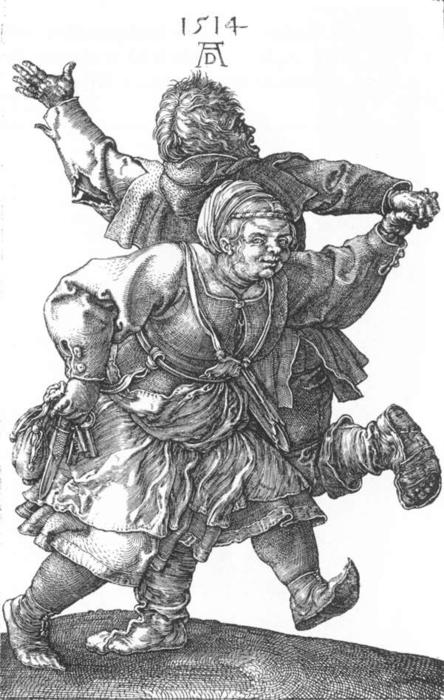
In the quiet intimacy of a single copperplate engraving, Albrecht Dürer managed to capture the thunderous pulse of human existence. Peasant Couple Dancing, executed in 1514, is far more than a mere depiction of rural merriment; it is a profound study of movement, texture, and the raw energy of the Northern Renaissance. As the viewer’s eye meets the figures, there is an immediate sense of being pulled into a private moment, frozen in time yet vibrating with potential motion. The composition utilizes a dynamic diagonal thrust that guides us through the physical struggle and joy of the dancers, creating a tension that feels both grounded in the earth and elevated by artistic genius.
The brilliance of this work lies in Dürer’s unparalleled command over the medium of engraving. Through the meticulous application of hatching and crosshatching, he transforms monochromatic ink into a rich tapestry of tactile sensations. One can almost feel the coarse weight of the peasants' clothing, the ruggedness of their skin, and the rhythmic tension in their muscles. Every fine line serves a purpose, building volume and shadow to create a sculptural presence that defies the flatness of the paper. For the discerning collector or interior designer, this level of detail offers a sophisticated focal point, bringing a sense of historical depth and structural complexity to any curated space.
Symbolism and the Spirit of an Era
To look upon these figures is to witness the intersection of social reality and profound symbolism. Created during the transformative era of the Reformation, the engraving carries the weight of a changing world. While the subject matter—the common folk—might initially seem humble, Dürer elevates them to monumental status. The woman, often noted as the focal point, gazes with an assertive, almost commanding presence. The subtle inclusion of items at her waist, such as keys or a purse, hints at themes of authority and domestic stability amidst the swirling winds of societal upheaval.
There is a captivating duality in this piece: it celebrates the unrefined, boisterous nature of life while simultaneously showcasing the disciplined, mathematical precision of the artist’s hand. This interplay between the "low-brow" subject and the "high-art" technique creates an intellectual resonance that continues to fascinate scholars and art lovers alike. It is a work that speaks to the human condition—our capacity for celebration, our inherent struggles, and our enduring connection to the rhythms of nature and community.
An Enduring Legacy for the Modern Collector
For those seeking to infuse their surroundings with character and intellectual gravity, a high-quality reproduction of Peasant Couple Dancing serves as an exquisite bridge between the past and the present. The monochromatic palette offers a timeless elegance that integrates seamlessly into both minimalist contemporary interiors and more traditional, classical settings. It provides a sophisticated anchor for a gallery wall or a singular, commanding presence in a study or library.
Owning a piece inspired by Dürer is an invitation to contemplate the mastery of the Northern Renaissance every day. It is an investment in a legacy of realism, emotion, and technical perfection. Whether you are drawn to the rhythmic energy of the dance or the intricate shadows etched into the metal plate, this artwork promises to evoke a sense of wonder and a deep appreciation for the enduring power of the human spirit captured in ink.