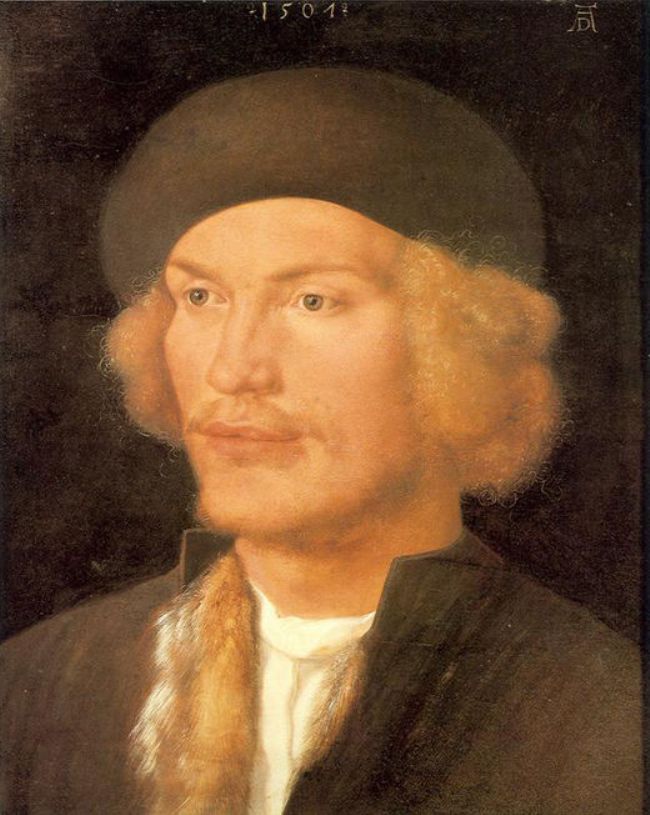
A Window into Renaissance Identity: Albrecht Dürer’s “Portrait of a Young Man 3”
Albrecht Dürer's "Portrait of a Young Man 3," a captivating oil on canvas, offers an intimate glimpse into the burgeoning artistic and social landscape of the Northern Renaissance. Painted in the early 16th century, this work transcends a simple likeness; it’s a carefully constructed statement about identity, status, and the emerging ideals of portraiture during a period of profound intellectual and artistic transformation. The subject, a young man with meticulously rendered blonde hair and a confident gaze, embodies the aspirations of his time – a burgeoning merchant or perhaps a rising professional seeking to establish himself within the increasingly complex social hierarchy of Nuremberg.
Technical Mastery and Northern Renaissance Style
- Oil on Canvas: Dürer’s masterful use of oil paint allowed for an unprecedented level of detail and tonal subtlety, a hallmark of his technique. The smooth gradations of color, particularly in the rendering of the hair and clothing, demonstrate his command of light and shadow – a crucial element in creating depth and realism.
- Northern Renaissance Precision: Rooted firmly within the Northern Renaissance style, this portrait eschews the idealized beauty often favored by Italian artists. Instead, Dürer presents a remarkably naturalistic depiction, emphasizing individual character and psychological observation. The slightly awkward pose, the subtle furrow of his brow, and the direct engagement with the viewer invite a sense of connection and shared humanity.
- Detailed Rendering: Notice the painstaking attention to detail – the texture of the velvet waistcoat, the intricate patterns on the hat, the precise lines of the mustache. These elements were not merely decorative; they served as markers of wealth, status, and personal taste, reflecting the values of the time.
Symbolism and Social Context
The portrait is more than just a representation of an individual; it’s imbued with symbolic meaning reflective of the era. The hat, a fashionable accessory for young men of means, signifies status and social standing. The suit itself speaks to his profession or trade – a common motif in Renaissance portraits. Dürer's meticulous rendering of these details underscores the importance of material possessions as indicators of success and belonging within the rigidly stratified society of Nuremberg.
Furthermore, the direct gaze of the subject is significant. It establishes an immediate connection with the viewer, inviting participation in the act of observation and contemplation – a characteristic feature of Renaissance portraiture that sought to capture not just appearance but also the inner life of the sitter.
Dürer’s Legacy: A Master at Work
"Portrait of a Young Man 3" stands as a testament to Albrecht Dürer's unparalleled skill and vision. As one of the most influential artists of the Renaissance, Dürer pushed the boundaries of artistic expression, blending technical virtuosity with profound psychological insight. His work continues to resonate today, offering a powerful reminder of the enduring human desire for self-representation and the transformative power of art.
ArtsDot offers meticulously crafted hand-painted reproductions that capture the essence of this iconic masterpiece, allowing you to bring Dürer’s vision into your home or office. Each reproduction is created using traditional techniques and archival materials, ensuring its longevity and beauty for generations to come.