A Glimpse into Renaissance Venice
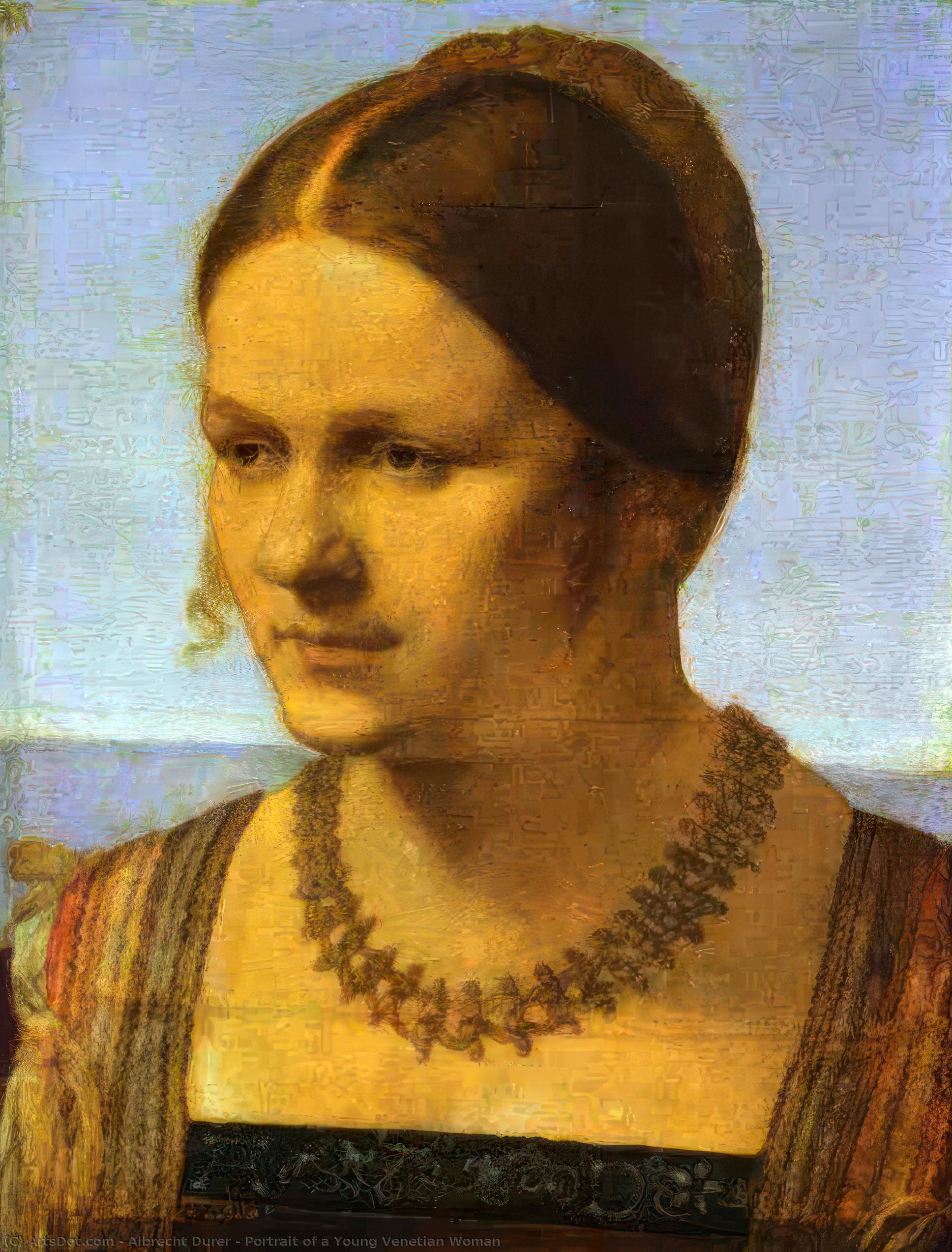
Painted in 1505 during Albrecht Dürer’s second visit to Italy, this captivating portrait offers a rare and intimate glimpse into the world of Venetian women during the High Renaissance. More than just a likeness, it's a study in quiet contemplation and subtle beauty, showcasing Dürer’s masterful adaptation of Italian artistic techniques within his Northern European sensibility.
Artistic Style & Technique
This work exemplifies Dürer’s evolving style, bridging the gap between the meticulous detail characteristic of German art and the softer, more atmospheric qualities favored by Venetian masters like Giovanni Bellini – whom Dürer greatly admired during this period. Executed in oil on panel, the painting demonstrates a remarkable delicacy of touch. Notice the soft blending of tones, particularly in the rendering of skin, and the subtle modeling that gives form to the subject’s face. While possessing a degree of finish, there's an intentional looseness, hinting at the artist’s process and lending an immediacy rarely found in formal portraiture.
Historical & Cultural Context
Dürer’s travels to Italy were pivotal in shaping his artistic vision. He sought to learn from the innovations of Italian Renaissance artists, absorbing their understanding of anatomy, perspective, and composition. This portrait reflects that influence, yet retains a distinctly Northern aesthetic. Commissioned portraits like this served not only as records of individual likenesses but also as statements of social status and refinement. The sitter’s elegant attire and composed demeanor speak to her position within Venetian society.
Symbolism & Interpretation
The subject's averted gaze invites introspection, suggesting a private world of thought and emotion. Her dark necklace, comprised of small beads or stones, could symbolize wealth or social standing, while the simple yet elegant dress reflects a restrained elegance. The indistinct background focuses all attention on the woman herself, emphasizing her inner life rather than external surroundings. The unfinished quality in certain areas adds to the sense of immediacy and vulnerability.
Emotional Resonance & Interior Appeal
This portrait evokes a mood of quiet melancholy and serene beauty. It’s a work that rewards close viewing, revealing subtle nuances in expression and technique. As a reproduction, this piece brings a touch of Renaissance sophistication to any interior. Its muted color palette – warm browns, ochres, creams contrasted with cool blues and greens – complements a variety of décor styles, from traditional to contemporary. It’s an ideal choice for those seeking artwork that is both visually stunning and intellectually stimulating.
A timeless masterpiece by one of the greatest artists in history, this portrait offers a captivating window into the Renaissance world and continues to resonate with viewers today.