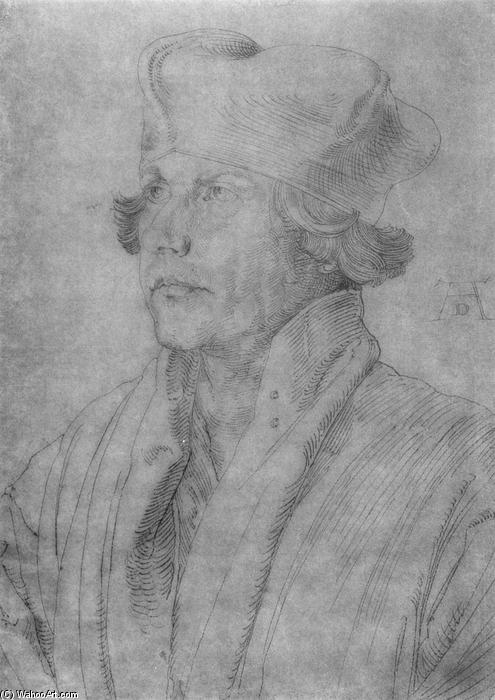
A Study in Dignity: Albrecht Dürer's Portrait of Cardinal Lang von Wellenburg
Albrecht Dürer’s “Portrait of Cardinal Lang von Wellenburg” is more than simply a depiction of a 16th-century ecclesiastical figure; it’s a meticulously crafted meditation on status, contemplation, and the very nature of representation. Executed in the late 1520s, during a period of profound artistic and intellectual ferment within the German Renaissance, this monochrome portrait embodies Dürer's mastery of Northern Renaissance style – a style characterized by an almost obsessive attention to detail, a commitment to realism that bordered on scientific observation, and a deeply considered approach to capturing the individual’s essence. The work’s enduring power lies not just in its technical brilliance but also in the quiet dignity it conveys, inviting viewers to engage with the cardinal's serious gaze and contemplate the weighty responsibilities of his position.
Technical Mastery: Line as Sculpture
Dürer’s technique is immediately striking. Rendered entirely in pen and ink on paper, the portrait relies almost exclusively on a complex interplay of lines – hatching, cross-hatching, and fine contours – to build form and texture. This isn't merely drawing; it’s line as sculpture. The artist employs an astonishing level of control, layering lines with varying densities to create subtle gradations of tone that model the cardinal’s face, clothing, and fur collar with remarkable accuracy. Notice how the delicate strokes mimic the weave of the fabric, suggesting a tangible quality that elevates the image beyond a simple likeness. The meticulous execution speaks volumes about Dürer's dedication – a testament to his belief in line as the fundamental building block of visual representation.
Symbolism and Status: A Portrait of Power
The portrait’s composition is steeped in symbolism, reflecting Cardinal Lang von Wellenburg’s elevated position within the Catholic Church. The three-quarter pose, a favored format in Renaissance portraiture, emphasizes the sitter's authority and presence. His attire – rich fabrics, elaborate fur collar – are not merely decorative; they are potent symbols of wealth, power, and ecclesiastical status. The cardinal’s serious expression, coupled with his direct gaze, conveys an air of dignity and contemplation, suggesting a mind preoccupied with spiritual matters. The subdued color palette—a carefully controlled grayscale—further enhances the solemnity of the scene, reinforcing the portrait's function as a visual declaration of power and piety.
Dürer’s Legacy: A Masterpiece of Northern Renaissance Portraiture
“Portrait of Cardinal Lang von Wellenburg” stands as a pivotal work in Albrecht Dürer’s oeuvre and a cornerstone of Northern Renaissance portraiture. It exemplifies his innovative approach to realism, his profound understanding of human anatomy, and his masterful control of line. The piece's enduring appeal lies not only in its technical brilliance but also in the quiet dignity it conveys – a quality that continues to resonate with viewers centuries later. This reproduction offers an unparalleled opportunity to experience firsthand the genius of one of history’s greatest artists, bringing this iconic portrait into your home or office.