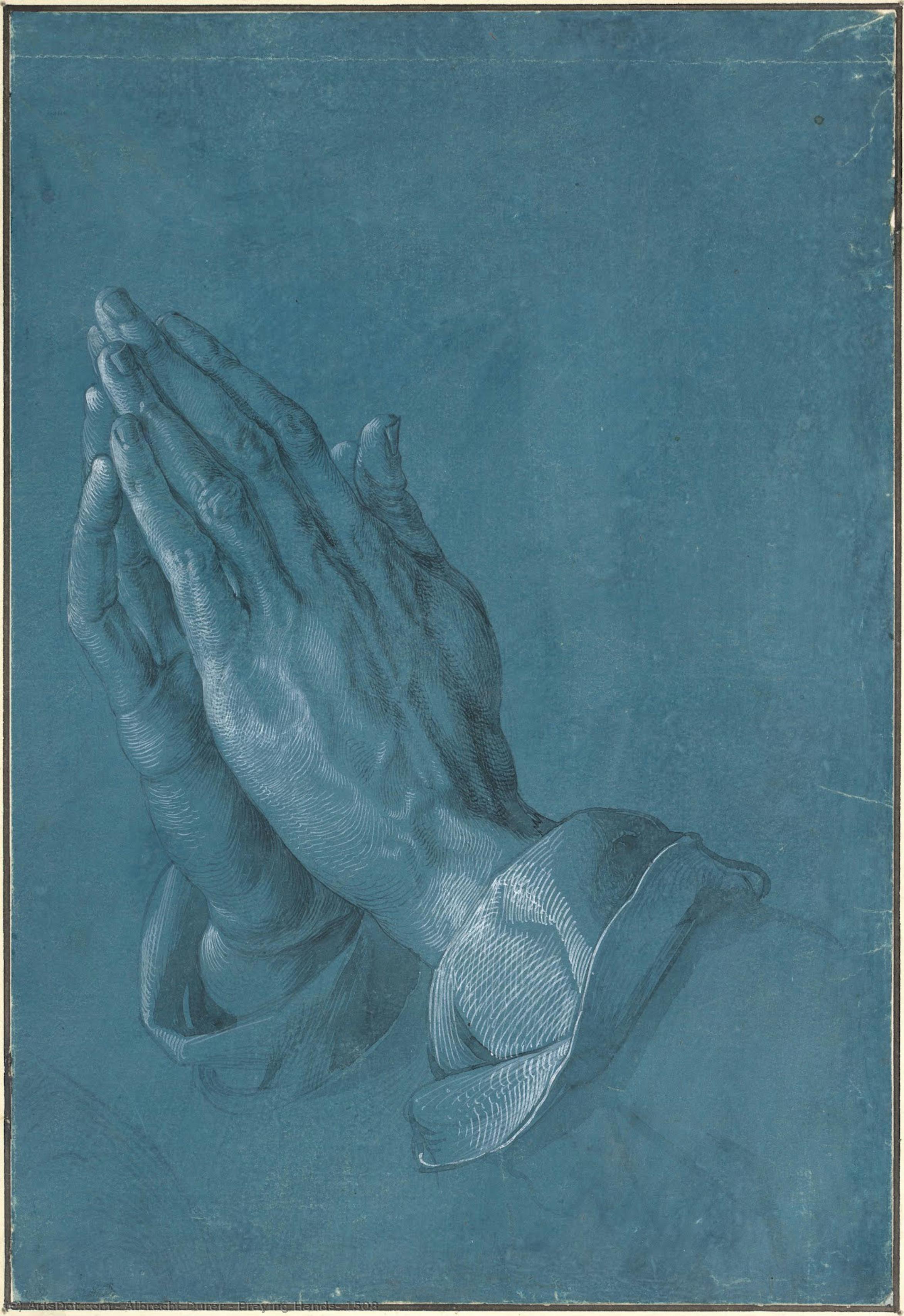
The Profound Silence of Hands: Albrecht Dürer’s “Praying Hands”
Albrecht Dürer's "Praying Hands," created in 1508, isn’t merely a depiction of two hands clasped in prayer; it’s an arresting meditation on faith, devotion, and the very essence of human connection. This exquisitely rendered pen-and-ink drawing, now residing within the hallowed halls of Vienna's Albertina museum, transcends its humble medium to become a timeless symbol of spiritual yearning. Dürer, a pivotal figure in the German Renaissance, masterfully captures an almost unbearable stillness – a silence brimming with profound meaning that continues to resonate centuries later.
The drawing itself is deceptively simple. Two male hands, rendered with meticulous detail and utilizing Dürer’s signature technique of white heightening against a rich blue paper stock, are presented in a gesture of supplication. The fingers are elegantly folded, the palms open, suggesting an offering to something beyond our immediate comprehension. Notice the subtle variations in texture – the delicate creases of the skin, the slight curve of the knuckles, the way the ink subtly catches the light. These aren’t just anatomical studies; they're imbued with a palpable sense of humanity, reflecting Dürer’s profound understanding of the human form.
A Window into Renaissance Florence and Beyond
Dürer’s creation emerged during a period of intense artistic and intellectual ferment in Europe. The High Renaissance was flourishing in Italy – Florence, Venice, Rome – inspiring artists to push the boundaries of realism and explore new techniques. Dürer, having spent several years immersed in the Italian art scene, brought these influences back to his native Nuremberg. “Praying Hands” is a testament to this exchange; it embodies the meticulous observation of nature that characterized Renaissance art while simultaneously retaining a distinctly Northern European sensibility.
Interestingly, the drawing’s origins are linked to a larger project – the "Heller Altarpiece," a monumental triptych commissioned for St. Elizabeth's Church in Frankfurt. The hands were intended as central figures within this grand composition, but tragically, the altarpiece was destroyed by fire in 1729, leaving only fragments and sketches behind. Despite this loss, “Praying Hands” stands alone as a masterpiece, its power undiminished.
Decoding the Symbolism: Faith, Humanity, and Mortality
The symbolism embedded within "Praying Hands" is layered and open to interpretation. The hands themselves represent humanity – our capacity for both profound faith and earthly concerns. The gesture of prayer signifies a connection with the divine, a plea for guidance and solace. The inclusion of a clock and a book—elements subtly integrated into the composition—adds further layers of meaning. The clock serves as a reminder of the fleeting nature of time, while the book symbolizes knowledge and wisdom – suggesting that true understanding comes through both faith and reason.
Some art historians have suggested that Dürer was drawing upon biblical imagery, specifically referencing the story of Jacob wrestling with an angel in Genesis. The hands’ posture mirrors this struggle—a reaching out for something beyond our grasp. The overall effect is one of quiet contemplation, inviting viewers to reflect on their own relationship with faith and mortality.
A Timeless Icon: Reproduction and Enduring Appeal
“Praying Hands” has achieved an unparalleled level of recognition in the art world, becoming perhaps the most reproduced image of prayer ever created. Its simplicity and profound emotional resonance have made it a favorite among artists, designers, and collectors alike. From tattoos to album covers, from posters to coffee mugs, Dürer’s drawing continues to permeate popular culture, serving as a potent symbol of hope, devotion, and human connection.
Today, high-quality reproductions offer an accessible way to experience the beauty and power of this iconic work. Whether displayed in a personal sanctuary or incorporated into a sophisticated interior design scheme, a reproduction of “Praying Hands” brings a touch of timeless elegance and spiritual depth to any space. It’s a reminder that even in our increasingly complex world, the simple act of prayer—and the profound silence it represents—remains a powerful force.