A Divine Encounter: The Luminous Presence of Dürer’s Salvator Mundi
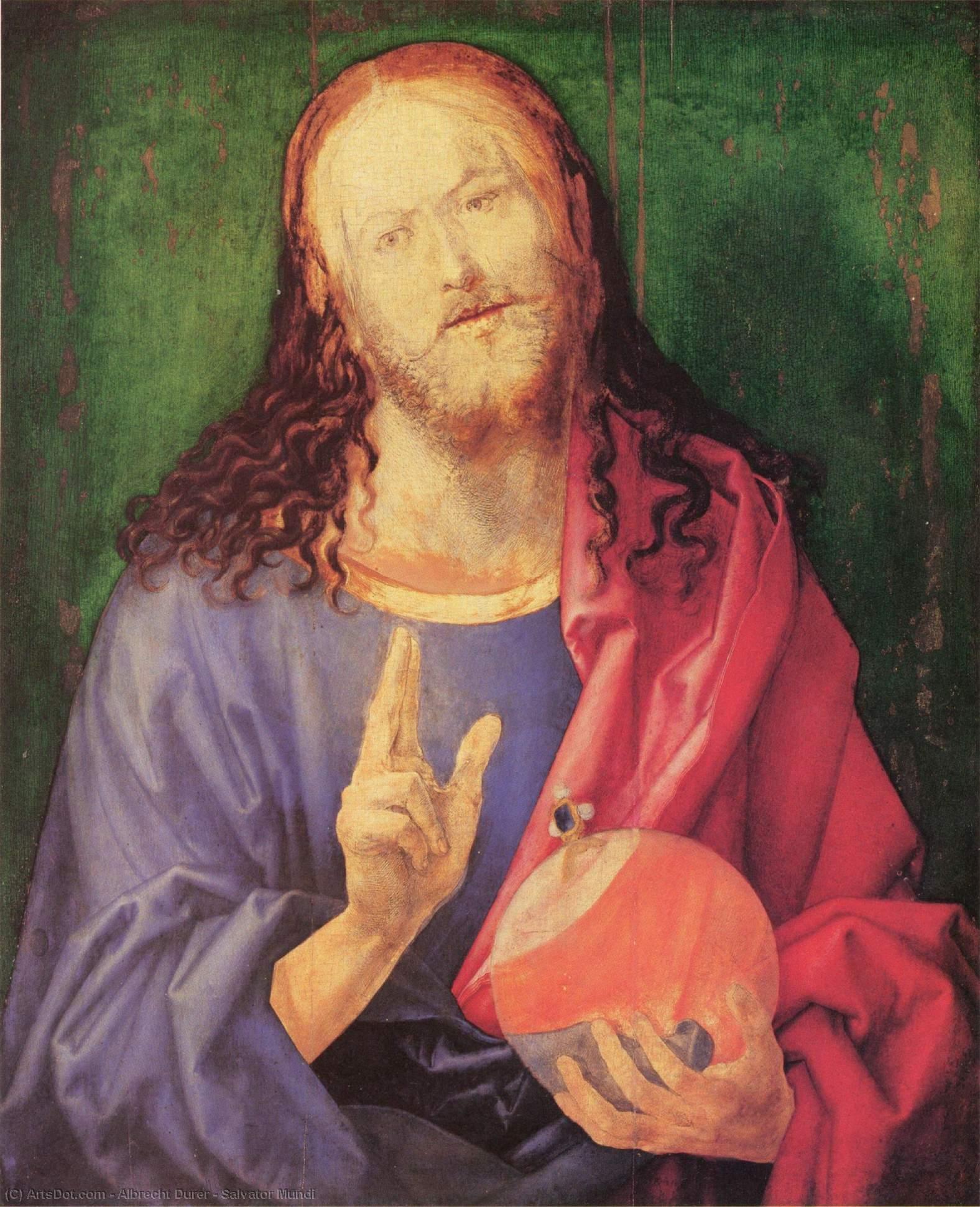
In the quiet stillness of 1504, Albrecht Dürer captured a moment of profound spiritual gravity that continues to resonate across centuries. His Salvator Mundi is far more than a mere portrait; it is an intimate encounter with the divine, rendered with the meticulous precision that defined the Northern Renaissance. As one gazes upon the figure of Jesus Christ, there is an immediate sense of being witnessed by something eternal. The composition, centered and commanding, places the viewer at eye level with the Savior, creating a bridge between the earthly realm and the celestial. This directness of gaze, paired with the soft, almost ethereal light playing across the subject's features, invites a contemplative silence, making it an ideal centerpiece for any space dedicated to reflection, peace, or intellectual depth.
The technical mastery displayed in this work is a testament to Dürer’s unique position as a bridge between Northern detail and Italian grace. Utilizing the delicate medium of oil on panel, the artist employed thin, translucent glazes to build a sense of inner luminosity. This technique allows light to appear as though it is emanating from within the skin and fabric itself, rather than merely reflecting off the surface. The texture of Christ’s curly hair and the heavy, rhythmic folds of his blue robe are rendered with an astonishing accuracy that speaks to Dürer's disciplined training in the goldsmithing traditions of Nuremberg. For the discerning collector or interior designer, this level of detail offers a rich visual experience, where every brushstroke contributes to a sense of tangible reality and profound craftsmanship.
Symbolism and the Weight of the World
Beyond its breathtaking aesthetic, the Salvator Mundi is a complex tapestry of theological symbolism. The most striking element—the globe held aloft in Christ's hand—serves as a powerful metaphor for his role as the ruler of the universe. This orb, often depicted with a subtle, jewel-like brilliance, represents the totality of creation under divine stewardship. The contrast between the deep, saturated blue of the robe and the warm, earthy tones of the background creates a visual tension that mirrors the intersection of heaven and earth. Even the choice of colors carries weight; the blue signifies divinity and truth, while the subtle hints of red and gold suggest the sacrifice and majesty inherent in the Christian narrative.
To possess a reproduction of this masterpiece is to bring a piece of history’s intellectual awakening into the modern home. The painting does not merely decorate a wall; it anchors a room with its historical gravity and emotional depth. Whether placed in a sunlit library, a formal study, or a contemporary living space, the Salvator Mundi acts as a focal point that stimulates conversation and inspires awe. It is a work that rewards repeated viewing, revealing new layers of shadow, light, and meaning each time the eye wanders across its storied surface, making it an incomparable choice for those who seek art that possesses both soul and substance.