Explore the art of Albrecht Dürer, a German Renaissance master! Discover iconic engravings like Melencolia I and detailed self-portraits – a pivotal figure in art history.
Explore the Museo Nacional del Prado in Madrid! Discover masterpieces by Velázquez, Goya & El Greco, spanning centuries of European art. A must-see cultural landmark!
A Window Into Renaissance Identity: Examining Albrecht Dürer’s Self-Portrait at 26
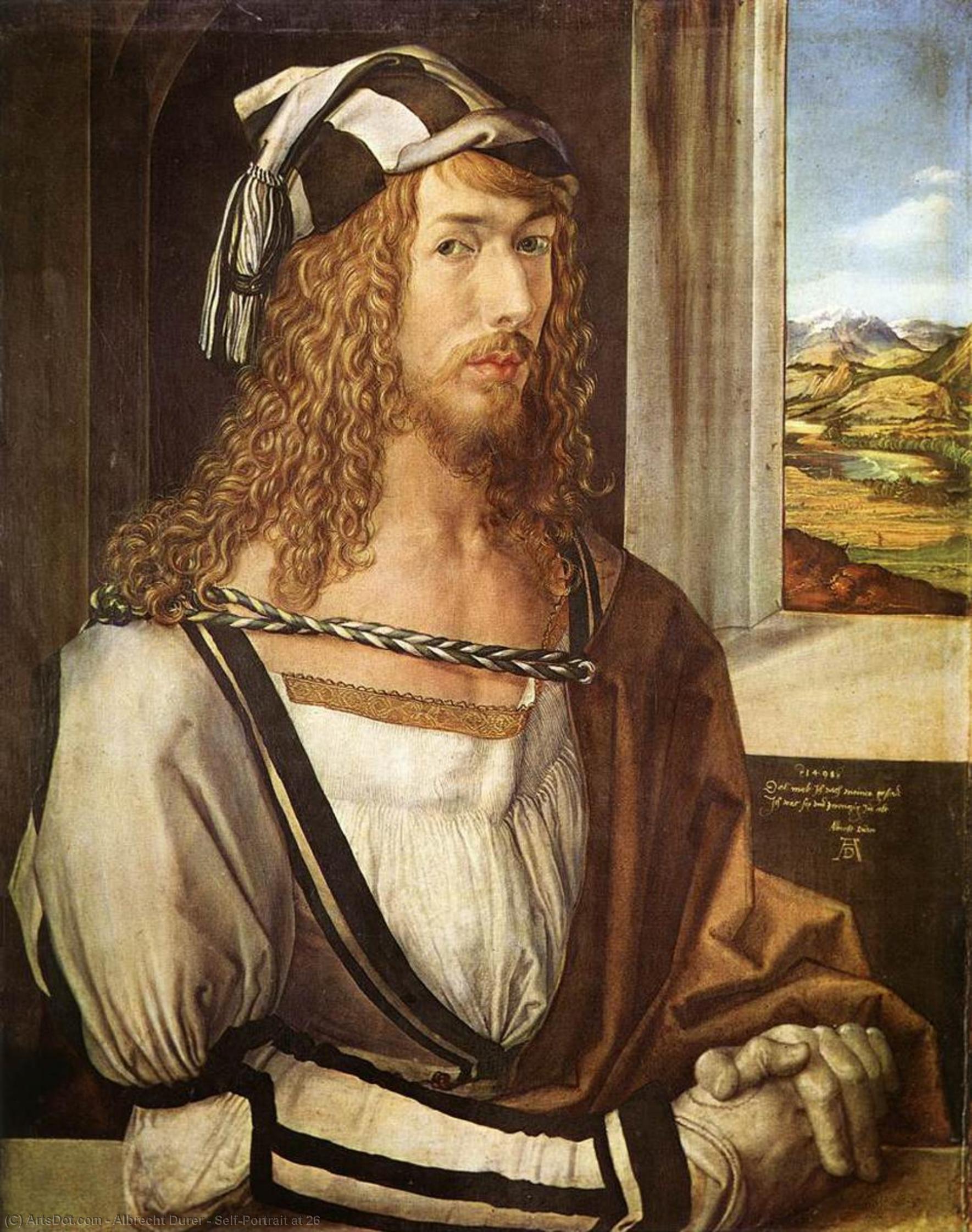
The painting “Self-Portrait at 26,” executed by Albrecht Dürer in 1498, transcends mere representation; it embodies the burgeoning humanist spirit of the German Renaissance and offers a profound glimpse into the artist's self-perception during a pivotal moment in his artistic journey. More than just a likeness of the man himself—a meticulously rendered depiction of facial features, hair texture, and clothing folds—the portrait speaks volumes about Dürer’s intellectual ambitions and his desire to articulate an evolving understanding of human experience.
Style and Technique: Precision Meets Observation
Dürer's mastery is immediately evident in his masterful application of oil paint on wood panel – a technique that was gaining traction during this period, allowing for greater luminosity and detail than tempera or fresco could achieve. Unlike the stylized portraits prevalent before him, Dürer prioritizes anatomical accuracy and observational realism. He painstakingly studied human anatomy, incorporating detailed sketches into his preparatory drawings, demonstrating an unwavering commitment to scientific observation alongside artistic expression. The subtle gradations of color—particularly in the skin tones—reveal a profound understanding of light and shadow, creating a palpable sense of depth and dimensionality that distinguishes it from earlier conventions.
Historical Context: Nuremberg’s Artistic Crucible
Created against the backdrop of Nuremberg's flourishing artistic milieu, “Self-Portrait at 26” reflects the broader cultural currents shaping Europe in the late fifteenth century. The humanist movement championed by figures like Erasmus and Pico della Mirandola was reshaping intellectual discourse, emphasizing human reason and potential for moral virtue. Dürer’s self-portrait isn't simply a depiction of his physical appearance; it’s an assertion of intellectual confidence—a declaration that he sees himself as capable of grappling with complex philosophical questions. The inclusion of the window behind him is particularly significant. Windows served as symbols of enlightenment and contemplation, representing access to knowledge and divine illumination – concepts central to humanist thought.
Symbolism: Beyond Appearance - A Reflection of Inner Thought
The artist’s attire—a dark robe adorned with a simple white collar—suggests modesty and piety, aligning with the prevailing moral sensibilities of the time. However, beyond these outward symbols lies a deeper layer of meaning. The gaze directed outwards, towards the viewer, invites introspection and establishes a dialogue between the artist and the observer. It’s as if Dürer is presenting himself not merely as he appears but as he understands himself—a man striving for intellectual clarity and artistic excellence. The distant mountains serve as a visual anchor, grounding the portrait in the natural world while simultaneously symbolizing aspiration – reaching for lofty ideals and embracing the grandeur of existence.
Emotional Impact: A Moment Frozen in Time
“Self-Portrait at 26” possesses an enduring emotional resonance that continues to captivate audiences centuries later. The artist’s gaze conveys a quiet confidence mingled with thoughtfulness, capturing a fleeting instant of self-awareness—a testament to Dürer's ambition to portray not just what he looked like but also what he felt. It is this psychological depth, combined with the meticulous technical skill and symbolic richness of the artwork, that secures its place as one of the most iconic portraits of the Renaissance and a cornerstone of artistic history.