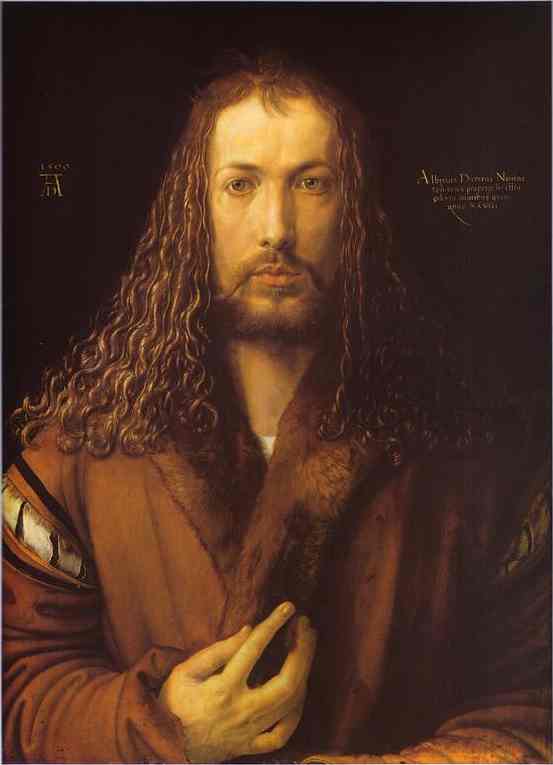
Delve into Northern Renaissance brilliance! Albrecht Dürer’s haunting Self-Portrait at 28 captivates with its meticulous detail and contemplative gaze—a masterful depiction of introspection within a pivotal artistic moment. Explore this iconic masterpiece and bring timeless beauty home.
Explore the art of Albrecht Dürer, a German Renaissance master! Discover iconic engravings like Melencolia I and detailed self-portraits – a pivotal figure in art history.
A Window Into Renaissance Soul: Examining Albrecht Dürer’s Self-Portrait at 28
Albrecht Dürer's "Self-Portrait at 28," completed in 1500, transcends mere representation; it embodies the intellectual fervor and artistic ambition characteristic of the Northern Renaissance. More than just a likeness of the artist himself, this oil on panel painting serves as a profound meditation on identity, purpose, and the role of the humanist scholar within his era—a reflection that continues to resonate with audiences centuries later. The artwork’s significance lies not only in its masterful execution but also in its deliberate engagement with artistic conventions and philosophical ideas prevalent during Dürer's formative years.
Style and Technique: Precision Embodied
Dürer’s approach aligns perfectly with the stylistic ideals of his time, prioritizing meticulous detail and realism—a departure from the stylized grandeur favored by Italian Renaissance artists. The painting exemplifies the Northern Renaissance preoccupation with anatomical accuracy, achieved through painstaking observation and dissection. Dürer meticulously rendered the musculature of his torso and limbs, demonstrating an unprecedented understanding of human anatomy for its time. Furthermore, the subtle gradations of light and shadow—a technique honed during his Venetian sojourn—create a palpable sense of depth and dimensionality, elevating the portrait beyond a simple depiction to an immersive experience for the viewer. The artist’s use of glazing – applying thin layers of translucent paint over underlying colors – contributes to the luminous quality of the skin tones and enhances the overall visual impact.
Historical Context: Nuremberg's Artistic Crucible
Painted against the backdrop of Nuremberg, a city undergoing rapid economic growth and burgeoning artistic innovation, “Self-Portrait at 28” reflects Dürer’s position as one of the leading figures in German art. Influenced by Flemish masters like Jan van Eyck, he absorbed their emphasis on naturalism and psychological insight—traits that would define his oeuvre. The painting's creation coincided with a period of intense intellectual debate concerning humanism and classical learning, mirroring Dürer’s own scholarly pursuits. He actively engaged in humanist discussions, exploring themes of morality, philosophy, and the pursuit of knowledge – ideas powerfully conveyed through the artist’s gaze and posture.
Symbolism: The Artist's Inner Landscape
The composition itself is laden with symbolic significance. Dürer’s frontal stance—a deliberate allusion to depictions of Christ—suggests humility and contemplation alongside unwavering confidence in his intellectual abilities. His right hand resting on his chest symbolizes inner strength and spiritual devotion, mirroring Christian iconography. The auburn hair framing his face represents vitality and intellectuality, while the gaze directly confronting the viewer establishes a connection between artist and observer – inviting us to contemplate the complexities of human consciousness.
Emotional Impact: A Portrait Beyond Appearance
Ultimately, “Self-Portrait at 28” transcends its visual beauty to communicate an enduring message about self-awareness and artistic conviction. It’s not merely a portrait; it's a declaration—a testament to Dürer’s belief in the transformative power of art and his unwavering commitment to capturing the essence of human experience. The painting continues to captivate viewers with its quiet dignity and profound psychological depth, cementing its place as one of the most iconic images of the Renaissance.