A Dramatic Encounter: Albrecht Dürer’s “Expulsion from Paradise”
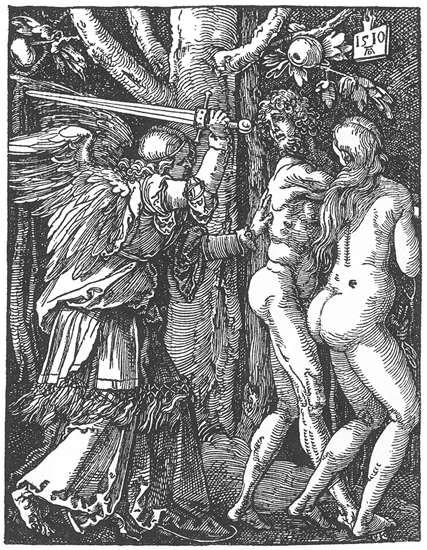
Albrecht Dürer's "Small Passion: 2. Expulsion from Paradise," created in 1510, stands as a cornerstone of Northern Renaissance art—a testament to meticulous observation and profound symbolic representation. More than just an illustration of biblical scripture, it’s a carefully constructed visual narrative that delves into themes of divine judgment, human fallibility, and the consequences of disobedience. Printed as a woodcut on paper bearing the High Crown watermark (M. 20), this image captures Dürer's unparalleled skill in translating complex theological concepts into breathtaking artistic detail.
Composition & Technique: Mastering Line and Light
The artwork’s dynamic composition immediately draws the eye, utilizing diagonal lines created by Adam’s pose and the angel’s outstretched hand—a deliberate device to convey movement and tension. Dürer's mastery of woodcut technique is evident in every aspect of the print. He painstakingly carved intricate lines into a block of pear or boxwood, achieving astonishing levels of precision and textural nuance. These finely spaced lines define forms with remarkable accuracy, creating areas of shading that mimic naturalistic light and shadow—a crucial element in conveying the scene’s dramatic atmosphere.
Symbolism: Decoding Biblical Narrative
Beyond its aesthetic beauty lies a rich tapestry of symbolism. The angel embodies divine authority and righteous indignation, representing God's judgment upon Adam for succumbing to temptation. Conversely, Adam embodies shame and regret—a poignant depiction of humanity’s loss of innocence following the serpent’s deceitful persuasion. The coiled snake symbolizes evil and transgression, while the apple hanging from the tree signifies knowledge gained through disobedience—elements meticulously rendered to communicate the core message of the biblical story.
Historical Context & Artistic Style
Dürer's "Small Passion" series reflects the intellectual fervor of the Renaissance, aligning with humanist ideals that championed reason and observation alongside faith. Influenced by Michelangelo’s monumental sculptures and drawing upon classical precedents, Dürer’s style embodies a commitment to realism—particularly in anatomical accuracy—while simultaneously elevating the subject matter through symbolic embellishment. The flattened perspective characteristic of woodcut prints contributes to the artwork's timeless quality.
Emotional Resonance: A Portrait of Loss
Ultimately, “Small Passion: 2. Expulsion from Paradise” transcends mere depiction; it evokes a palpable sense of sorrow and impending doom. Dürer’s masterful use of line—particularly the dense linework that creates textural depth—captures the emotional weight of the scene, conveying the profound consequences of humanity's fall from grace. This artwork continues to inspire contemplation on themes of morality, faith, and the enduring power of visual storytelling.