St. Catherine and the Executioner: A Study in Northern Renaissance Drama
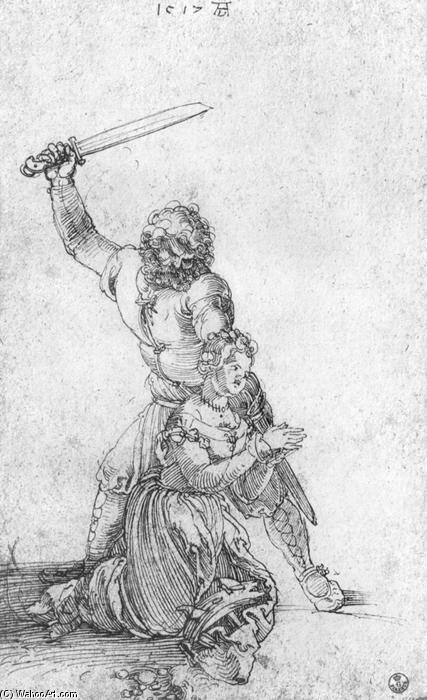
Albrecht Dürer’s “St. Catherine and the Executioner” is not merely a depiction of a biblical scene; it's a visceral embodiment of faith tested by brutal power, rendered with an almost obsessive attention to detail that defines the apex of Northern Renaissance printmaking. Executed around 1502, this monochrome engraving – likely created from copper or iron – immediately commands attention with its dramatic composition and the palpable tension radiating from the figures. The work’s stark palette, a carefully orchestrated symphony of grays, blacks, and whites, amplifies the emotional weight of the subject matter, stripping away any superfluous color to focus solely on form, texture, and the profound contrast between light and shadow.
Technique and Craftsmanship: The Language of the Burin
- Engraving Process: Dürer’s mastery is evident in his meticulous application of the engraving technique. He began with a meticulously prepared metal plate, painstakingly incised using specialized tools known as burins – small hand-held chisels used to cut lines into the surface. This wasn't a simple tracing; it was an act of deliberate creation, where line density and direction were consciously manipulated to build up tonal values and create a remarkable sense of depth.
- Cross-Hatching Mastery: The extensive use of cross-hatching is particularly noteworthy. These intersecting lines aren’t just decorative; they are the very building blocks of volume and texture, allowing Dürer to simulate the rough fabric of St. Catherine's garments and the polished sheen of the executioner’s sword with astonishing realism.
- Precision and Detail: The level of precision is breathtaking – a testament to Dürer’s unparalleled skill and dedication. Each line is perfectly formed, contributing to an overall effect that feels both monumental and intensely personal.
Symbolism and Narrative: Martyrdom and the Clash of Worlds
The subject matter itself—the martyrdom of St. Catherine, a fourth-century virgin and early Christian martyr – is laden with symbolic weight. The scene depicts her kneeling in defiance before an executioner poised to strike, representing the ultimate sacrifice made for one’s beliefs. This wasn't simply a historical record; it was a potent meditation on faith versus earthly authority, a timeless struggle that resonated deeply within the context of the Reformation era. St. Catherine’s posture – a blend of resignation and unwavering conviction – speaks volumes about her spiritual fortitude. The raised sword, a symbol of brutal power, underscores the vulnerability of the individual against overwhelming force.
A Window into the Northern Renaissance: Dürer's Legacy
"St. Catherine and the Executioner" is a quintessential example of the Northern Renaissance style, heavily influenced by the work of Albrecht Dürer himself. Dürer’s influence extended beyond mere technical skill; he elevated printmaking to an art form, demonstrating its capacity for profound emotional expression and intellectual engagement. This engraving exemplifies his fascination with perspective, anatomy, and dramatic composition – elements that would profoundly impact generations of artists to come. The work's enduring power lies not just in its technical brilliance but also in its ability to evoke a powerful emotional response, reminding us of the timeless themes of faith, courage, and sacrifice.