St. George On Foot: A Renaissance Masterpiece of Heroic Resolve
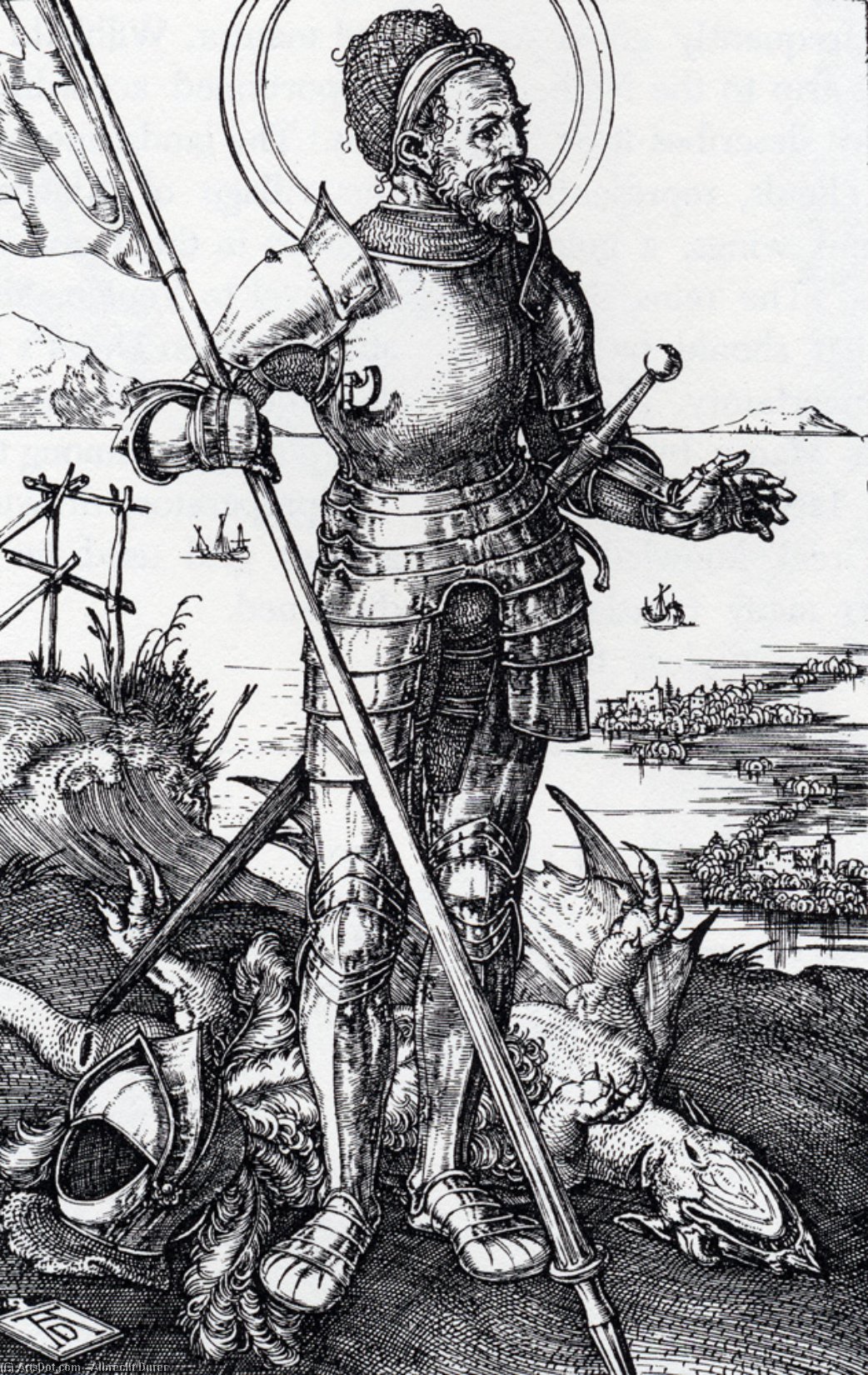
Albrecht Dürer’s “St. George On Foot,” executed in 1502, stands as a monumental achievement within the Northern Renaissance tradition – a testament to meticulous observation, masterful technique, and profound symbolic resonance. This engraving, rendered entirely in shades of gray through the painstaking process of hatching and cross-hatching, depicts the legendary saint’s triumphant victory over the dragon, a scene that continues to captivate viewers with its dramatic composition and unwavering sense of righteous power. Dürer's work transcends mere illustration; it is an embodiment of faith, courage, and the eternal struggle between good and evil, firmly rooted in the artistic and intellectual currents of his time.
Technical Brilliance: The Art of Engraving
- The Process: “St. George On Foot” exemplifies the precision of Renaissance printmaking. Dürer began with a copper or iron plate, meticulously incised using specialized tools known as burins – delicate instruments that allowed for incredibly fine lines to be etched into the metal surface. This was not simply drawing; it was sculpting with light and shadow.
- Line Weight & Density: The artist’s control over line weight is breathtaking. Thick, closely spaced lines create areas of deep shadow, lending a sense of volume and texture to St. George's armor and the dragon’s scales. Conversely, lighter, sparser lines define highlights, creating a dynamic interplay of light and dark that dramatically emphasizes the figure’s musculature and the textures of the landscape.
- Hatching & Cross-Hatching: The extensive use of hatching – parallel lines – combined with cross-hatching (intersecting lines) creates an astonishingly realistic depiction of surface detail, from the rough texture of stone to the shimmering scales of the defeated beast. This technique was central to Dürer’s artistic vision and a hallmark of Northern Renaissance printmaking.
Symbolism & Narrative: The Legend of St. George
The subject matter itself – the story of St. George slaying the dragon – is rich with symbolic meaning. Dating back to the 4th century, the legend served as a powerful allegory for Christian virtue overcoming pagan evil. St. George’s posture, standing confidently on the dragon's head, represents victory over temptation and sin. The castle in the background symbolizes divine protection and order, while the boats along the shoreline evoke themes of salvation and passage to paradise. The composition is carefully constructed to reinforce this narrative, drawing the viewer’s eye from the heroic figure to the surrounding landscape – a world transformed by his righteous act.
Historical Context & Artistic Influence
Created in 1502, “St. George On Foot” reflects Dürer's deep engagement with the artistic and intellectual trends of the High Renaissance. Dürer’s work builds upon the legacy of artists like Michael Wolgemut, his early master, while simultaneously pushing the boundaries of printmaking technique. His meticulous attention to detail, combined with a profound understanding of perspective and anatomy, established him as one of the most influential artists of the era. The engraving's style is firmly rooted in Northern Renaissance engraving, particularly influenced by Dürer’s own explorations of linear perspective and his fascination with naturalism – qualities that would profoundly impact generations of printmakers to come.
Emotional Impact & Artistic Value
"St. George On Foot" is more than just a historical artifact; it's an emotionally resonant image that continues to inspire awe and admiration. The engraving’s dramatic composition, combined with Dürer’s masterful technique, creates a powerful sense of heroism and triumph. A hand-painted reproduction captures the essence of this masterpiece, allowing you to experience its beauty and significance firsthand – a timeless symbol of courage, faith, and the enduring power of good over evil.