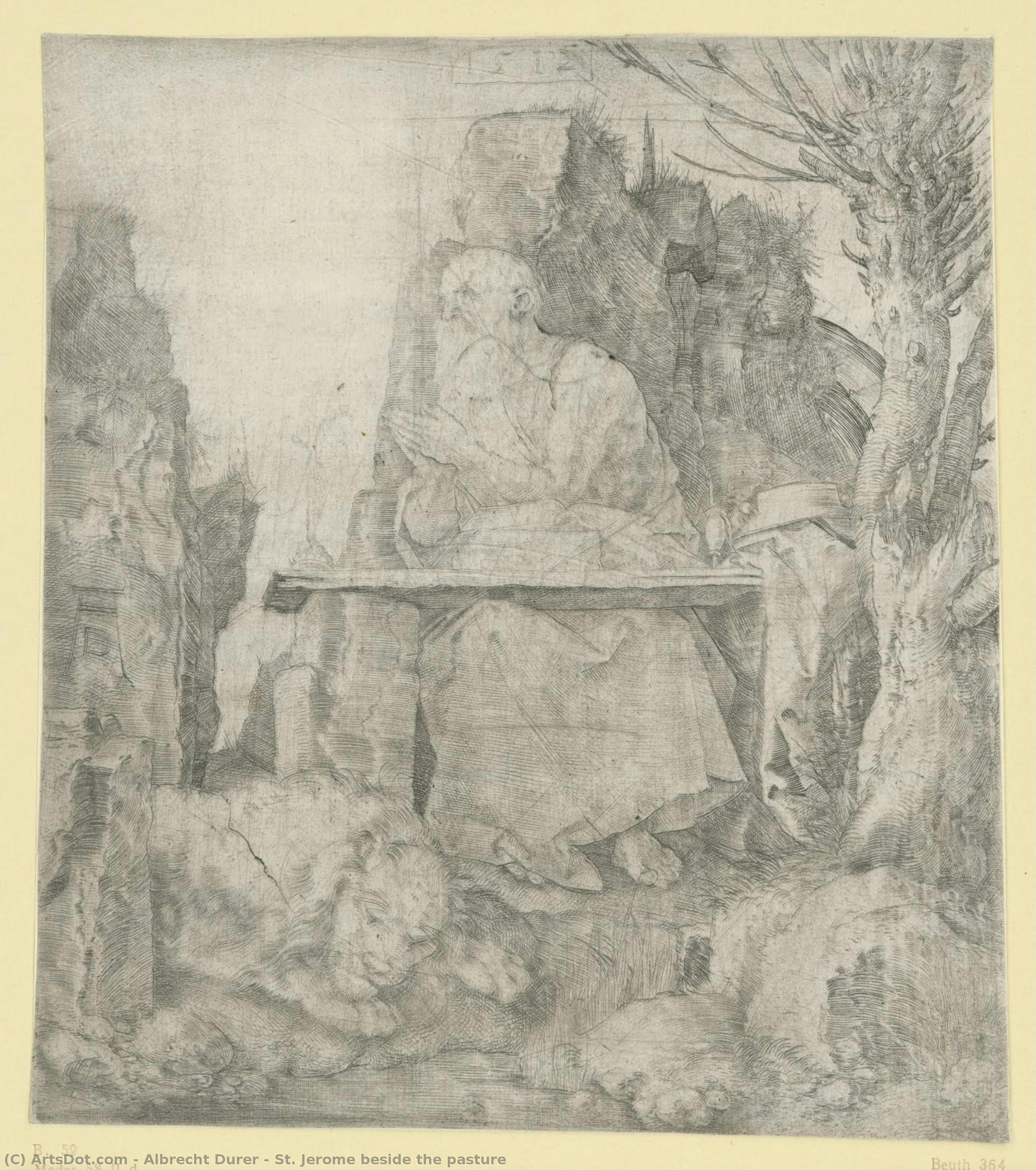
A Moment of Contemplation: Albrecht Dürer’s “St. Jerome beside the pasture”
Albrecht Dürer's "St. Jerome beside the pasture," a meticulously rendered etching from around 1518, isn’t merely a portrait; it’s a profound meditation on faith, solitude, and the quiet beauty of the natural world. Dürer, a pivotal figure in the Northern Renaissance, masterfully captures a scene both biblical and deeply human – the saint, known for his diligence in translating the Vulgate Bible, pausing amidst a serene landscape to reflect upon his task. The image immediately draws the eye with its stark contrasts: the deep blacks of Jerome’s robes and the lion's fur against the luminous white of the parchment, creating an almost sculptural effect. It’s a testament to Dürer’s unparalleled skill in rendering texture and light, achieved through painstaking detail and a masterful understanding of printmaking techniques.
The Anatomy of Faith: Symbolism and Composition
Dürer's compositional choices are laden with symbolic weight. St. Jerome, depicted as a mature man with a thoughtful expression, sits upon a weathered rock – a symbol of steadfastness and resilience. The lion, traditionally associated with strength and vigilance (and often linked to the Apocalypse), lies at his feet, seemingly offering silent support. This pairing speaks volumes about the saint’s dedication: he is not simply translating scripture; he is guarding it, protecting its truth from corruption. The inclusion of a simple wooden chair and a book further emphasizes Jerome's role as a scholar and interpreter of divine wisdom. Notice also the subtle details – the folds in his robe, the texture of the rock, the individual strands of the lion’s mane – all meticulously rendered to convey a sense of realism and immediacy. The background landscape, though simplified, evokes a sense of vastness and tranquility, mirroring the saint's internal state.
A Renaissance Masterpiece: Technique and Context
Dürer’s etching showcases his revolutionary approach to printmaking. He pushed the boundaries of woodcut and engraving, achieving an unprecedented level of detail and tonal subtlety previously unattainable in these mediums. He utilized a technique known as “burin,” meticulously scratching lines into copper plates with a sharp tool, creating incredibly fine details and shading. This process demanded immense patience and precision – Dürer himself famously spent months perfecting this particular print. The work was created during a period of intense intellectual and artistic ferment in Europe, marked by the rediscovery of classical art and philosophy. Dürer’s work reflects this spirit of inquiry, blending biblical themes with humanist ideals and scientific observation. He was deeply interested in proportion and perspective, evident in the accurate depiction of Jerome's figure and the landscape.
Beyond the Image: Albrecht Dürer’s Legacy
Albrecht Dürer’s “St. Jerome beside the pasture” is more than just a beautiful image; it’s a window into the mind of a genius. His meticulous attention to detail, his profound understanding of symbolism, and his innovative approach to printmaking established him as one of the most influential artists of the Renaissance. The etching continues to resonate with viewers today, offering a timeless meditation on faith, contemplation, and the enduring power of art. The piece’s quiet dignity and evocative atmosphere make it a compelling subject for interior design, bringing a sense of serenity and intellectual depth to any space. Explore reproductions of this iconic work – a testament to Dürer's lasting legacy.