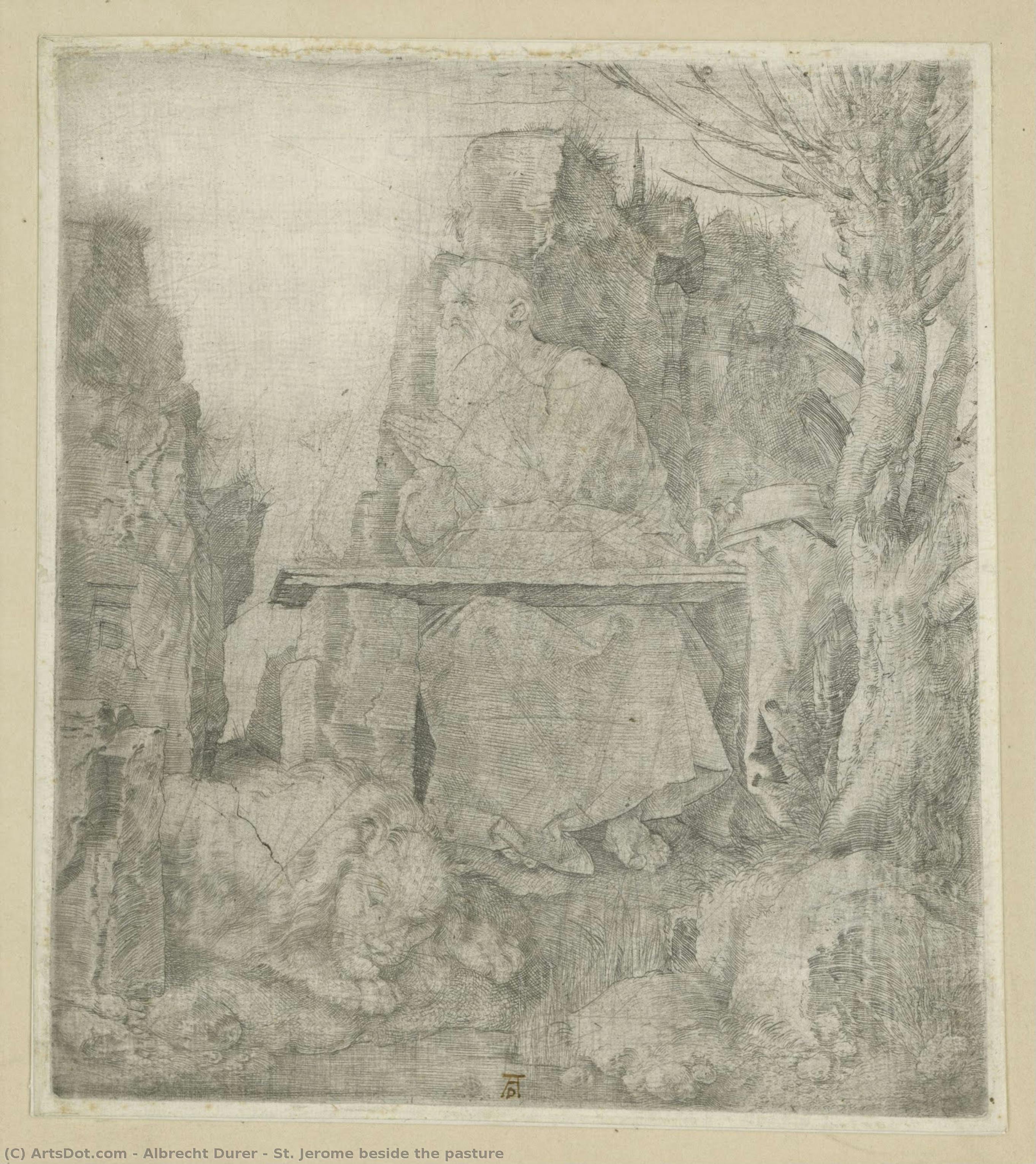
A serene etching by Albrecht Dürer depicting St. Jerome and his dog companion, capturing the tranquility of a medieval landscape with intricate detail and symbolic elements.
Explore the art of Albrecht Dürer, a German Renaissance master! Discover iconic engravings like Melencolia I and detailed self-portraits – a pivotal figure in art history.
Explore the Kupferstichkabinett's stunning collection of prints & drawings spanning centuries! Discover masterpieces by Dürer, Rembrandt & more in Berlin’s vibrant art museum.
A Moment of Serenity: Albrecht Dürer’s St. Jerome Beside the Pasture
The etching “St. Jerome Beside the Pastoral,” created by Albrecht Dürer in 1514, transcends mere depiction; it embodies a profound meditation on faith, solitude, and the harmonious relationship between humanity and nature—themes central to the artistic spirit of the German Renaissance. Executed with meticulous detail during Dürer’s prolific period at Basel, Switzerland, this artwork stands as a testament to his unparalleled mastery of printmaking technique and his unwavering commitment to capturing psychological nuance alongside visual precision.
The Technique: Copperplate Engraving – A Dance Between Light and Shadow
Dürer's approach to engraving was revolutionary for its time. Unlike earlier woodcuts, which relied on laborious carving techniques, copperplate engraving offered a level of tonal gradation previously unattainable. This involved meticulously polishing a sheet of copper plate until it achieved an almost mirror-like sheen, followed by incising lines with acid—a process known as etching—to create recessed areas that would hold ink. Subsequent burnishing smoothed the surface, maximizing reflectivity and producing images imbued with subtle luminescence. The resulting monochrome print possesses an astonishing depth of texture and tonal variation, capturing the nuances of light and shadow with breathtaking accuracy – a characteristic that distinguishes Dürer’s oeuvre from its contemporaries.
Historical Context: Reformation Reverberations and Humanist Ideals
The etching emerged during a period of intense religious upheaval—the Protestant Reformation—which dramatically reshaped European intellectual and artistic landscapes. Dürer, though personally Catholic, embraced humanist ideals championed by thinkers like Erasmus and Pico della Mirandola, which emphasized human dignity and rational inquiry alongside spiritual contemplation. This confluence of influences is palpable in “St. Jerome,” where the saint’s contemplative posture reflects a broader cultural preoccupation with inner piety and moral virtue. The pastoral setting—a tranquil meadow dotted with sheep—represents Edenic innocence and symbolizes God's benevolent provision for humankind, mirroring humanist conceptions of paradise as a realm accessible through intellectual understanding.
Symbolism: Saint Jerome – Patron Saint of Translators and Scholars
Saint Jerome, depicted in the etching’s central figure, holds immense symbolic significance within Christian iconography. Revered as the patron saint of translators and scholars—a role stemming from his tireless efforts to translate biblical texts into Latin—Jerome embodies intellectual perseverance and devotion to divine truth. His habit—the draped robe characteristic of monastic attire—represents humility and asceticism, while his scroll symbolizes scripture and knowledge. The dog at Jerome’s feet serves as a symbol of loyalty and guardianship, reflecting the saint's unwavering faith and spiritual fortitude. Furthermore, the table with the wine glass subtly references the Eucharist—the sacrament commemorating Christ’s sacrifice—underscoring the artwork’s theological core.
Emotional Impact: Tranquility Amidst Spiritual Reflection
“St. Jerome Beside the Pastoral” achieves its enduring appeal through its ability to evoke a profound sense of tranquility and contemplative serenity. The artist's masterful rendering of light and texture invites viewers into a space of quiet introspection—a deliberate departure from the turbulent anxieties of the Reformation era. The scene’s stillness communicates an acceptance of God’s grace and an affirmation of the beauty inherent in simplicity, resonating powerfully with audiences across centuries. It remains a compelling exemplar of Renaissance art's capacity to convey complex spiritual ideas through deceptively understated visual language—a testament to Dürer’s genius as both craftsman and humanist thinker.