A Divine Encounter in Ink and Line
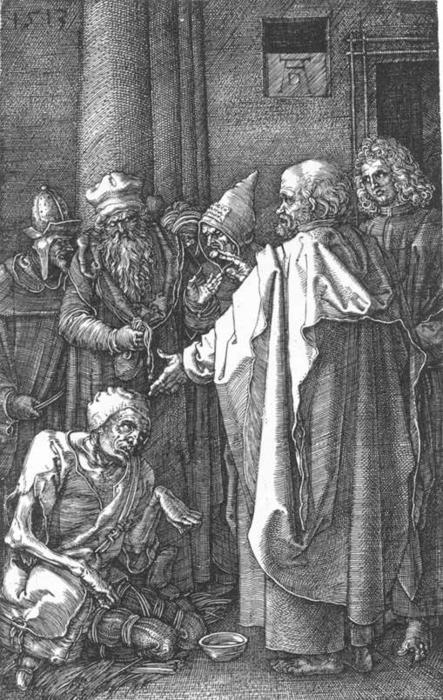
In the quiet, profound depths of Albrecht Dürer’s 1513 engraving, St Peter and St John Healing the Cripple (No. 16), we encounter a moment where the earthly and the divine collide with breathtaking intimacy. This masterpiece, a cornerstone of the High Renaissance, transcends its medium to tell a story of profound compassion and spiritual transformation. As the eye wanders through the intricate web of black and white lines, it is immediately drawn to the central tableau: two apostles, figures of statuesque greatness, leaning toward a man whose physical vulnerability serves as a poignant mirror to human suffering. Dürer does not merely depict a biblical miracle; he invites the viewer into a sacred space where every etched stroke vibrates with the tension between mortal frailty and divine grace.
The composition is a masterclass in Renaissance balance, utilizing architectural elements like heavy columns and sweeping arches to frame the narrative within a sense of permanence and sanctity. There is a subtle, almost voyeuristic magic in the way Dürer directs our gaze; a small figure peeking from behind a pillar adds a layer of human curiosity and vulnerability, reminding us that such miracles are witnessed by a world full of both awe and uncertainty. This careful arrangement creates a spatial depth that feels remarkably tangible, as if one could step through the paper and stand within the very shadows cast by the apostles' heavy robes.
The Alchemy of the Burin
To behold this work is to witness the absolute pinnacle of printmaking technique. Dürer, working with the precision of a goldsmith—a craft inherited from his father—employed the burin tool to carve into metal with an almost supernatural accuracy. There is no color here to rely on; instead, the artist achieves a full spectrum of emotion through the language of light and shadow. Through the rigorous application of cross-hatching, Dürer builds up tonal variations that simulate the rough texture of stone, the soft weight of heavy drapery, and the delicate, weathered skin of the kneeling man. The contrast is stark yet harmonious, using the density of black lines to create deep, dramatic shadows that define form and suggest a light source descending from an unseen heaven.
For the discerning collector or interior designer, this engraving offers a sophisticated textural element that brings a sense of historical weight and intellectual depth to any space. The monochromatic palette allows it to integrate seamlessly into diverse decor styles, from the minimalist modern gallery look to the rich, layered textures of a classical study. It is an artwork that demands close inspection, rewarding the viewer with new discoveries in every fine line and meticulously rendered anatomical detail.
A Legacy of Faith and Humanism
Beyond its technical brilliance, the piece serves as a profound meditation on the humanist ideals of the 16th century. Dürer’s ability to marry religious devotion with a realistic, almost scientific observation of the human condition is what makes this work eternal. The ailment of the cripple—often identified by historians as leprosy—serves as a powerful symbol of spiritual cleansing and the transformative power of faith. There is an undeniable emotional resonance in the expressions of St Peter and St John; their faces are not merely icons of holiness, but vessels of genuine empathy and concern.
Owning a high-quality reproduction of this engraving is more than an aesthetic choice; it is an engagement with a pivotal moment in art history. It brings into the home a piece of the German Renaissance that speaks to the enduring human desire for healing, hope, and connection. Whether placed as a focal point in a grand hall or as a quiet detail in a private library, St Peter and St John Healing the Cripple continues to radiate the same transformative energy that Dürer captured over five centuries ago.