A Masterclass in Precision: The Soul of Nuremberg
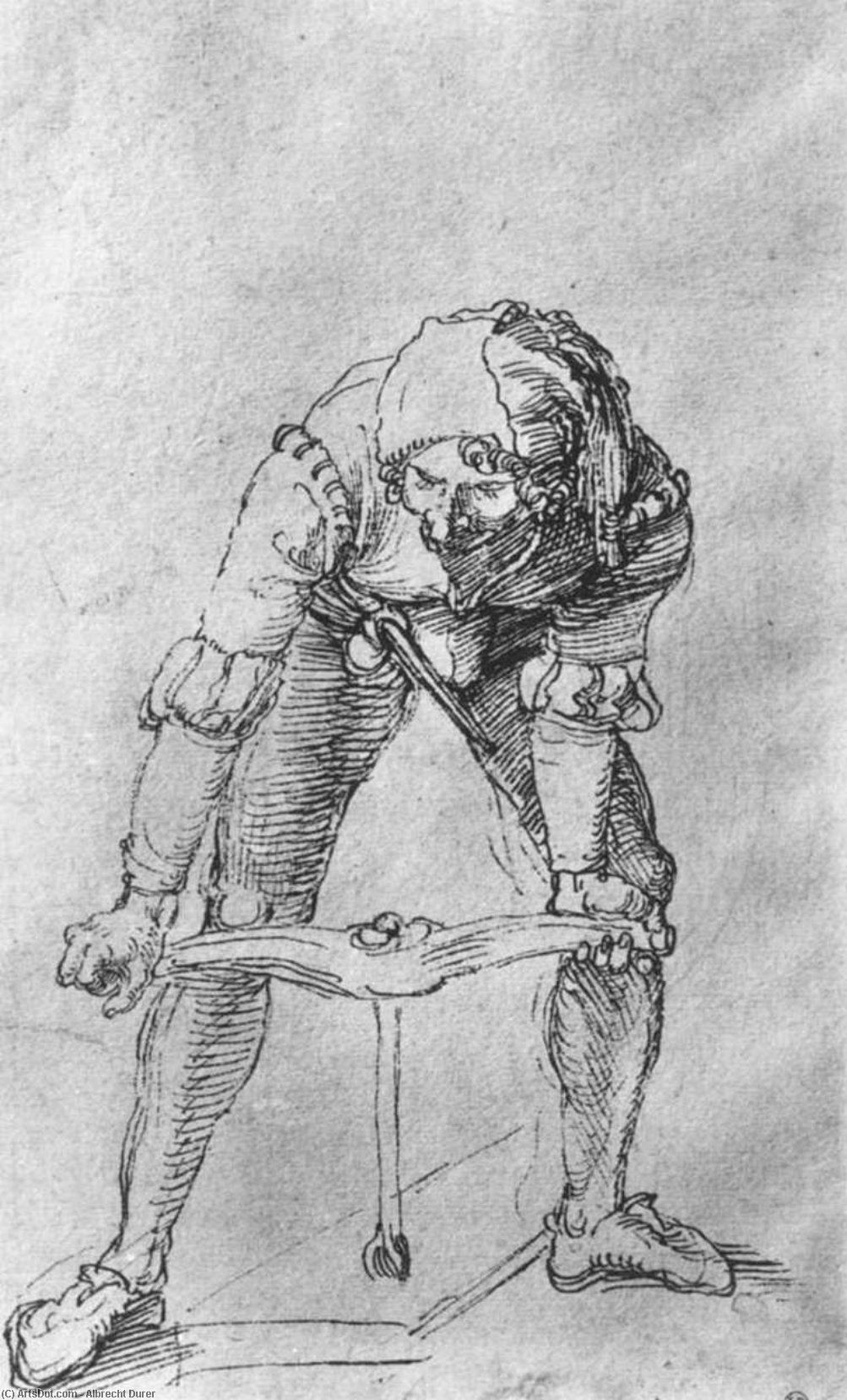
In the year 1496, within the vibrant, industrious atmosphere of Nuremberg, Germany, a young Albrecht Dürer captured a moment that would transcend the boundaries of mere sketchwork to become a testament to human focus. Study of a Man with a particular Drill is not simply a depiction of manual labor; it is a profound window into the Northern Renaissance, an era where the thirst for scientific accuracy met an unparalleled devotion to artistic craftsmanship. As one gazes upon this work, the viewer is immediately transported to a workshop pulsating with the energy of the burgeoning mercantile power of Germany, where every stroke of the pen reflects the meticulous spirit of its time.
The subject matter—a man deeply immersed in a mechanical task—serves as a powerful emblem of the era's fascination with the intersection of human skill and technological progress. There is an undeniable emotional gravity to the figure’s posture; his bent frame and concentrated gaze evoke a sense of quiet, intense devotion to his craft. For the modern collector or interior designer, this piece offers more than just aesthetic beauty; it provides a contemplative focal point that celebrates the dignity of work and the beauty found in the most disciplined of human endeavors.
The Language of Line and Light
To encounter Dürer’s technique is to witness the mastery of the line. Executed with breathtaking precision using pen and ink, the drawing utilizes the subtle nuances of metalpoint and hatching to breathe life into a monochrome world. There are no vibrant colors to distract the eye; instead, Dürer relies on an intricate dance of light and shadow to create a palpable sense of three-dimensionality. Through the sophisticated use of cross-hatching, he achieves remarkable tonal gradations, allowing the viewer to feel the rough texture of heavy clothing and the cold, hard surface of the mechanical drill.
The composition is masterfully balanced, placing the central figure in a position that commands attention while using blurred background elements to create an illusion of profound depth. This use of atmospheric perspective ensures that the man remains the undisputed protagonist of this silent drama. The interplay between the organic curves of the human form and the rigid, geometric lines of the tools creates a visual tension that is both intellectually stimulating and visually harmonious. It is a technical triumph that demonstrates how much can be communicated through the simplest of mediums: ink on paper.
An Enduring Legacy for the Discerning Eye
For those looking to adorn a space with art that speaks of intellect, history, and permanence, this study offers an incomparable presence. The artwork embodies the humanist ideals of the Renaissance—the belief that by observing the minute details of the physical world, we might better understand the universe itself. It is a piece that invites long periods of study, rewarding the observer with new discoveries in anatomy, texture, and light upon every viewing.
Integrating a high-quality reproduction of this masterpiece into a curated collection or a sophisticated interior design scheme brings an air of academic prestige and timeless elegance. Whether placed in a library, a professional studio, or a contemporary living space, the Study of a Man with a Drill acts as a bridge between the artisanal traditions of the 15th century and the refined aesthetics of the modern age. It is a celebration of focus, a tribute to the hand of the maker, and an eternal inspiration for anyone who finds beauty in the pursuit of perfection.