The Soul in the Folds: Rediscovering Dürer’s Study of Drapery
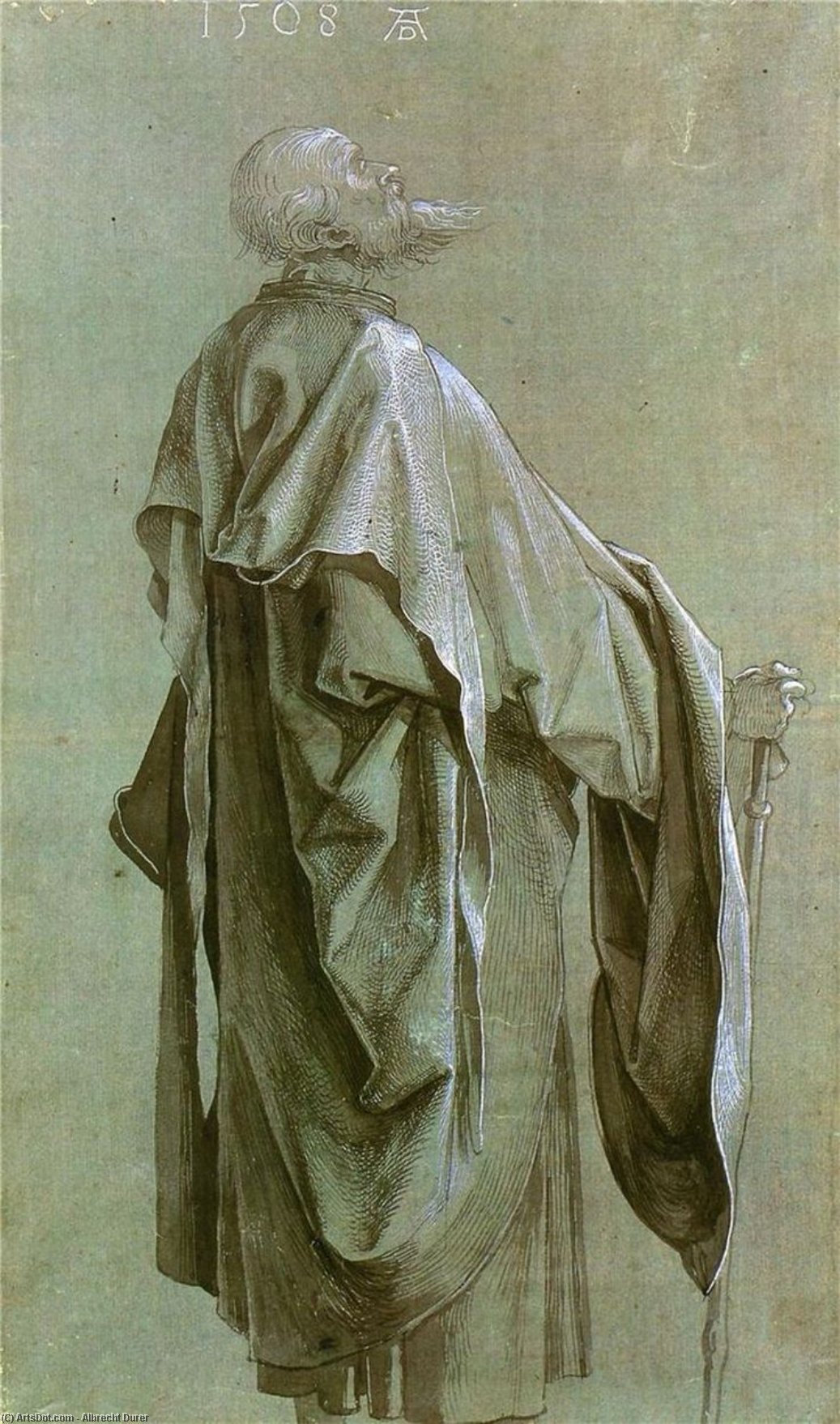
To stand before Albrecht Dürer’s “Study of Drapery” is to enter a realm where the boundary between the physical and the spiritual begins to dissolve. Completed in 1508, this monumental work—stretching an impressive 400 x 235 cm—is far more than a mere technical exercise in rendering fabric; it is a profound meditation on presence and introspection. At its heart, the painting presents a solitary male figure, his gaze cast downward in a moment of quiet contemplation that feels as intimate today as it did during the height of the Northern Renaissance. The subject’s heavy, bearded countenance and the way he seems anchored by his own thoughts invite the viewer to pause, mirroring the very stillness captured on the canvas.
The mastery of Dürer’s technique is nothing short of breathtaking, particularly in his use of chiaroscuro. Through a sophisticated interplay of light and shadow, the artist sculpts the heavy folds of the drapery, giving them a tactile, three-dimensional weight that seems to breathe within the frame. Every crease and shadow serves a dual purpose: they demonstrate Dürer’s scientific commitment to anatomical and material accuracy, while simultaneously creating a rhythmic, almost musical movement across the canvas. For the discerning collector or interior designer, this piece offers a dramatic focal point, bringing a sense of structural depth and classical elegance to any sophisticated space.
A Tapestry of Symbolism and Renaissance Humanism
Beyond the visible textures of cloth and skin lies a deeper layer of meaning rooted in the intellectual ferment of 1508. During this era, the burgeoning ideals of humanism were reshaping the European consciousness, emphasizing the dignity of the individual and the beauty of the natural world. In this study, the drapery itself acts as a powerful symbol; the heavy, cascading layers are traditionally interpreted as emblems of humility and modesty. The way the fabric envelops the figure suggests a protective, inward-looking state, reinforcing the theme of religious or philosophical devotion that was so prevalent in Dürer’s era.
The historical context of the work further enriches its emotional resonance. As a bridge between the meticulous traditions of Northern Europe and the soaring intellectualism of the Italian Renaissance, Dürer’s work captures a pivotal moment in art history. The aged brickwork in the background and the subtle presence of secondary figures suggest a larger, lived-in world, yet the focus remains intensely personal. This tension between the monumental scale of the work and the quiet, internal struggle of the subject creates an emotional impact that is both humbling and deeply moving.
Timeless Elegance for the Modern Collector
For those looking to curate a collection or design an environment of distinction, a high-quality reproduction of this masterpiece offers unparalleled inspiration. The "Study of Drapery" possesses a unique ability to anchor a room, providing a sense of historical gravity and artistic sophistication. Whether placed in a sunlit library or a contemporary gallery-style living space, the painting’s rich textures and dramatic lighting serve as a constant dialogue between the past and the present.
Owning a piece that celebrates such meticulous craftsmanship allows one to surround themselves with the very essence of the Renaissance spirit. It is an invitation to appreciate the beauty found in the details—the way light catches a thread, the weight of a shadow, and the profound peace found in a moment of silent reflection. Dürer’s legacy lives on through this work, offering a timeless window into the human soul that continues to captivate, inspire, and endure.