The Enigmatic Grip: Unveiling Albrecht Dürer’s “Study of Hands”
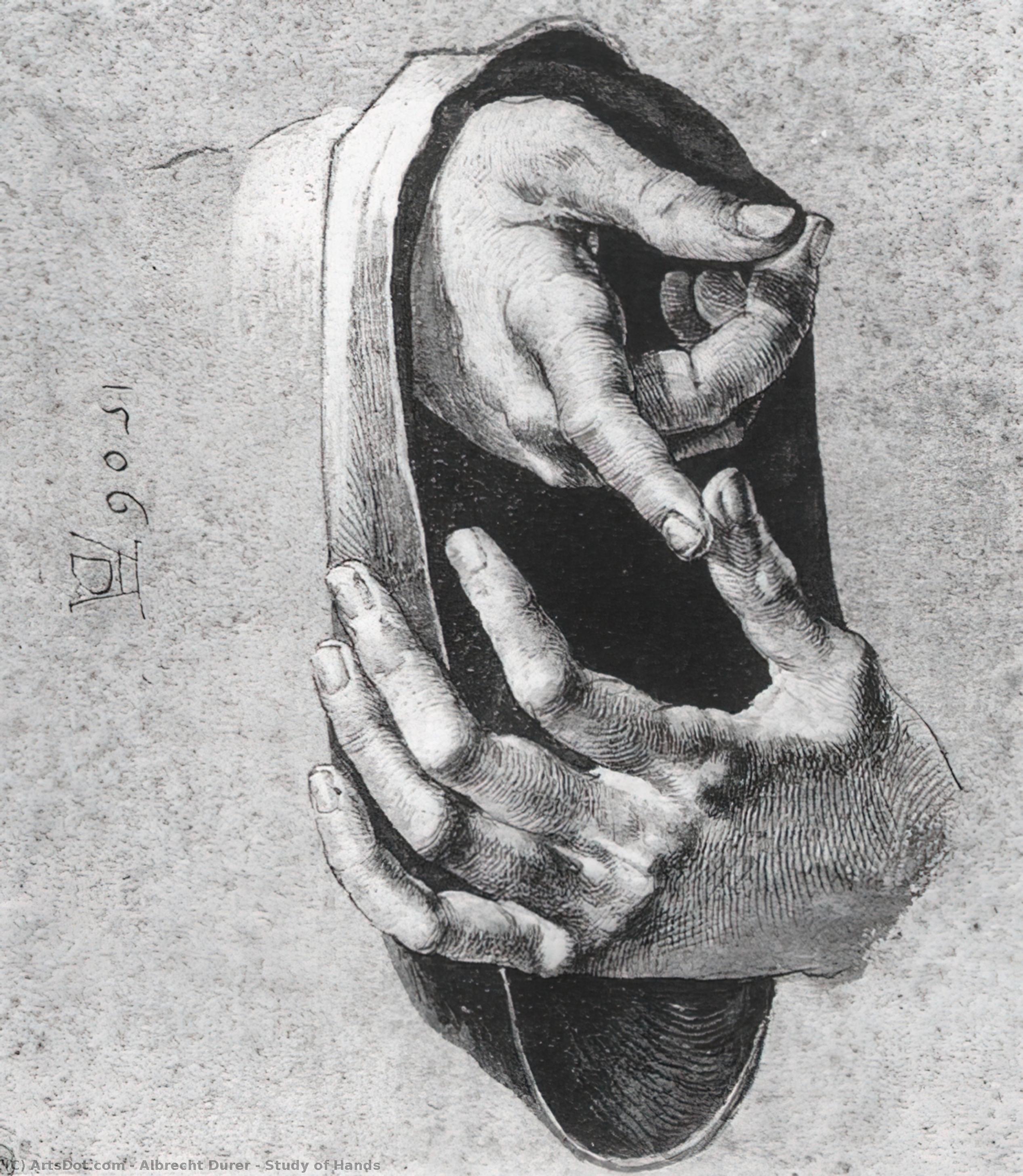
Albrecht Dürer's "Study of Hands," created in 1506, is far more than a simple depiction of two hands grasping a hat; it’s a profound meditation on human skill, the act of creation, and the very essence of observation. Born in Nuremberg during the vibrant heart of the German Renaissance, Dürer was already establishing himself as a revolutionary artist, pushing the boundaries of realism and technical mastery. This particular drawing, executed with meticulous detail using pen and ink on blue paper – a deliberate choice reflecting the prestige associated with such materials – stands as a testament to his unparalleled ability to capture not just form but also texture, gesture, and the subtle nuances of human interaction.
The image itself is deceptively simple. Two hands, rendered with astonishing precision, are shown grasping a small, dark hat. The hands themselves are the undeniable focal point, their delicate fingers, subtly textured skin, and the slight curve of the knuckles meticulously documented. Yet, within this seemingly straightforward composition lies a wealth of symbolic meaning and artistic intent. Dürer wasn’t merely illustrating anatomy; he was exploring the relationship between the artist's hand – the instrument of creation – and the object being shaped.
A Window into Renaissance Technique: Line, Light, and Texture
Dürer’s technique is a marvel of controlled execution. He employs an extraordinary level of cross-hatching, layering fine lines to create a remarkable range of tonal values – from the darkest shadows that define the contours of the hands to the delicate highlights that suggest the sheen of skin and fabric. This masterful manipulation of line isn't simply about representation; it’s about imbuing the drawing with a palpable sense of texture and volume. The varying density of the lines creates an illusion of depth, making the image feel remarkably tactile. The use of white heightening – areas left untouched by ink – further enhances this effect, adding to the three-dimensionality of the subject.
Furthermore, Dürer’s choice of blue paper was significant. Blue pigments were expensive and associated with royalty and high status, elevating the drawing's perceived value and reflecting Dürer’s own ambition to create works worthy of admiration. The meticulous preparation of the surface itself speaks volumes about his dedication to his craft.
Symbolism and the Artist’s Hand
Beyond its technical brilliance, “Study of Hands” is rich in symbolic interpretation. The act of grasping – the deliberate reaching out and securing of the hat – can be seen as a metaphor for the artist's engagement with his subject matter. It represents not just the physical act of creation but also the intellectual process of observation, analysis, and ultimately, representation. The hands themselves are often associated with skill, labor, and even divinity in Western art; here, they embody Dürer’s own mastery as a craftsman and his deep understanding of human anatomy.
Interestingly, this drawing is believed to be a preparatory study for a larger altarpiece commissioned by the wealthy merchant Hans Heller. The hands, remarkably similar to those depicted in the final painting, suggest that Dürer was meticulously studying their form and gesture before committing them to canvas. This detail underscores the importance of preliminary sketches and studies in the artist’s process – a practice increasingly valued today.
A Timeless Masterpiece: Resonance for Today
“Study of Hands” continues to resonate with audiences centuries after its creation. Its enduring appeal lies not only in Dürer's technical brilliance but also in its profound exploration of human nature and the creative process. Reproductions of this iconic image have become ubiquitous, adorning everything from posters and coffee mugs to album covers – a testament to its universal recognition as a symbol of skill, precision, and artistic vision. It remains a powerful reminder of the enduring legacy of Albrecht Dürer and his pivotal role in shaping the course of Western art.