A Study in Human Form: Dürer's "Study of Three Hands"
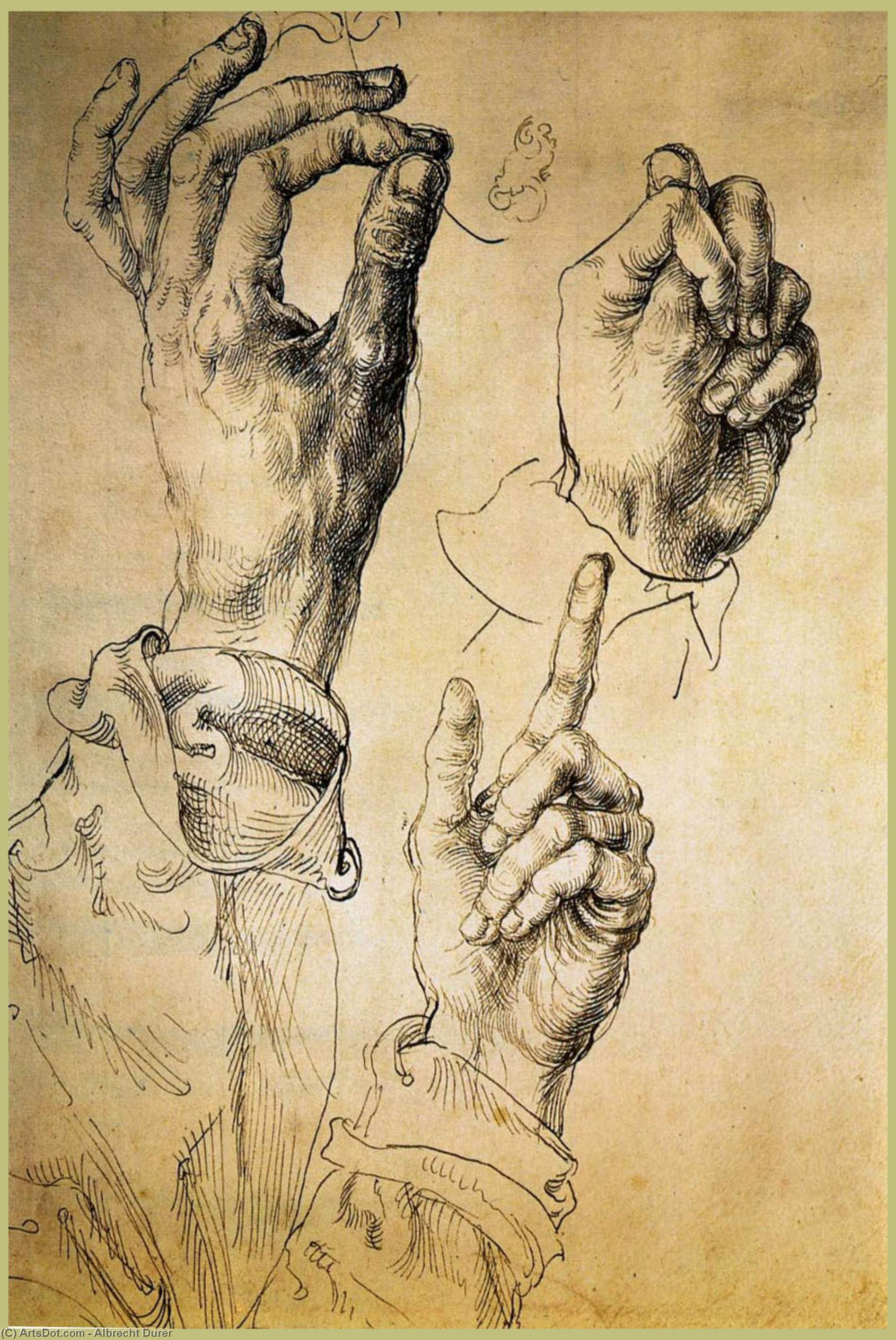
Albrecht Dürer’s “Study of Three Hands” is not merely a depiction of anatomical detail; it’s a profound meditation on the very nature of human existence, rendered with an almost unsettling precision. Painted around 1508, this work, executed in earthy browns and ochres, transcends the simple act of observation to become a powerful statement about skill, perception, and perhaps even mortality. The image presents three hands – two belonging to a male figure and one to a female – arranged in a complex interplay of gestures, each finger reaching upwards as if grasping for something just beyond reach. The hands are not idealized; they possess the marks of age and wear, subtly hinting at the passage of time and the fragility of the human form.
- Technique: Dürer’s mastery is immediately apparent in his meticulous rendering of texture and shadow. The dry point technique, employed extensively throughout the work, creates a remarkable range of tonal values – from the darkest recesses of the knuckles to the luminous highlights on the fingertips. This painstaking process, achieved through carefully incised lines on a copper plate, allowed Dürer to build up layers of ink with incredible subtlety and depth.
- Composition: The arrangement of the hands is deliberately unsettling. Their overlapping forms create a sense of spatial ambiguity, drawing the viewer’s eye across the surface and inviting contemplation. The differing angles and gestures suggest a dynamic interaction, perhaps representing the relationship between male and female, or simply the striving for knowledge and understanding.
Renaissance Humanism and Anatomical Study
“Study of Three Hands” firmly places itself within the context of the High Renaissance – a period characterized by an intense interest in classical antiquity and a renewed focus on human potential. Dürer, like many artists of his time, was deeply influenced by humanist thought, which emphasized observation, reason, and the study of the natural world. The detailed depiction of the hands reflects this intellectual curiosity, aligning with the burgeoning field of anatomical study that sought to understand the structure and function of the human body. This wasn’t simply about artistic representation; it was a scientific endeavor, albeit one driven by aesthetic concerns.
The inclusion of both male and female hands adds another layer of complexity. In Renaissance art, the depiction of the hand often carried symbolic weight, representing labor, skill, and even divine grace. The juxtaposition of male and female hands suggests a broader exploration of human duality – strength and fragility, intellect and emotion.
Symbolism and Emotional Resonance
Beyond its technical brilliance and historical context, “Study of Three Hands” possesses a powerful emotional resonance. The upward-reaching gestures evoke a sense of aspiration, longing, or perhaps even despair. The hands themselves become vessels for our own anxieties and hopes – a reminder of our mortality and the human desire to transcend earthly limitations. Dürer’s deliberate ambiguity invites viewers to project their own interpretations onto the image, making it a timeless work that continues to captivate audiences centuries later.
The muted color palette further contributes to the painting's somber mood, reinforcing its themes of introspection and contemplation. The earth tones evoke a sense of age, wisdom, and perhaps even decay – subtly reminding us of the transient nature of beauty and existence.