A Portrait of Faith and Reflection: Albrecht Dürer’s “The Apostle James the Elder”
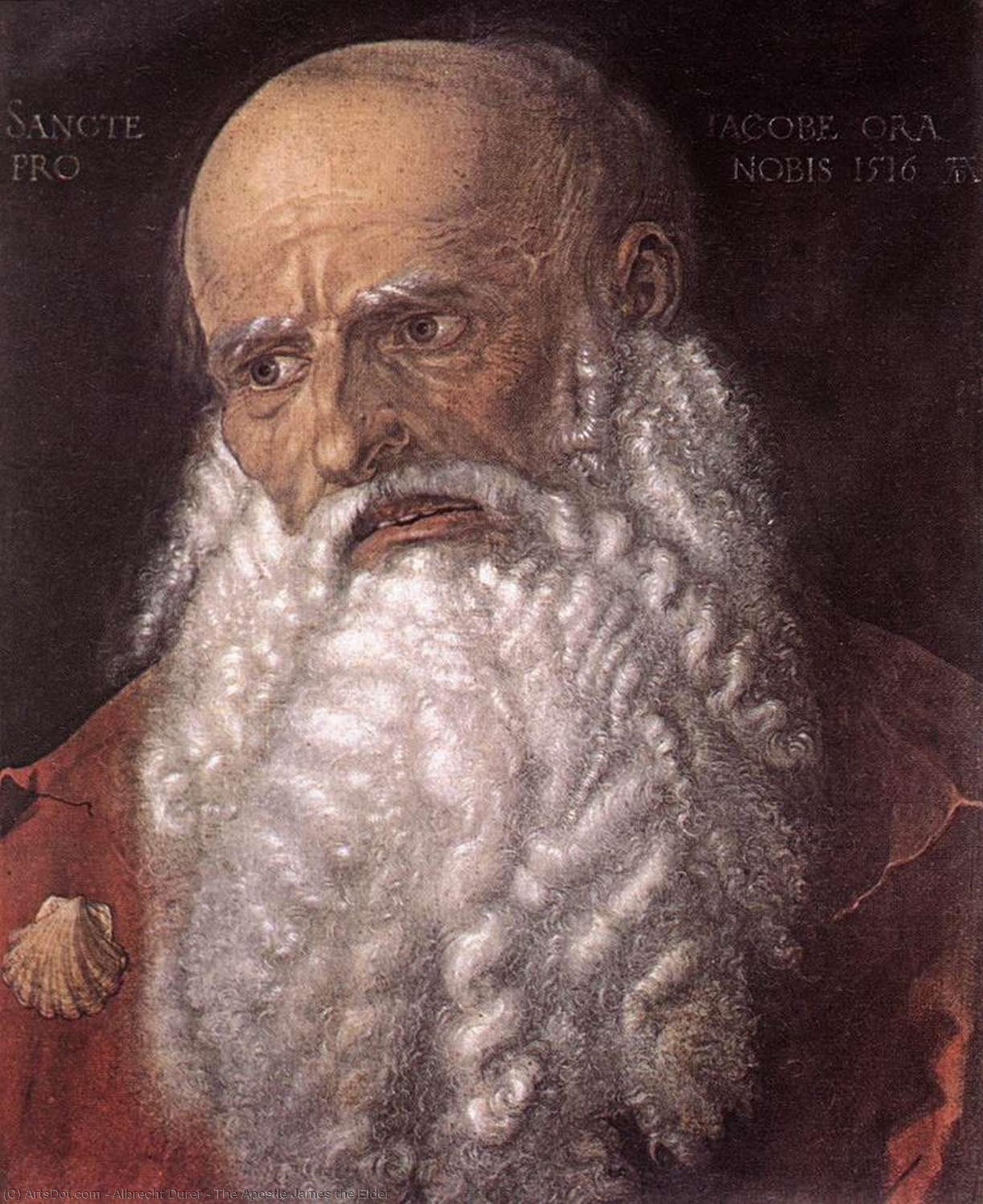
Albrecht Dürer's "The Apostle James the Elder," painted in 1516, is more than simply a portrait; it’s a profound meditation on age, faith, and the quiet dignity of contemplation. This intimate work, measuring just 45 x 38 cm, housed within the hallowed halls of the Galleria degli Uffizi in Florence, offers a rare glimpse into the soul of a man wrestling with his mortality and the enduring legacy of his apostleship. Dürer, already establishing himself as a master of Northern Renaissance art, meticulously crafted this image, revealing not just a likeness but an emotional landscape rendered with astonishing precision.
The Man Before Us: Subject and Appearance
The subject is James the Elder, one of the twelve apostles, distinguished by his venerable appearance. Dürer has depicted him as a man well into his years – perhaps nearing seventy, judging by the long, flowing white hair and the deeply etched lines that map his face. His beard, thick and full, adds to this impression of wisdom earned through experience. The artist’s careful attention to detail extends to the subtle droop of the mouth, suggesting a contemplative sadness or perhaps a gentle acceptance of time's passage. The red robe he wears, a vibrant splash against the muted tones of the background, draws immediate attention and subtly hints at his status as an apostle – a color often associated with royalty and spiritual authority.
Technique and Materials: Tempera on Canvas
Dürer’s mastery is immediately evident in the execution. He employed tempera paint on canvas, a technique favored for its luminosity and ability to achieve subtle gradations of tone. This medium allowed Dürer to build up layers of color with remarkable delicacy, capturing the texture of skin, the sheen of fabric, and the play of light and shadow. Note the meticulous rendering of wrinkles – not as blemishes, but as evidence of a life fully lived. The artist’s use of *sfumato*, a technique borrowed from Renaissance masters like Leonardo da Vinci, creates an atmospheric haze around James' face, softening edges and lending him an air of ethereal serenity. The canvas itself, though small in scale, is treated with the same level of care, contributing to the overall sense of quiet grandeur.
Symbolism and Historical Context: A Reflection on Mortality
“The Apostle James the Elder” resonates deeply within its historical context. Painted during a period of increasing religious introspection and humanist thought, the work reflects a growing awareness of mortality and the importance of spiritual reflection. James’s downward gaze is particularly significant; it suggests he's lost in prayer or perhaps contemplating his life’s journey. The apostle’s posture embodies a quiet dignity—a testament to faith and service. Dürer himself was deeply concerned with biblical subjects, often imbuing them with profound symbolic meaning. This portrait isn’t merely a depiction of an individual; it's a visual meditation on the virtues associated with James – humility, piety, and unwavering devotion. Furthermore, as a Northern Renaissance artist, Durer was heavily influenced by classical ideals of beauty and proportion, subtly integrated into this portrayal of a biblical figure.
ArtsDot offers exquisite, hand-painted reproductions of “The Apostle James the Elder,” allowing you to bring this timeless masterpiece into your home or office. Each reproduction is created with the same meticulous attention to detail as Dürer’s original, capturing not just the image but also the profound emotional resonance of this iconic work. Consider how this evocative portrait can enrich your space and serve as a constant reminder of faith, reflection, and the enduring beauty of human experience.