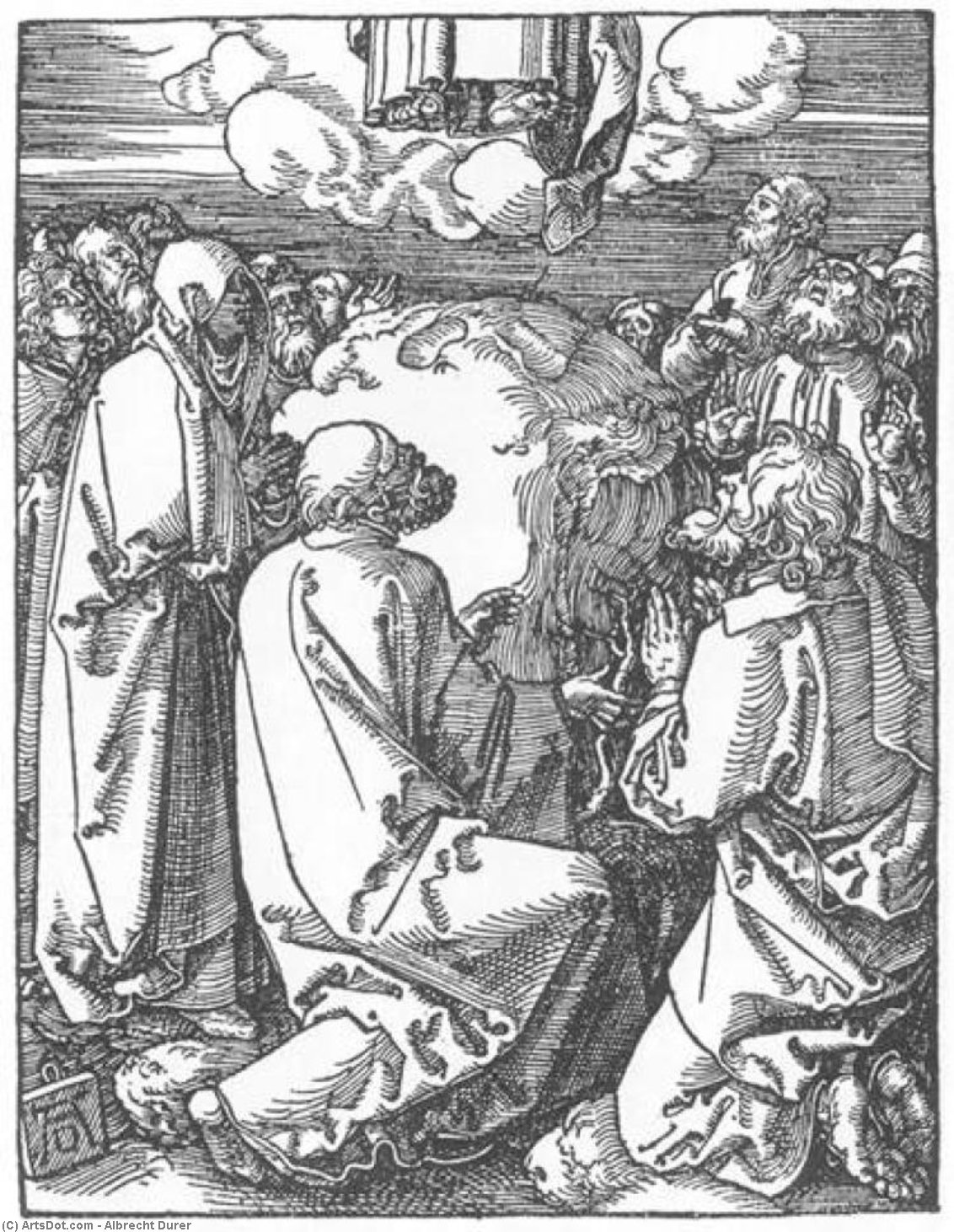
Albrecht Dürer’s meticulously detailed monochrome engraving, "The Ascension," captures the divine moment of Christ's ascent with intricate linework and a profound sense of reverence. Explore this iconic Northern Renaissance masterpiece and bring its timeless beauty into your collection.
A Testament in Line: Albrecht Dürer’s ‘The Ascension’
Albrecht Dürer's “The Ascension,” created in 1511, is more than simply an engraving; it’s a profound meditation on faith, transcendence, and the very nature of human devotion. Executed during the height of the Northern Renaissance, this monochrome masterpiece exemplifies Dürer’s unparalleled skill in copper engraving – a technique demanding both immense patience and artistic vision. The image depicts the pivotal moment when Jesus ascends into heaven, surrounded by his disciples who kneel in awe, their postures conveying a palpable sense of wonder and reverence. Dürer's meticulous attention to detail, evident in the intricate linework and masterful use of hatching, elevates this biblical scene to a level of timeless beauty and spiritual significance.
Technical Mastery: The Art of Copper Engraving
- Dürer’s technique is a testament to the precision required in copper engraving. He began with a sheet of prepared copper, meticulously incising fine lines using specialized burins – tools that allowed for incredibly delicate control. These lines weren't merely decorative; they were the very essence of the image, each one carefully planned and executed.
- The process involved applying ink to the engraved plate, then pressing it onto paper under immense pressure. This created a reversed image, where the recessed lines became visible, forming the final print. The density of the lines – achieved through varying pressures and angles – dictated the tonal values, creating a sophisticated grayscale palette that conveyed depth and volume.
- The sheer number of lines in “The Ascension” – estimated to be over 300,000 – underscores the immense labor involved. It’s a remarkable demonstration of Dürer's dedication and his mastery of this demanding medium.
Symbolism and Spiritual Resonance
Beyond its technical brilliance, “The Ascension” is rich in symbolic meaning. The kneeling disciples represent the unwavering faith and devotion that characterized the early Christian community. Jesus’ ascending figure embodies divine transcendence – a visual representation of his departure from earthly existence and his ascension to God. The swirling clouds surrounding him aren't merely atmospheric effects; they evoke a sense of mystery, spiritual power, and the boundless nature of the heavens. The composition itself is carefully structured to guide the viewer’s eye upwards, mirroring the narrative of ascent and emphasizing the central figure’s divine status.
A Window into the Northern Renaissance
Created in 1511, “The Ascension” firmly places Dürer within the context of the Northern Renaissance. This period witnessed a renewed interest in classical art and humanist ideals, but also a distinctive artistic style characterized by meticulous detail, realism, and a profound engagement with religious themes. Dürer’s work reflects this synthesis – blending traditional Christian iconography with his own innovative techniques and stylistic sensibilities. The engraving stands as a powerful example of the era's artistic achievements, showcasing the skill and vision of one of its greatest masters.
Capturing the Essence: A Hand-Painted Reproduction
ArtsDot offers meticulously crafted hand-painted reproductions of “The Ascension,” allowing you to experience Dürer’s masterpiece in a truly authentic way. Our skilled artists replicate the engraving's intricate details and tonal nuances, capturing the emotional depth and spiritual resonance of this iconic work. Whether for your home, office, or collection, a ArtsDot reproduction ensures that you possess a timeless piece of art history – a testament to Dürer’s genius and the enduring power of faith.