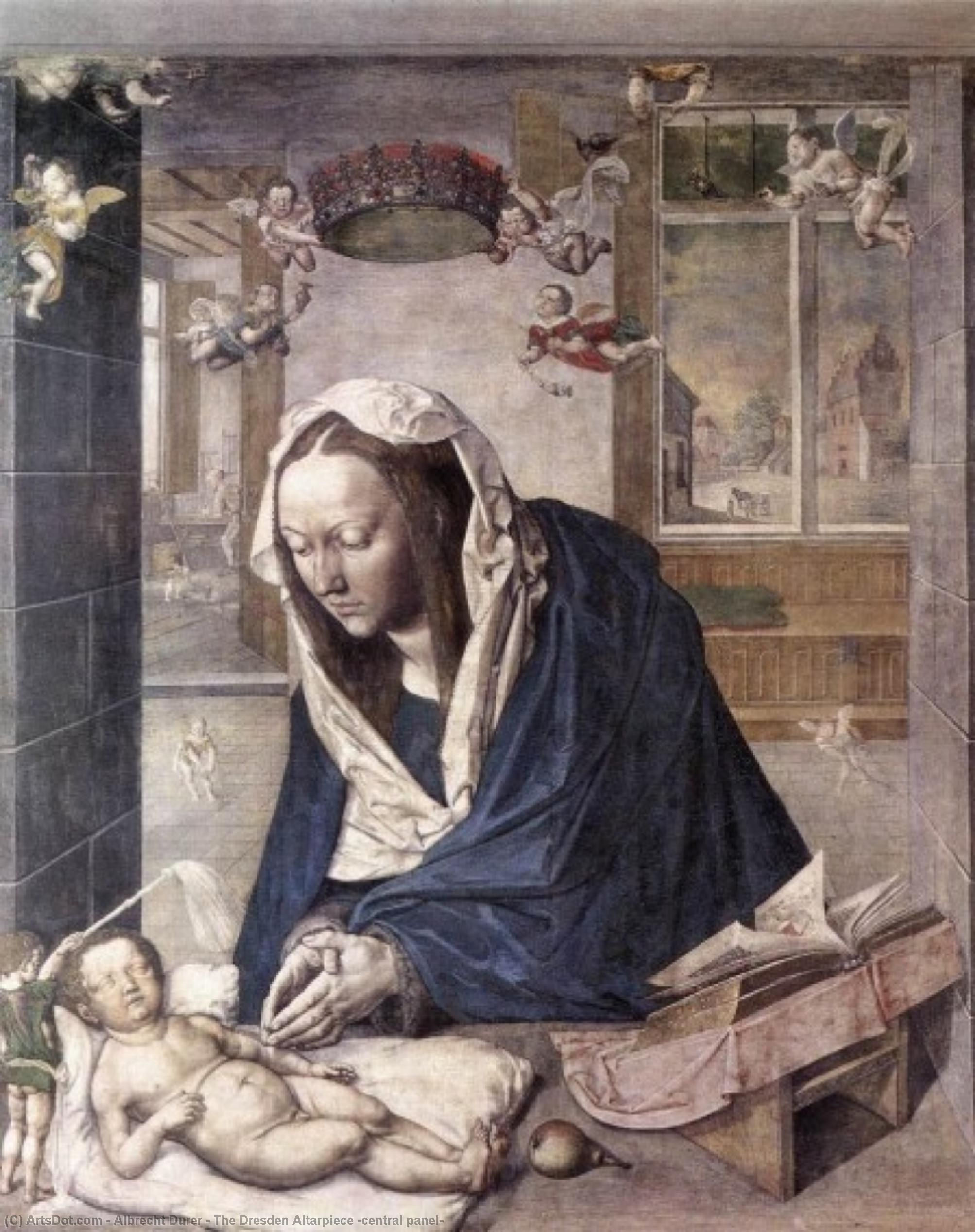
The Dresden Altarpiece (Central Panel): A Testament to Dürer’s Divine Vision
Albrecht Dürer's "The Dresden Altarpiece" – specifically its central panel – stands as a monumental achievement, a distillation of the artist’s profound understanding of religious iconography and his unparalleled technical mastery. This arresting image, depicting the Virgin Mary with the Christ Child, transcends mere representation; it embodies a deeply felt spiritual experience, reflecting the anxieties and aspirations of late 15th-century Europe. Dürer, working in the heart of Nuremberg during a period of intense artistic innovation, created a work that immediately established him as one of the foremost artists of his generation, foreshadowing the High Renaissance’s emphasis on realism and emotional depth.
- Subject Matter: The composition centers around Mary, presented with an almost ethereal grace. Her posture, serene and dignified, reflects her role as the Mother of God – a figure revered for her piety, humility, and unwavering faith. The infant Christ, nestled in her arms, embodies innocence, vulnerability, and divine power.
- Style & Technique: Dürer’s meticulous attention to detail is immediately apparent. Employing his signature pointillistic technique—a method of building up color through the application of countless tiny dots – he achieves an astonishing level of realism in the textures of Mary's robes, the baby's skin, and even the delicate folds of her veil. The use of oil paint allowed for a luminosity and depth of color previously unattainable with tempera, further enhancing the work’s visual impact.
Symbolism Woven into Sacred Cloth
Every element within this panel is laden with symbolic meaning, reflecting the complex theological beliefs prevalent during Dürer's time. The blue veil covering Mary’s head signifies her purity and virginity – a crucial aspect of her divine status. The crown adorning her head represents her royalty and her role as Queen of Heaven. The scepter in her hand symbolizes her authority and dominion, reflecting the narrative of Christ’s eventual reign. Notably, the presence of the two books adds another layer of interpretation; they represent Mary's role as a scholar and a vessel of divine knowledge. The positioning of the figures also holds significance – their arrangement within the frame creates a sense of balance and harmony, mirroring the spiritual order of the universe.
- The Child: The infant Christ is depicted not as a fully formed adult but as a vulnerable babe, emphasizing his divine humility and foreshadowing his eventual sacrifice.
- Color Symbolism: Blue, predominantly used in Mary’s garments, was associated with the Virgin herself and represented heaven and holiness.
Historical Context & Dürer's Legacy
Dürer created this altarpiece around 1507-1508, a period of immense artistic ferment in Germany. The rise of humanism was challenging traditional religious dogma, while artists like Dürer were striving to create works that combined spiritual depth with technical brilliance. This panel exemplifies the artist’s ambition – he sought not merely to depict religious scenes but to capture the very essence of faith and devotion. The Dresden Altarpiece quickly gained renown, influencing generations of artists who followed in Dürer's footsteps. It remains a cornerstone of Northern Renaissance art, demonstrating Dürer’s unparalleled skill in rendering human form, his innovative use of color, and his profound understanding of religious symbolism. Its impact continues to resonate today, solidifying its place as one of the most important works in the history of Western art.
Reproductions Available
ArtsDot offers meticulously crafted hand-painted reproductions of this iconic masterpiece, allowing you to bring Dürer’s vision into your home or office. Our skilled artisans employ traditional techniques and archival materials to ensure that each reproduction faithfully captures the original's beauty and detail. Choose from a range of sizes to perfectly suit your space and budget.