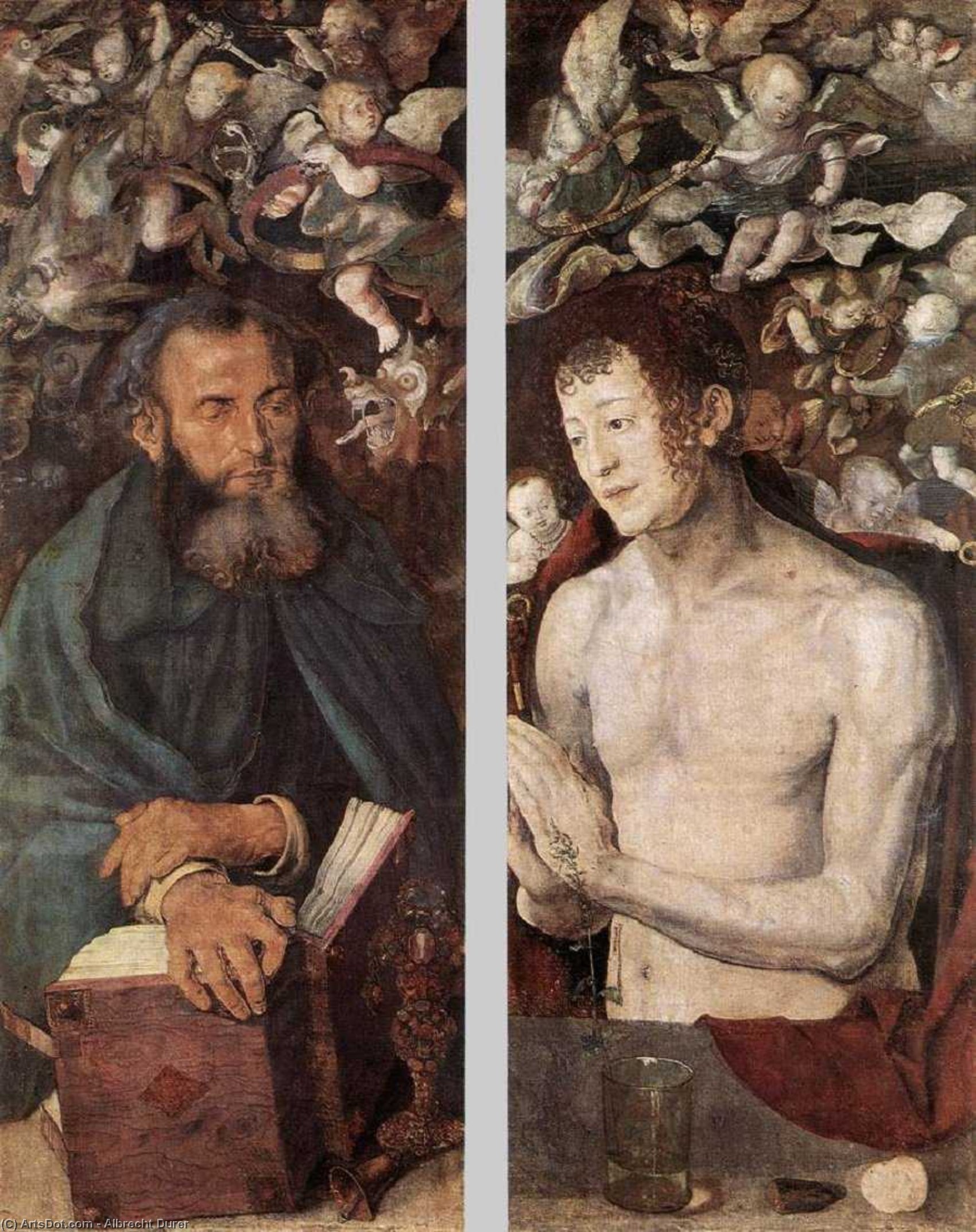
A Window into Faith and Human Endeavor: Exploring Albrecht Dürer’s Dresden Altarpiece Side Wings
The Dresden Altarpiece, specifically its two flanking wings depicting Saint Anthony and Saint Sebastian, stands as a testament to the artistic brilliance of Albrecht Dürer during the High Renaissance. Completed in 1496, this monumental artwork transcends mere depiction; it embodies a profound meditation on spirituality and human intellect within the framework of meticulously crafted German art. Commissioned for St. James’s Church in Dresden, Germany, it represents a pivotal moment in Dürer's career—a culmination of his apprenticeship under Michael Wolgemut and a decisive step toward establishing himself as one of Europe’s foremost artists.
- Subject Matter & Narrative: The scene portrays Saint Anthony and Saint Sebastian engaged in prayerful contemplation, illuminated by angelic figures. This iconography reflects the prevalent Christian beliefs of the time—the veneration of saints as intercessors between humanity and God—and underscores the importance of piety and devotion within medieval society.
- Style & Technique: Dürer’s masterful use of oil paint on wood demonstrates his command of Renaissance artistic conventions. The meticulous detail evident in every brushstroke speaks to his unwavering commitment to realism, albeit imbued with a subtle spiritual resonance. Unlike the stylized depictions favored by some contemporaries, Dürer strives for accuracy, capturing the textures and nuances of human flesh and drapery with remarkable precision.
Symbolism: Layers of Meaning Beyond Visual Representation
The composition is rich in symbolic elements that extend beyond the immediate narrative. The books scattered throughout the wings symbolize knowledge and divine wisdom—a cornerstone of humanist thought during Dürer’s era. Saint Anthony, often depicted as a hermit wrestling with demonic forces, embodies asceticism and spiritual fortitude, representing the struggle for purity of heart. Conversely, Saint Sebastian, martyred for his unwavering faith, symbolizes sacrifice and redemption—themes central to Christian theology.
Historical Context: Renaissance Faith and Artistic Innovation
Created during a period marked by burgeoning intellectual curiosity and artistic experimentation, the Dresden Altarpiece exemplifies the spirit of the Renaissance. Dürer’s work aligns with the humanist movement's emphasis on human dignity and rational inquiry while simultaneously upholding Christian values. The altarpiece reflects the desire to elevate the viewer spiritually through visual beauty—a characteristic ambition that distinguishes it from earlier Gothic art.
Emotional Impact: A Reflection of Inner Contemplation
Ultimately, Dürer’s Dresden Altarpiece Side Wings resonate with viewers on an emotional level. The serene expressions of Saint Anthony and Saint Sebastian convey a sense of tranquility and devotion—inviting contemplation and fostering a connection to the divine. Through his meticulous technique and profound symbolism, Dürer achieves a remarkable feat: transforming religious iconography into a timeless masterpiece that continues to inspire awe and admiration centuries later.