The Fall: A Renaissance Masterpiece of Symbolism and Technique
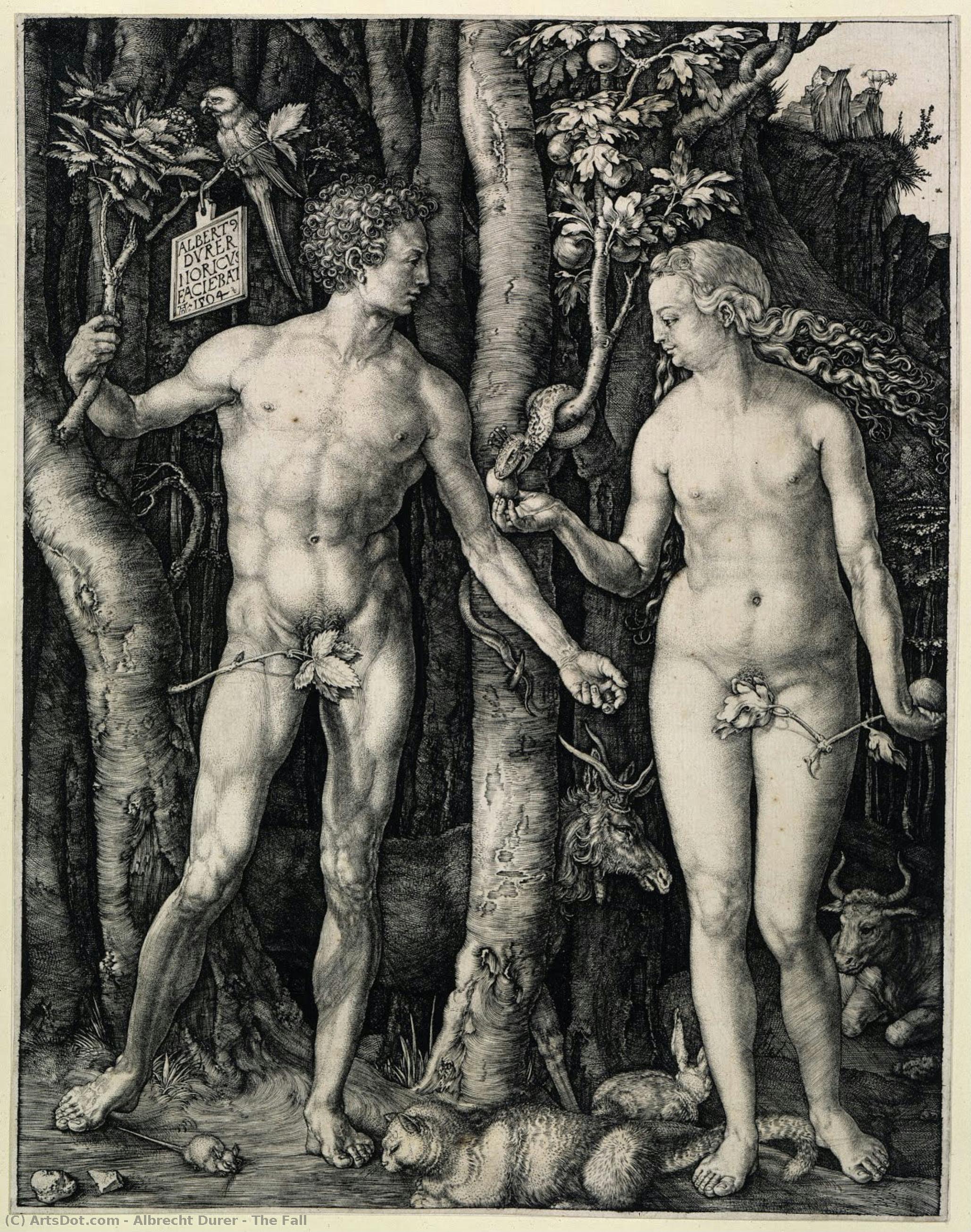
Albrecht Dürer’s “The Fall,” etched around 1504, stands as an emblem of the High Renaissance's preoccupation with classical ideals and theological contemplation. More than just a depiction of Genesis—Adam and Eve’s transgression against God’s commandment—it embodies a profound meditation on human nature, sin, and redemption through masterful engraving technique and intricate symbolism. This artwork transcends mere visual representation; it invites viewers into a dialogue about morality and the consequences of disobedience.
- Subject Matter: The print recounts the biblical narrative of Adam and Eve’s temptation by Satan—a pivotal moment in Christian theology representing humanity's fall from grace. Dürer meticulously captures this dramatic scene, portraying the figures with a solemn dignity that reflects Renaissance humanist sensibilities.
- Style & Influences: Dürer’s style is firmly rooted in Italian Mannerism, mirroring the stylistic innovations championed by artists like Michelangelo and Raphael. He consciously adopted classical proportions and anatomical accuracy—drawing inspiration from sculptures of Apollo Belvedere and Venus Pudica—demonstrating a commitment to reviving Greco-Roman artistic traditions.
- Technique: Dürer’s engraving prowess is evident in every line of “The Fall.” Utilizing the meticulous hatching and crosshatching technique, he achieves remarkable textural depth and volume, simulating the bark of trees, the flesh of Adam and Eve, and the foliage surrounding them. This painstaking process required hours of labor and showcased Dürer's unparalleled skill in manipulating ink on paper—a testament to the precision demanded by Renaissance printmaking.
- Symbolism: The composition is laden with symbolic significance. The serpent embodies temptation and deceit, while Adam and Eve represent humanity’s vulnerability to evil. The inclusion of animals – a lion, bison, and elk – symbolizes the four humors or temperaments—choleric, sanguine, phlegmatic, and melancholic—reflecting medieval beliefs about humoral balance and illness. These elements underscore the overarching theme of spiritual struggle and the disruption of divine harmony caused by sin.
- Emotional Impact: “The Fall” evokes a palpable sense of unease and impending doom. Dürer’s masterful rendering captures the psychological tension between innocence and corruption, prompting contemplation on moral responsibility and the enduring quest for spiritual purity. The artwork's subdued palette—primarily browns and blacks—contributes to its solemn atmosphere, reinforcing its profound emotional resonance.
Provenance & Reproduction Considerations
This original engraving is housed in prestigious collections worldwide, including the Metropolitan Museum of Art and MFA Boston. Reproductions crafted by ArtsDot offer exceptional quality, faithfully capturing Dürer’s nuanced shading and textural detail—allowing collectors and enthusiasts alike to experience the artwork's grandeur within their own homes. The matte finish ensures that reproductions maintain the original artistic intent, preserving the solemn beauty of this iconic Renaissance masterpiece.
Further Exploration
To delve deeper into Dürer’s artistic legacy, consider visiting Albrecht Dürer’s House in Nuremberg—the only surviving 15th-century artist’s home in Northern Europe—where you can explore Renaissance art and historic workshops. Alternatively, immerse yourself in the Albertina Museum's impressive collection of prints and drawings by Dürer and other masters of the era. Don’t hesitate to consult scholarly articles like “Albrecht Dürer: A Renaissance Master's Legacy of Innovation and Self-Portraiture” for a comprehensive understanding of his artistic contributions.