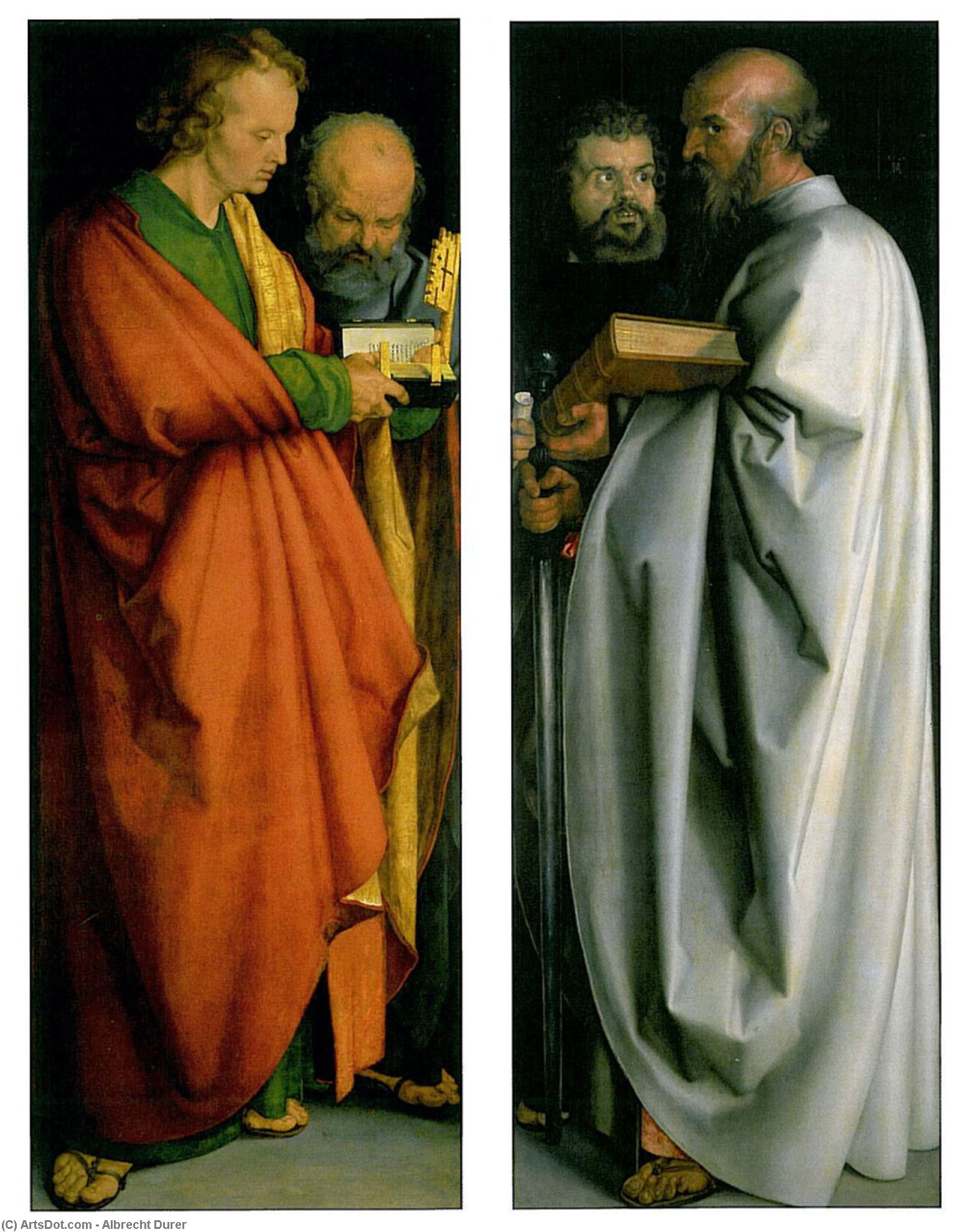
Albrecht Dürer’s masterful depiction of St. John and St. Peter embodies Northern Renaissance precision—a serene portrait illuminated by subtle light—inviting you to explore this iconic masterpiece and bring its timeless beauty into your home.
Explore the art of Albrecht Dürer, a German Renaissance master! Discover iconic engravings like Melencolia I and detailed self-portraits – a pivotal figure in art history.
A Window Into Faith: Exploring Albrecht Dürer’s “The Four Apostles”
Albrecht Dürer's "The Four Apostles," completed in 1526, transcends mere depiction; it embodies the spirit of Northern Renaissance art and offers a profound glimpse into humanist ideals intertwined with religious devotion. Executed on panel oil paint, this artwork resides within the Alte Pinakothek museum in Munich, Germany, serving as a cornerstone of Dürer’s oeuvre and a testament to his unparalleled mastery of artistic craft. More than just portraits of men, these figures represent a carefully considered meditation on faith, intellect, and human dignity—themes central to the era's intellectual ferment.
Composition and Technique: Precision Embodied
Dürer’s meticulous approach is immediately apparent in the painting’s composition. Four apostles stand shoulder-to-shoulder against a subtly textured background, creating an arresting visual balance. Each apostle is rendered with astonishing realism—a hallmark of Dürer's style—characterized by precise lines and painstakingly observed anatomical detail. The artist skillfully employs chiaroscuro, manipulating light and shadow to sculpt the figures’ forms and imbue them with depth and volume. This technique wasn’t simply about accurate representation; it was a deliberate choice to elevate the apostles beyond mere physicality, portraying them as embodiments of spiritual contemplation. Dürer's mastery of oil paint allowed him to achieve nuanced tonal gradations that would have been impossible with tempera—a pigment favored by earlier artists—further demonstrating his innovative spirit.
Symbolism Rooted in Christian Tradition
The painting’s symbolism speaks volumes about the beliefs and values of its time. Each apostle is assigned a distinct characteristic, reflecting established theological interpretations. St. John, depicted on the left panel, embodies humility and introspection, holding a book—often interpreted as representing divine revelation—suggesting a contemplative gaze focused inward. Opposite him stands St. Peter, radiating authority and confidence, clutching a book symbolizing papal leadership and spiritual guidance. The apostle to St. Paul’s right is portrayed with solemn dignity, while St. Matthew holds a scroll bearing the Gospel text, emphasizing the importance of scripture in Christian faith. These postures and gestures are not accidental; they were carefully chosen to convey specific theological concepts—a testament to Dürer's understanding of humanist thought alongside religious dogma.
Historical Context: Renaissance Humanism Meets Spiritual Reflection
“The Four Apostles” emerged during a period of significant intellectual transformation – the High Renaissance in Germany. While influenced by Italian artistic innovations, Dürer’s work retains a distinctly German sensibility, reflecting the humanist movement's emphasis on human reason and observation alongside religious piety. The painting reflects the broader cultural preoccupation with portraying humanity—both physical and spiritual—with dignity and accuracy. It stands as a powerful reminder of the Renaissance’s ambition to reconcile classical ideals with Christian faith, capturing a moment in time when artistic excellence served as a vehicle for conveying profound philosophical and theological ideas.
Emotional Resonance: A Portrait of Inner Strength
Ultimately, “The Four Apostles” transcends its technical brilliance to evoke an emotional response. The solemn expressions of the apostles convey resilience and unwavering devotion—qualities admired throughout history. Their posture exudes quiet confidence, suggesting inner fortitude in the face of adversity. Viewing this artwork is akin to encountering a visual meditation on faith and contemplation; it invites viewers to consider questions of morality, spirituality, and human aspiration. It’s a piece that continues to inspire awe and admiration centuries after its creation—a timeless masterpiece capturing the essence of Northern Renaissance artistry.