A Vision of Devotion: The Soul of Northern Renaissance Realism
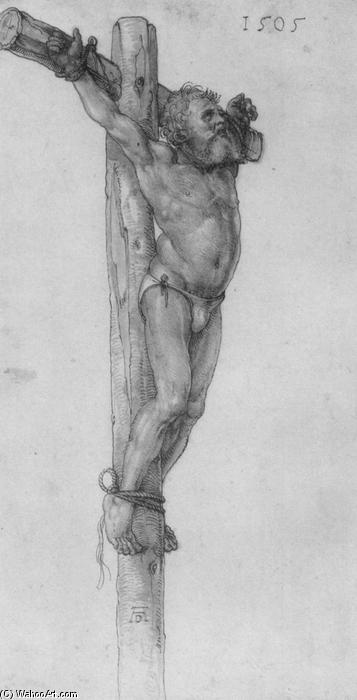
In the quiet, monochromatic depths of Albrecht Dürer’s "The Good Thief," we encounter a moment of profound spiritual gravity. This exquisite pencil drawing serves as a masterclass in the Northern Renaissance style, where the meticulous observation of the physical world meets an intense, inward-looking piety. Unlike the grand, sweeping canvases of the Italian masters that often sought to idealize the human form, Dürer directs our gaze toward the raw, unvarnished reality of suffering. Through the delicate application of graphite, the artist captures the weight of a body suspended in agony, inviting the viewer into a space of deep contemplation and reverence.
The composition is strikingly intimate, focusing entirely on the central figure of Christ. There is no distracting landscape or secondary narrative to pull the eye away from the central drama; instead, the verticality of the cross anchors the piece, creating a sense of monumental stability amidst the chaos of death. The use of chiaroscuro—the dramatic interplay between light and shadow—is nothing short of breathtaking. Light seems to descend from an unseen celestial source, catching the ridges of musculature and the tension in the limbs, while deep, velvety shadows swallow the periphery, pushing the subject forward into our very presence.
Mastery of Line and Texture
To behold this work is to witness the technical virtuosity of a true master. Dürer employs a sophisticated technique of hatching and cross-hatching, using fine, rhythmic lines to build volume and anatomical precision. These repetitive strokes do more than just define shape; they create a tactile texture that feels almost rough to the touch, mimicking the grit and hardship of the crucifixion scene. Every shadow is earned through layers of meticulous shading, giving the figure a sculptural quality that breathes life into the paper.
For the discerning collector or interior designer, this piece offers a unique aesthetic versatility. Its grayscale palette provides a sophisticated, understated elegance that complements both classical and contemporary settings. The starkness of the black and white medium allows it to act as a powerful focal point in a room, drawing the eye with its dramatic contrast without overwhelming the surrounding decor. It is a work that demands attention through its subtlety rather than through loud colors, making it an ideal selection for those seeking art that possesses both intellectual depth and visual impact.
Symbolism and Emotional Resonance
Beyond its technical brilliance, "The Good Thief" is a vessel for profound symbolic meaning. It represents the core tenets of Christian theology: sacrifice, redemption, and the transformative power of suffering. The anatomical vulnerability of the figure serves as a metaphor for the human condition—fragile, mortal, yet capable of divine connection. The very act of looking upon this drawing becomes a meditative practice, as the viewer is forced to confront the heavy emotional weight of the subject matter.
The emotional impact of the piece is one of somber beauty. It evokes a sense of melancholy, yet within that sadness, there is an underlying feeling of hope and spiritual endurance. For anyone looking to adorn their space with a reproduction of this caliber, "The Good Thief" offers more than mere decoration; it offers a window into the human spirit, providing a constant source of inspiration, peace, and historical connection.