A Masterpiece of Line and Legend
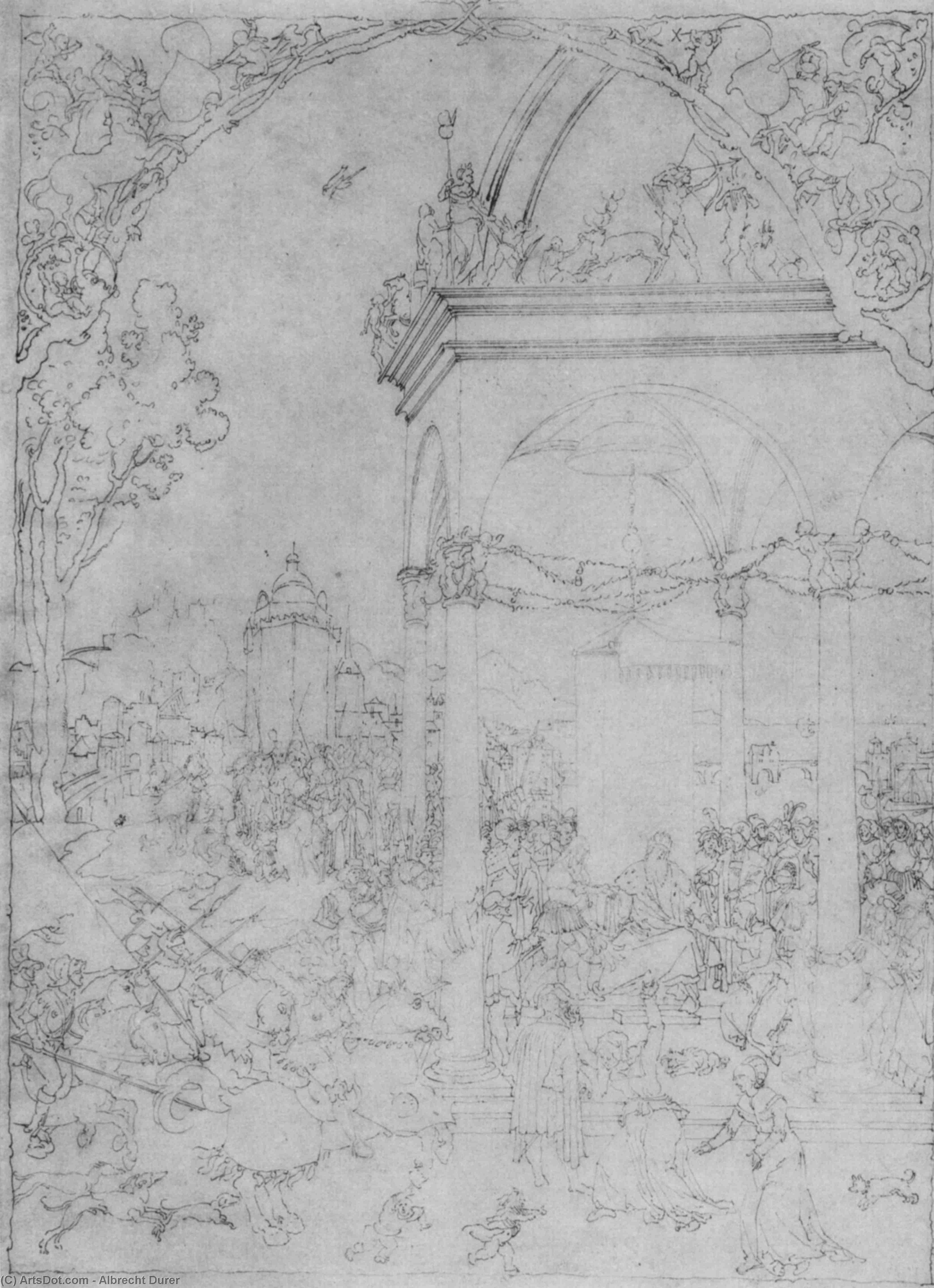
In the delicate dance of pen and ink, Albrecht Dürer captures a moment of profound classical resonance in The Justice of Trajan. This exquisite black and white drawing serves as a window into the soul of the German Renaissance, where the meticulous precision of Northern craftsmanship meets the grand, sweeping narratives of antiquity. At first glance, the viewer is swept into a lively, crowded outdoor scene that feels less like a static image and more like a captured breath of history. The composition is an intricate tapestry of movement, featuring a complex architectural setting—a majestic pergola or colonnade—that anchors the swirling energy of the figures within. It is a work that demands close inspection, rewarding the eye with layers of detail that reveal a world of mythological splendor and allegorical depth.
The technique employed here is nothing short of virtuosic. Dürer, a master of the line, utilizes a sophisticated system of hatching and cross-hatching to breathe life into two-dimensional space. Through these rhythmic strokes, he creates a palpable sense of volume and texture, allowing light to play across the classical drapery of the figures and the weathered stone of the architecture. The use of varying line densities provides a dramatic tonal range, guiding the eye through the receding planes of the composition. This mastery of monochrome allows the structural integrity of the drawing to shine, emphasizing the artist's ability to suggest depth, shadow, and form without the need for color, making it an ideal centerpiece for those who appreciate the raw, intellectual beauty of fine graphic arts.
Symbolism and the Renaissance Spirit
Beyond its technical brilliance, The Justice of Trajan is steeped in the symbolic language of the Renaissance. The figures, dressed in attire reminiscent of classical antiquity, engage in a variety of activities—some carrying spears or scrolls, others lost in dance or quiet conversation—suggesting a celebration of civic virtue and divine order. The presence of winged figures nestled within the architectural flourishes hints at divine intervention, a common motif used to elevate historical events to the realm of the eternal. This interplay between the human and the divine creates an atmosphere of profound significance, inviting collectors and historians alike to contemplate the themes of justice, leadership, and the enduring legacy of Roman ideals.
For the discerning interior designer or art enthusiast, this reproduction offers more than mere decoration; it offers a conversation piece of immense cultural weight. The artwork’s ability to evoke a sense of joyous movement and historical gravity makes it a versatile addition to any sophisticated space. Whether placed in a library filled with classical literature or as a focal point in a modern, minimalist gallery, the drawing brings an air of intellectual prestige and timeless elegance. It is a testament to Dürer's enduring genius—a piece that captures the fleeting moment of a celebration while anchoring it forever in the monumental history of Western art.