A Window Into Renaissance Nature: Albrecht Dürer’s “The Large Turf”
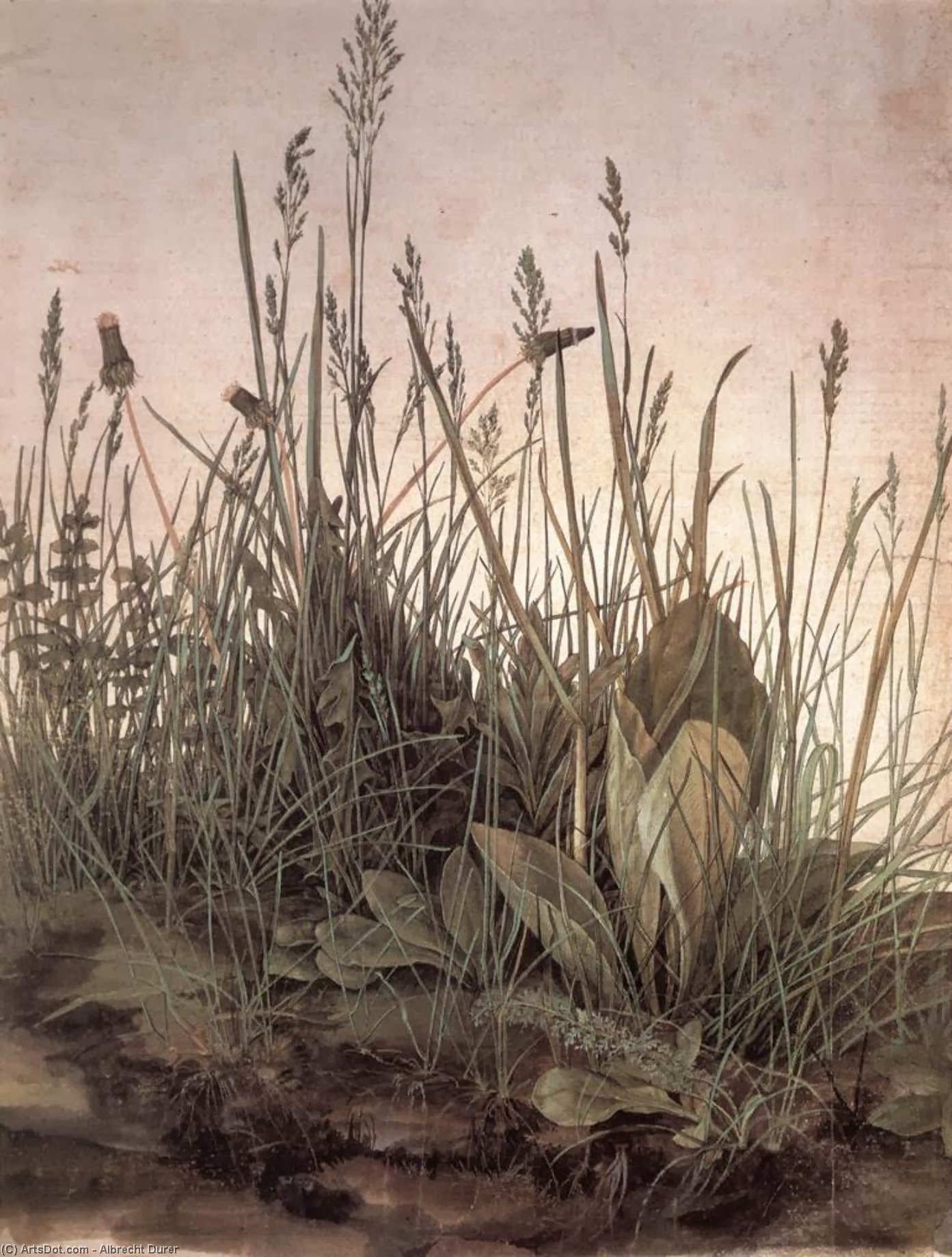
Albrecht Dürer's "The Large Turf," completed in 1503, stands as a testament to the artistic fervor of the German Renaissance and offers a captivating glimpse into the humanist fascination with observing and representing the natural world. More than just a botanical depiction—though undeniably meticulous—the painting embodies a profound philosophical stance that reflects Dürer’s intellectual engagement with contemporary scientific thought.
Style and Technique: Watercolor Precision
Executed in watercolor, “The Large Turf” exemplifies Dürer's mastery of this medium. Unlike oil paint, which relies on layering and blending to achieve depth and luminosity, watercolor employs transparent washes that build upon each other, resulting in a luminous quality that captures the subtle nuances of light and shadow. Dürer’s painstaking attention to detail is evident in every brushstroke; he painstakingly rendered individual blades of grass, stems, and wildflowers with astonishing accuracy—a remarkable feat considering the limitations imposed by watercolor.
Historical Context: Observation and Idealization
The painting emerged during a period marked by burgeoning scientific inquiry. Anatomical studies were gaining prominence, driven by figures like Andreas Vesalius, who challenged Galenic dogma through detailed dissections and illustrations. Dürer’s depiction of flora aligns seamlessly with this intellectual climate—it's not merely a recording of what was seen but an idealized representation informed by humanist principles. The artist sought to capture the essence of nature, elevating it beyond mere visual observation into a symbol of harmony and order.
Symbolism: Order Amidst Complexity
Beyond its technical brilliance, “The Large Turf” is laden with symbolic significance. The carefully arranged grasses and wildflowers represent not just botanical diversity but also broader concepts of beauty and contemplation. The inclusion of birds—particularly doves—suggests peace and spiritual aspiration – a common motif in Renaissance art reflecting the humanist belief in human potential for moral virtue. Dürer’s deliberate composition conveys a sense of serenity, inviting viewers to appreciate the grandeur of God's creation.
Emotional Impact: A Momentary Pause
"The Large Turf" transcends its formal qualities to evoke a powerful emotional response. Its tranquil atmosphere encourages contemplation and invites us to reconnect with the natural world—a welcome respite from the anxieties of urban life during Dürer’s time. The painting's luminous watercolor technique imbues it with an ethereal beauty, capturing not just what is seen but also what is felt – a quiet reverence for the sublime majesty of God’s design.