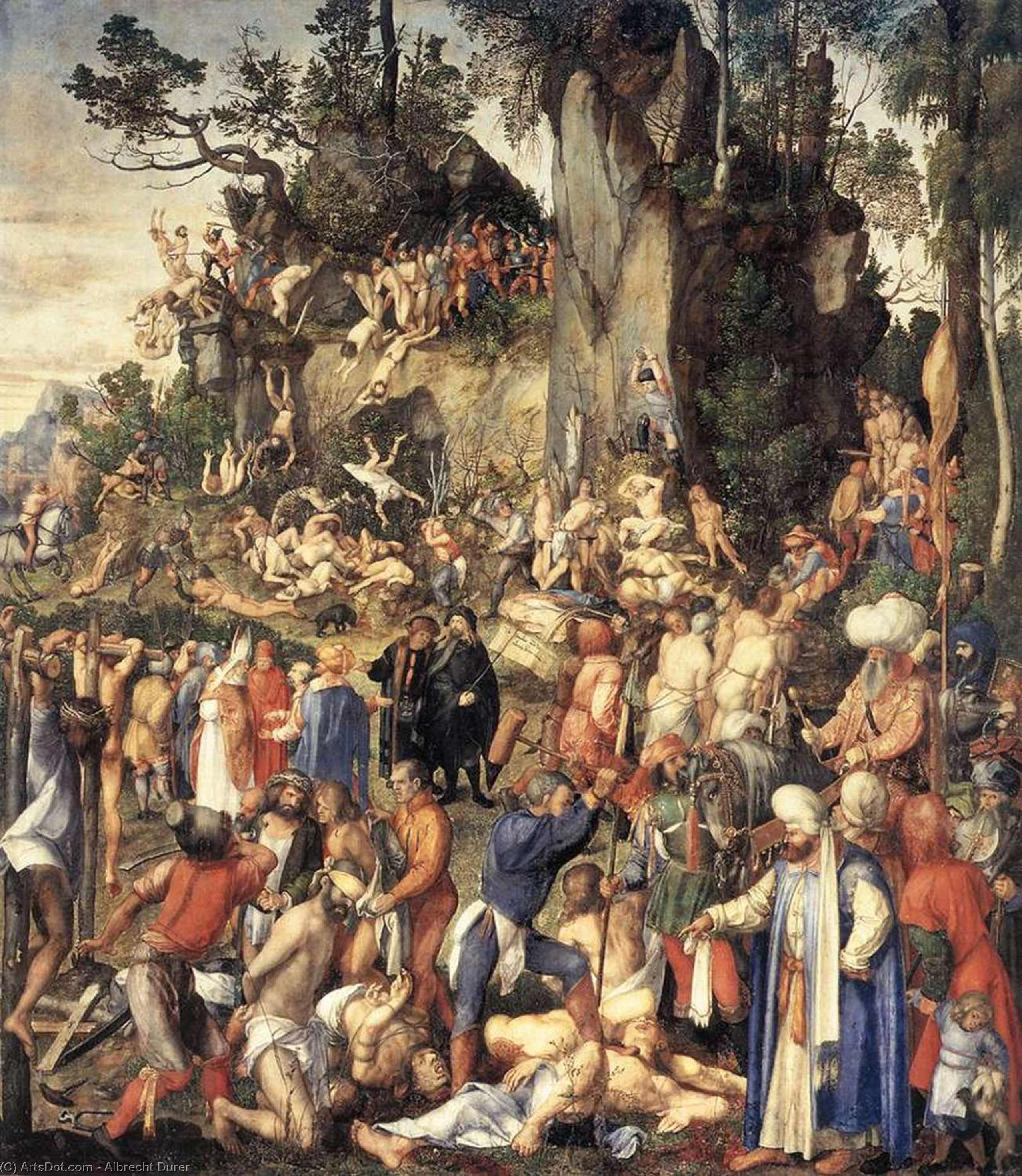
The Martyrdom of the Ten Thousand: A Masterpiece of Renaissance Drama
Albrecht Dürer's "The Martyrdom of the Ten Thousand" is a powerful and evocative oil painting that captures the essence of the Northern Renaissance. Created in 1508, this masterpiece is a testament to Dürer's skill as both an artist and a storyteller, blending intricate detail with emotional depth.
A Scene of Historical and Religious Significance
The painting depicts the legendary martyrdom of ten thousand Christian soldiers, a subject that resonates deeply with themes of faith, sacrifice, and persecution. The scene is set on Mount Ararat, where the Persian King Shapur II, portrayed as an Ottoman sultan, oversees the brutal execution of the soldiers by order of the Roman emperor. This historical narrative is brought to life through Dürer's meticulous attention to detail, making it a compelling piece for those interested in religious and historical art.
Dürer's Masterful Technique
Dürer's technique is characterized by its precision and realism, hallmarks of the Northern Renaissance. The painting employs a complex composition with numerous figures engaged in various acts of martyrdom, from crucifixions to decapitations. The use of diagonal lines created by the bodies and weapons guides the viewer's eye through the chaos, enhancing the sense of movement and urgency. Dürer's mastery of perspective and lighting adds depth and dimension to the scene, making it a striking example of Renaissance artistry.
A Rich Palette of Colors
The color palette is rich and varied, with earthy tones of browns, greens, and blues punctuated by brighter hues like reds and yellows. These colors not only draw attention to specific figures and actions but also create a sense of depth and contrast, highlighting the drama and intensity of the scene. The vibrant sunset in the background adds a layer of emotional resonance, evoking feelings of both tragedy and transcendence.
Symbolism and Emotional Impact
The painting is rich in symbolic elements, with the chaotic and violent scene serving as a powerful commentary on the brutality of war and human suffering. The expressive postures and interactions of the figures convey a range of emotions, from fear and despair to aggression and determination. At the center of the crowded scene, Dürer includes a self-portrait and a depiction of his friend Conrad Celtes, adding a personal touch to this monumental work.
Why This Piece is a Must-Have for Art Lovers and Collectors
"The Martyrdom of the Ten Thousand" is not just a historical artifact but a timeless piece of art that continues to captivate viewers with its dramatic narrative and technical brilliance. For art lovers, collectors, and interior designers, this painting offers a unique opportunity to bring a piece of Renaissance history into their homes or collections. Its rich colors, intricate details, and powerful symbolism make it a perfect addition to any space, adding depth and character to the decor.
Whether you are looking to inspire your guests with a conversation piece or seeking to enhance your art collection with a high-quality reproduction, Dürer's masterpiece is a choice that promises both aesthetic appeal and historical significance. Experience the drama and beauty of the Northern Renaissance with this extraordinary artwork.