Explore the art of Albrecht Dürer, a German Renaissance master! Discover iconic engravings like Melencolia I and detailed self-portraits – a pivotal figure in art history.
Explore human history & culture at the British Museum! Discover iconic artifacts from around the world – ancient Egypt to modern art. A must-see London landmark.
A Window Into Renaissance Leisure: Examining Albrecht Dürer’s ‘The Men’s Bath’
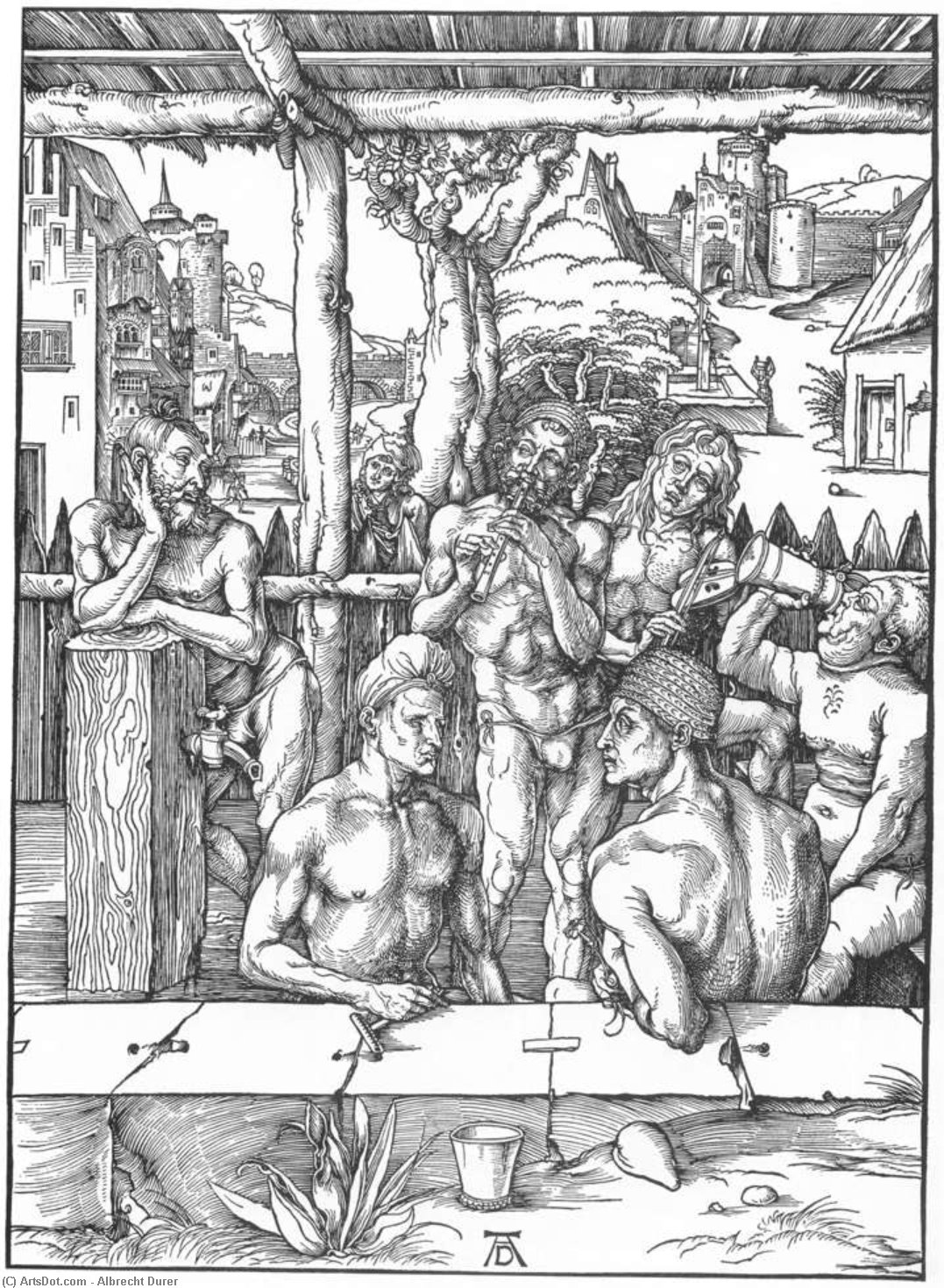
Albrecht Dürer's “The Men’s Bath,” completed in 1497, stands as a remarkable testament to the artistic fervor of the German Renaissance and offers a captivating glimpse into the intellectual currents shaping European culture during that era. More than just a depiction of nudity—a theme deliberately chosen by Dürer to honor classical ideals—the engraving is a meticulously crafted exploration of human anatomy, social interaction, and symbolic representation, executed with unparalleled precision using the innovative technique of copper engraving.
The Anatomy of Observation: Technique and Detail
Dürer’s mastery lies in his painstaking attention to detail, achieved through a masterful application of engraving techniques. Unlike oil painting, which relies on blending colors to create illusionistic depth, engraving employs lines—lines of varying thickness and density—to build up tonal values and textures. This process began with creating a copper plate meticulously etched with lines using specialized tools – a laborious undertaking that demanded immense patience and skill. Subsequent application of ink followed by pressure printing onto paper resulted in an image possessing astonishing clarity and realism, surpassing the capabilities of many contemporary artistic mediums. The extensive use of hatching—overlapping parallel lines—creates subtle gradations of shade, convincingly simulating skin texture and conveying a sense of volume within the figures’ musculature. Cross-hatching adds further complexity to this textural illusion, enhancing the impression of depth and contributing significantly to the engraving's overall aesthetic impact.
A Dialogue With Antiquity: Context and Symbolism
“The Men’s Bath” isn’t merely a visual record; it’s infused with intellectual references to classical antiquity—specifically, depictions of nude male figures found in Roman sculptures and frescoes. Dürer’s decision to portray men bathing was considered daring for its time, reflecting the humanist movement's renewed interest in human form and philosophical contemplation. The scene depicts a group of men engaged in conversation around a table, fostering an atmosphere of camaraderie and intellectual exchange—values central to Renaissance ideals. The pergola structure overhead serves as a framing device, emphasizing the composition’s grandeur and subtly directing the viewer’s gaze. Furthermore, the architectural backdrop—featuring buildings and city walls—grounds the scene within a recognizable urban environment, reinforcing its connection to the realities of fifteenth-century Nuremberg.
Beyond Representation: Emotional Resonance
Despite its formal precision, “The Men’s Bath” possesses an undeniable emotional resonance. The depiction of nude men evokes associations with classical mythology and celebrates the beauty of human physicality—themes that resonated deeply within Renaissance artists and thinkers. However, Dürer's intention transcends mere aesthetic pleasure; he seeks to convey a deeper understanding of human nature and its capacity for contemplation. The engraving invites viewers to consider not only what is seen but also what is felt – a testament to Dürer’s ability to transform technical skill into profound artistic expression.
A Legacy Etched in Metal
“The Men’s Bath” remains an iconic achievement of Northern Renaissance printmaking, securing its place as one of Dürer's most celebrated works. Its enduring appeal lies not only in its exquisite detail and masterful technique but also in its ability to encapsulate the spirit of a transformative era—a period marked by intellectual curiosity, artistic innovation, and a fervent desire to recapture the grandeur of classical civilization. Reproductions of this masterpiece offer collectors and interior designers alike an opportunity to experience firsthand the beauty and sophistication of Dürer’s unparalleled artistry.