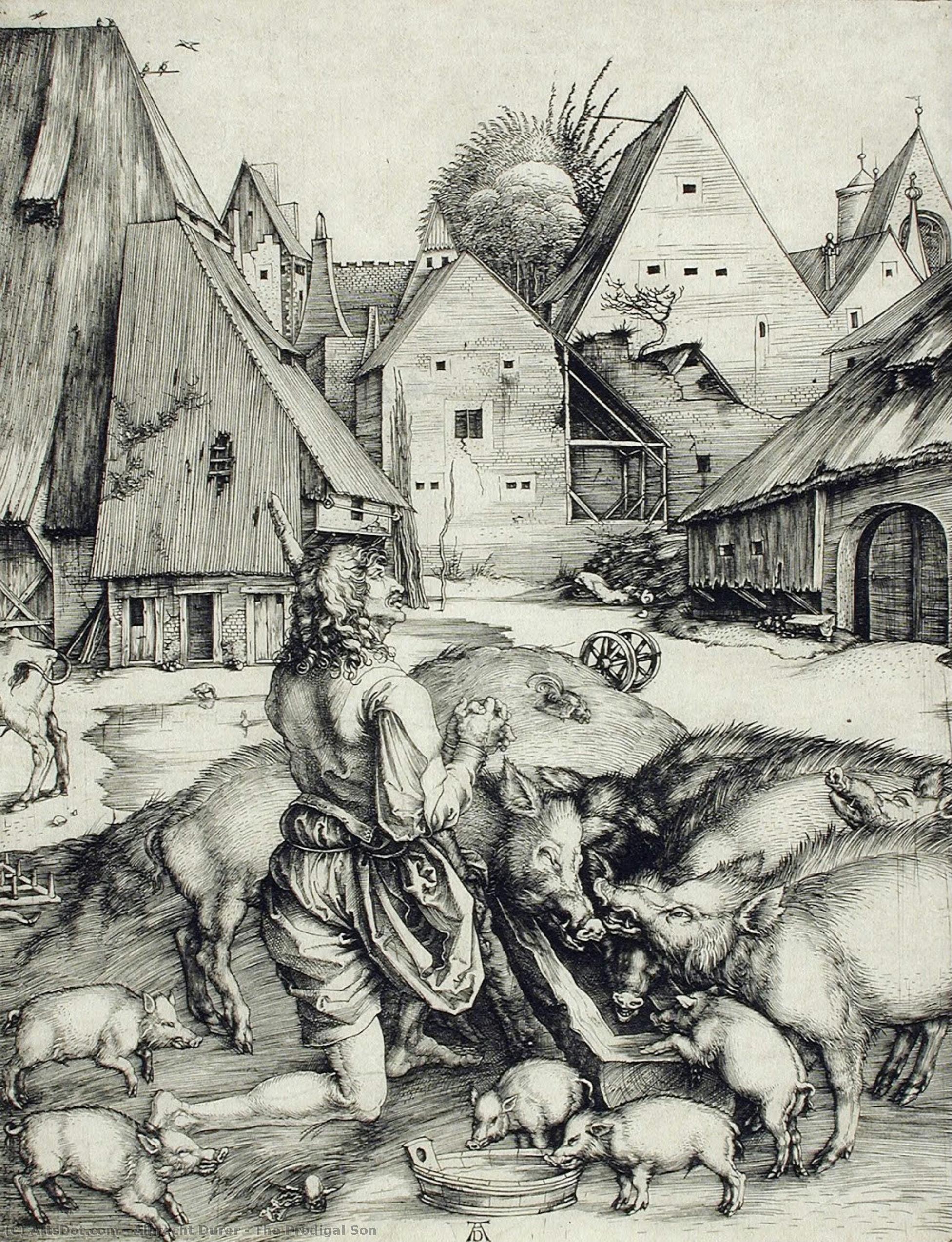
A Portrait of Redemption: Albrecht Dürer’s “The Prodigal Son”
Albrecht Dürer's "The Prodigal Son," completed in 1497, transcends mere depiction; it embodies a profound meditation on repentance, forgiveness, and the transformative power of faith. Executed during the apex of German Renaissance humanism, this iconic woodcut etching stands as a testament to Dürer’s mastery of printmaking technique and his ability to convey complex theological concepts with breathtaking visual clarity.
The Technique: Precision Embodied
Dürer's meticulous approach to engraving is immediately apparent. He employed a burin tool—a steel needle with hardened tip—to incise lines into a copper plate, creating an image that would be transferred onto paper through pressure and ink. This process demanded unwavering concentration and painstaking detail, resulting in astonishingly sharp lines and tonal gradations – characteristics that distinguish Dürer’s prints from earlier woodcuts. The artist painstakingly etched every contour of the figures and animals, achieving a level of realism unprecedented for its time.
Historical Context: Reformation Echoes
“The Prodigal Son” emerged during a period of intense religious upheaval—the Protestant Reformation. The biblical parable itself served as a powerful metaphor for the spiritual struggles faced by Christendom. Dürer’s depiction captures the dramatic narrative of the son returning home after squandering his inheritance, humbled by poverty and remorse. This scene resonated deeply with audiences grappling with questions of morality and divine grace, reflecting the broader anxieties surrounding papal authority and theological interpretation.
Symbolism: Pigs as Judgment
The inclusion of pigs—a deliberate choice by Dürer—holds significant symbolic weight. Traditionally associated with filth and impurity in Christian iconography, they represent the earthly realm of sin and degradation against which the repentant son strives to overcome. The pigs’ presence underscores the stark contrast between the prodigal’s former life of indulgence and his newfound devotion to God. Furthermore, the father's embrace symbolizes unconditional forgiveness—a cornerstone of Christian theology.
Emotional Impact: A Moment Frozen in Time
"The Prodigal Son" isn’t merely a visual record; it’s an emotional experience. Dürer skillfully captures the pathos of repentance and the overwhelming joy of reconciliation. The expressive faces of the father and son convey a palpable sense of tenderness and compassion, reminding viewers of the enduring human capacity for empathy and spiritual renewal. Its enduring appeal lies in its ability to communicate universal themes—humility, grace, and the transformative potential of faith—making it an unforgettable masterpiece that continues to inspire contemplation centuries later.