A Symphony of Sorrow and Devotion
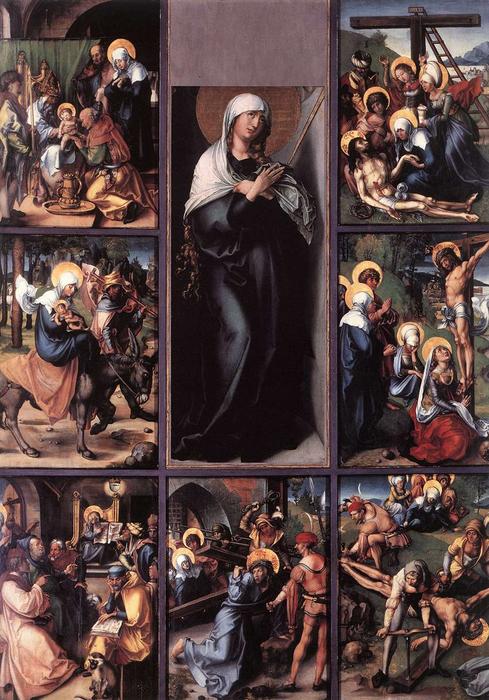
In the quiet, contemplative depths of Albrecht Dürer’s "The Seven Sorrows of the Virgin," created in 1496, we encounter more than a mere religious relic; we enter a profound psychological landscape. This masterpiece of the German Renaissance serves as a window into the soul of late medieval piety, capturing the heavy, rhythmic pulse of grief. The work is structured around the poignant narrative of Mary’s suffering, presenting a multi-paneled journey through the most agonizing moments of her life. As one gazes upon the intricate details, there is an immediate sense of being drawn into a sacred drama where every line and shadow serves to illuminate the weight of maternal loss and spiritual endurance.
Dürer, a titan of Nuremberg’s artistic golden age, utilizes his unparalleled mastery of hatching and cross-hatching to breathe life into the monochrome or subtly toned surfaces. The technique is nothing short of miraculous; through the meticulous application of fine lines, he achieves a sculptural depth that makes the fabric of garments feel heavy with sorrow and the skin of the figures appear almost palpable. This precision allows for a sophisticated tonal gradation that guides the viewer's eye across the various scenes, creating a sense of movement within a static medium. For the collector or designer, this level of detail offers a captivating visual complexity that rewards prolonged observation, making it a centerpiece capable of commanding any room with its intellectual and aesthetic gravity.
Symbolism and the Human Experience
Beyond its technical brilliance, the painting is a dense tapestry of theological symbolism. Each panel acts as a narrative beat, utilizing subtle gestures—a bowed head, a clenched hand, or a distant, mournful gaze—to communicate the profound stages of Mary’s anguish. Dürer moves away from the overly idealized, ethereal figures common in earlier eras, opting instead for a raw, anatomical realism that bridges the gap between the divine and the human. This choice invites the viewer to empathize deeply with the Virgin; her pain is not distant or abstract, but visceral and recognizable. The inclusion of recurring motifs, such as the sharp thorns and the presence of celestial witnesses like angels, creates a layered dialogue between earthly suffering and heavenly prophecy.
For those looking to integrate such a profound work into a curated interior, "The Seven Sorrows of the Virgin" offers an unparalleled emotional anchor. It is a piece that speaks of resilience, history, and the enduring power of faith. Whether displayed in a gallery-style setting or as a focal point in a sophisticated study, this reproduction brings with it the prestige of the Northern Renaissance. It is not merely a decoration, but an invitation to reflect on the complexities of the human condition, rendered through the hands of one of history's greatest masters.