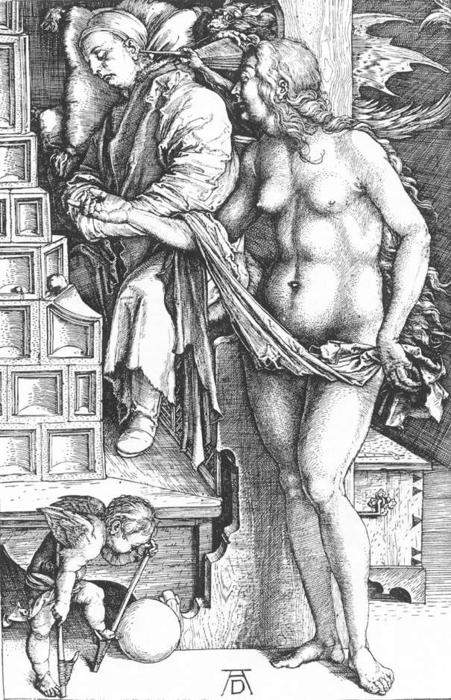
A Renaissance Dialogue Between Virtue and Vice: Albrecht Dürer’s “The Temptation of the Idler”
Albrecht Dürer's "The Temptation of the Idler," completed around 1498, stands as a cornerstone of Northern Renaissance printmaking—a masterful distillation of humanist thought and allegorical representation. More than just a depiction of a sleeping man contemplating his life’s path, it’s a profound meditation on moral responsibility and the insidious influence of temptation, rendered with breathtaking precision and imbued with layers of symbolic meaning.
- Composition & Narrative: The engraving centers on a reclining figure—likely representing humanity—surrounded by figures embodying opposing forces. An angel, radiating serene light, confronts him with a mirror reflecting his own vanity, while Venus and Cupid actively attempt to seduce him away from contemplation. Beneath them lies a smaller group of individuals symbolizing earthly pleasures and distractions. This carefully orchestrated arrangement underscores the central conflict: the struggle between inner reflection and external allure.
- Technique & Detail: Dürer’s genius resided in his mastery of engraving—a technique demanding painstaking labor and unparalleled artistic skill. Using a burin tool, he meticulously etched lines into a copper plate, creating an intricate network of tonal variations that capture the textures of skin, fabric, and architectural surfaces with astonishing realism. The extensive use of cross-hatching builds up deep shadows, enhancing depth and conveying the solemn mood of the scene.
- Symbolism & Allegory: Each element within the engraving speaks to broader philosophical concepts. The mirror symbolizes introspection and self-awareness—a crucial component of Renaissance humanism—but also exposes the dangers of excessive pride. Venus and Cupid represent earthly desires that threaten spiritual purity, while the angel’s gesture embodies divine guidance attempting to steer humanity toward virtue.
- Historical Context: Created during a period of intellectual ferment in Nuremberg, Dürer's work reflects the humanist ideals championed by thinkers like Erasmus and Pico della Mirandola. The engraving engages with questions about human nature—the capacity for both good and evil—a preoccupation that resonated deeply within Renaissance culture.
- Emotional Impact: “The Temptation of the Idler” compels viewers to confront uncomfortable truths about themselves and their relationship with temptation. Its subdued palette, combined with masterful shading and perspective, fosters a contemplative atmosphere—inviting reflection on moral dilemmas and urging us to resist distractions that impede spiritual growth.
This exceptional engraving exemplifies the pinnacle of Renaissance printmaking artistry. A reproduction captures not only Dürer’s meticulous craftsmanship but also the enduring power of his symbolic vision – a timeless reminder of the ongoing battle between reason and desire.