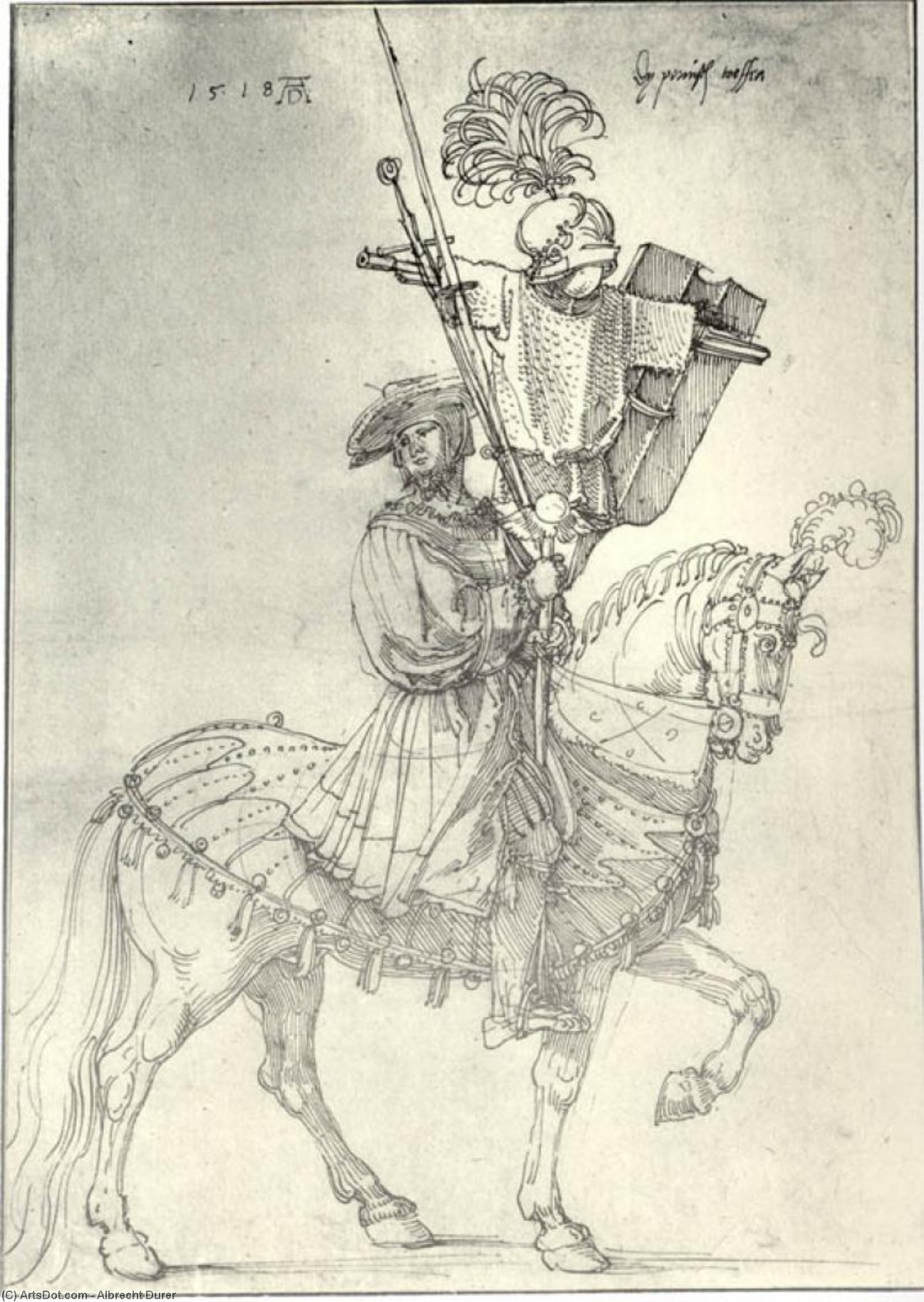
Experience Albrecht Dürer’s iconic ‘The Trophy Bohemia,’ a dramatic depiction of a warrior on horseback with a fantastical horse and symbolic elements. This powerful Renaissance artwork captures the spirit of medieval heroism, perfect for art lovers and collectors.
A Vision of Warrior Majesty: Albrecht Dürer's "The Trophy Bohemia"
Albrecht Dürer’s “The Trophy Bohemia” is not merely a depiction of a mounted warrior; it’s a meticulously crafted embodiment of Renaissance ideals, steeped in symbolism and reflecting the anxieties and aspirations of 16th-century Europe. This painting, likely created around 1505, captures a moment of potent power – a knight astride a formidable steed, radiating both martial prowess and an almost mythical aura. The sheer scale of the horse, with its dramatically oversized head adorned with horns, immediately elevates the scene beyond a simple equestrian portrait. It speaks to primal forces, hinting at ancient legends and the untamed spirit of nature, elements frequently explored in Dürer’s work.
- Subject Matter: The central figure embodies the archetype of the heroic warrior – a theme prevalent throughout European art history, particularly during the era of burgeoning nation-states.
- Composition: Dürer masterfully employs perspective and dynamic movement to draw the viewer into the scene. The positioning of the rider and horse creates a sense of forward momentum, suggesting action and conquest.
- Details: Note the meticulous rendering of armor, reflecting Dürer’s obsession with anatomical accuracy and his desire to represent reality with unparalleled precision.
Technical Brilliance: Dürer's Masterful Technique
Dürer was a revolutionary figure in the world of printmaking and painting, renowned for his innovative techniques and unwavering commitment to detail. “The Trophy Bohemia” exemplifies this mastery. Executed primarily in oil on panel – a medium he favored for its ability to capture subtle gradations of tone – Dürer employed meticulous layering and glazing to achieve an astonishing level of realism. His use of hatching and cross-hatching, particularly evident in the rendering of the armor’s reflections and the horse's musculature, demonstrates his profound understanding of light and shadow. The painting showcases a hallmark of Dürer’s style: a painstaking attention to texture and surface detail that elevates the work beyond simple representation.
- Oil Painting: Dürer’s use of oil paint allowed for richer colors and smoother transitions than tempera, a common medium at the time.
- Hatching & Cross-hatching: These techniques were crucial to creating depth and volume in the depiction of the armor and horse.
- Glazing: Layering translucent glazes created luminous effects and enhanced the realism of the scene.
Symbolism and Historical Context
“The Trophy Bohemia” resonates with the complex political and cultural landscape of the early 16th century. Dürer, a staunch patriot and defender of Nuremberg’s independence, frequently incorporated allegorical elements into his work, reflecting contemporary anxieties about war, power, and religious conflict. The shield, prominently displayed, could represent protection or perhaps even heraldry – a visual declaration of allegiance. The book, positioned in the upper right corner, might symbolize knowledge, wisdom, or even divine authority. The painting’s overall mood is one of controlled strength and potential danger, mirroring the volatile political climate of the time.
Dürer's work reflects the humanist ideals of the Renaissance, emphasizing human achievement and celebrating classical antiquity while simultaneously engaging with contemporary concerns about power and morality.
Emotional Impact and Artistic Legacy
“The Trophy Bohemia” transcends its historical context to offer a powerful visual statement. The imposing figure of the warrior evokes feelings of awe, respect, and perhaps even fear. Dürer’s ability to capture not just physical appearance but also an underlying sense of character and purpose is what makes this painting so enduringly captivating. As a reproduction, this artwork offers a unique opportunity to experience the genius of one of history's greatest artists – a chance to bring a timeless masterpiece into your home or office, enriching your surroundings with beauty and intellectual stimulation.