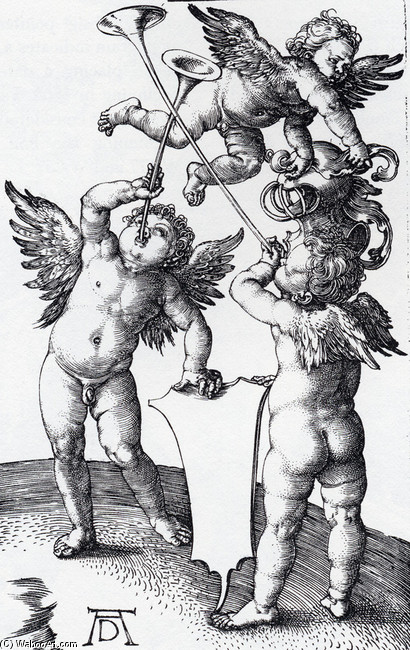
A Symphony of Youthful Grace: Albrecht Dürer's "Three Putti With Shield And Helmet"
Albrecht Dürer’s “Three Putti With Shield and Helmet” is more than just an engraving; it’s a concentrated distillation of Renaissance ideals – a testament to meticulous observation, masterful technique, and the enduring human fascination with innocence, joy, and divine beauty. Executed in 1507, this iconic work captures three cherubic figures engaged in playful activities, embodying the spirit of the Northern Renaissance at its zenith. Dürer’s profound understanding of line, form, and texture elevates this seemingly simple depiction into a complex meditation on human experience and artistic skill.
The Art of Engraving: A Dance with Metal
- Technique: The engraving process itself is central to the artwork’s impact. Dürer, a true innovator in his craft, employed a complex system of burins – meticulously crafted tools for cutting lines into a copper or zinc plate. This wasn't merely copying; it was an act of creation, demanding immense patience and control. The resulting image is built entirely from these precisely incised lines, creating a remarkable depth and richness through the skillful manipulation of cross-hatching.
- Detail: Notice the incredible level of detail – the delicate folds in the putti’s garments, the precise rendering of their wings, the sharp edges of the shield and helmet. This obsessive attention to detail was characteristic of Dürer's approach, reflecting his belief that art should strive for absolute realism.
- Material: The use of a metal plate – typically copper or zinc – allowed for an unparalleled degree of precision in line work, a crucial element in achieving the engraving’s signature aesthetic.
Symbolism and Narrative: Echoes of Mythology and Human Experience
The subject matter itself—three putti engaged in playful combat—is rich with symbolic meaning. Putti, or infant angels, are frequently associated with love, beauty, and harmony, representing the purest forms of these virtues. The figures’ actions – one blowing a horn, another holding a shield and helmet – can be interpreted as allegorical representations of various aspects of human experience: perhaps youthful exuberance, defense against adversity, or even divine intervention. Dürer masterfully blends classical mythology with humanist concerns, inviting the viewer to contemplate themes of innocence, joy, and the potential for both beauty and conflict within the human spirit.
A Window into the Northern Renaissance: Style and Context
“Three Putti With Shield and Helmet” is a quintessential example of the Northern Renaissance style. Unlike its Italian counterpart, which often focused on idealized forms and classical mythology, the Northern Renaissance emphasized realism, meticulous detail, and a profound understanding of naturalism. Dürer’s work reflects this trend, showcasing his mastery of perspective, shading, and line work – skills honed through years of rigorous training and observation. Created during a period of burgeoning artistic innovation in Nuremberg, this engraving stands as a landmark achievement, demonstrating the city's position at the forefront of European art.
Emotional Impact: A Timeless Appeal
Despite its age, “Three Putti With Shield and Helmet” retains an undeniable emotional resonance. The figures’ youthful energy and playful interaction evoke a sense of joy and wonder, while their classical beauty inspires contemplation. Dürer's masterful technique ensures that this engraving continues to captivate viewers centuries after its creation – a timeless testament to the power of art to inspire, delight, and provoke thought.