A Vision in Black and White: Dürer's "Virgin and Child Appearing to St John"
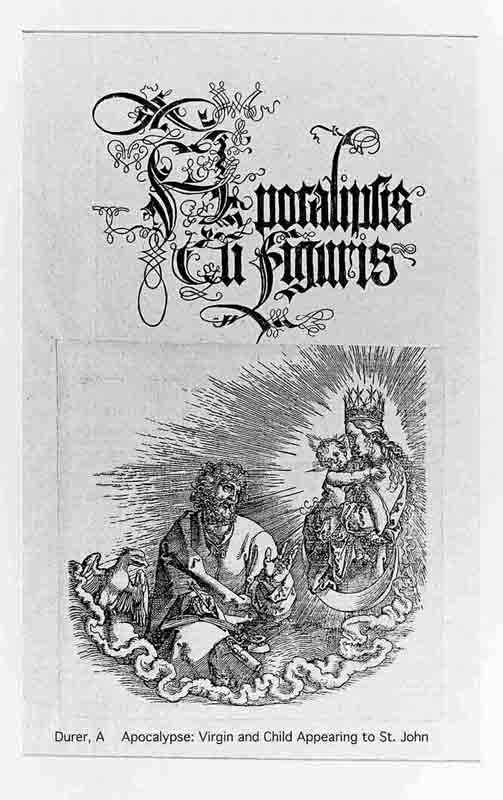
Albrecht Dürer’s “Virgin and Child Appearing to St John” is not merely an engraving; it’s a meticulously crafted window into the heart of the Northern Renaissance. Executed around 1506, this work transcends its technical mastery – the precise lines, dramatic contrasts, and masterful use of hatching – to deliver a profoundly moving meditation on faith, revelation, and the divine presence. The image, rendered in stark monochrome, immediately commands attention with its intricate detail and the palpable sense of drama that Dürer so expertly evokes. It’s a testament to his unparalleled skill as an engraver and a poignant reminder of the artistic fervor that defined this pivotal era.
Technical Brilliance: The Art of the Engraving
Dürer's technique is central to the work's impact. He employed the engraving process, a painstaking method involving cutting precise lines into a copper or iron plate using a tool called a burin. This wasn’t simply about creating an image; it was about controlling light and shadow with unparalleled accuracy. The resulting surface, when inked and pressed onto paper, produces a remarkably rich tonal range – achieved through variations in line density and hatching – that creates a convincing illusion of depth and texture. Notice the deliberate use of cross-hatching to build up areas of shadow, particularly around the figures’ drapery and the swirling patterns above, contributing significantly to the engraving's dramatic effect. The sheer labor involved speaks volumes about Dürer’s dedication to his craft and the value he placed on achieving absolute precision.
Symbolism and Narrative: A Revelation in Form
The subject matter itself is rich with symbolic weight. Depicting the Virgin Mary, Christ Child, and St. John the Baptist, the engraving likely references an apocalyptic vision or revelation – a common theme within Northern Renaissance art. St. John’s posture, gazing upwards with evident reverence, underscores his role as a witness to divine grace. The swirling patterns surrounding the central figures are not merely decorative; they suggest a celestial realm, a space beyond earthly comprehension. The inclusion of Latin calligraphy above the scene adds another layer of meaning, reinforcing the religious context and hinting at scriptural references. This wasn’t just about depicting a biblical event; it was about conveying a profound spiritual experience.
Dürer's Legacy: A Masterpiece of Northern Renaissance Style
“Virgin and Child Appearing to St John” is a quintessential example of Dürer’s distinctive style – characterized by its meticulous detail, dramatic contrasts, and a profound understanding of human anatomy. His work reflects the broader artistic trends of the Northern Renaissance, which emphasized realism, religious devotion, and a fascination with classical antiquity. Dürer's influence extended far beyond his own lifetime, shaping the course of engraving for generations to come. This piece stands as a powerful testament to his genius and remains one of the most celebrated works in the history of printmaking.