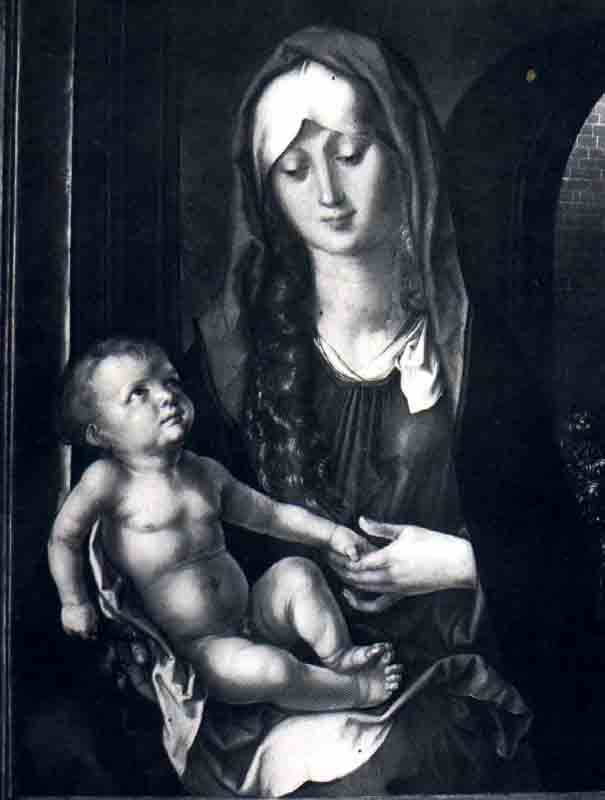
Albrecht Dürer's "Virgin and Child Before an Arcade": A Window into Renaissance Devotion
Albrecht Dürer’s “Virgin and Child Before an Arcade,” a captivating black and white image, offers a profound glimpse into the heart of the Northern Renaissance. Executed around 1503, this painting transcends mere representation; it's a carefully constructed meditation on faith, familial love, and the burgeoning humanist ideals of the era. Dürer, a pivotal figure in German art history, masterfully blends meticulous observation with deeply symbolic meaning, creating an image that continues to resonate with viewers centuries later. The photograph itself captures not just a painting but a moment frozen in time – a testament to Dürer’s unparalleled skill and artistic vision.
A Study in Detail: Technique and Materials
Dürer's mastery is immediately apparent in the astonishing detail of this work. Executed primarily in oil paint on panel, the technique showcases his innovative approach to rendering texture and form. He employed a layering method – *glazing* – building up thin translucent layers of color to achieve luminous effects and subtle gradations. The meticulous attention to detail extends beyond mere representation; Dürer meticulously rendered every fold of fabric, every vein in the figures’ hands, and even the individual stones of the arcade itself. This dedication to realism was revolutionary for its time, setting a new standard for artistic precision. The use of black and white photography highlights the incredible depth and complexity of Dürer's original technique, emphasizing the painstaking process involved in creating this masterpiece.
Symbolism and Narrative
“Virgin and Child” is rich with symbolic meaning, reflecting the profound religious devotion prevalent during the Renaissance. The central figures, Mary and Christ, embody humility, grace, and divine love. The arcade itself – a recurring motif in Dürer’s work – represents a transition, a threshold between earthly and spiritual realms. The presence of the statue or archway suggests a sacred space, a place of contemplation and prayer. The two figures on the left, often interpreted as representing Joseph and John the Baptist, add another layer to the narrative, reinforcing the themes of lineage and salvation. Even the small bird in the upper right corner may hold symbolic significance – perhaps representing the Holy Spirit or simply adding an element of natural beauty to the scene.
Historical Context and Dürer’s Legacy
Dürer's “Virgin and Child Before an Arcade” was created during a period of immense artistic and intellectual ferment. The Renaissance, with its rediscovery of classical antiquity and emphasis on humanism, was transforming Europe. Dürer, deeply influenced by this movement, sought to elevate art beyond mere decoration, imbuing it with profound meaning and psychological depth. His work reflects the growing interest in individual experience and emotion – a departure from the more stylized representations of the medieval period. As one of the most influential artists of his time, Dürer’s impact on subsequent generations is undeniable. This painting stands as a powerful example of his genius, demonstrating his ability to synthesize religious devotion with artistic innovation, solidifying his place as a cornerstone of Western art history.